
You are using an out of date browser. It may not display this or other websites correctly.
You should upgrade or use an alternative browser.
You should upgrade or use an alternative browser.
Pepper 🌶️
- Thread starter MichiH
- Start date


MichiH
Hot Topics Subscriber
Thank you JanI'm glad you acted so fast and that she's doing better again now.


She's gotten to be a pro at this!I'm glad you acted so fast and that she's doing better again now.

Pepper, Pepper! What have you got yourself into this time?! Shaking my head!
 I'm so glad that all worked out good!
MichiH
Hot Topics Subscriber
Isn’t that the truth?! lol I will say I wasn’t ready to run to the ER this time. This girl does whatever she does always on weekends! Thankfully Friday my vet was open!She's gotten to be a pro at this!
Pepper, Pepper! What have you got yourself into this time?! Shaking my head!
Thank you
my 2 year old forever it appears 


LifeofRubie
Moderator
oh, gosh! Glad everything ended up ok and she's back to feeling like herself.
MichiH
Hot Topics Subscriber
Thank youoh, gosh! Glad everything ended up ok and she's back to feeling like herself.

Glad she is better, that’s for sure!
A couple of years ago, the neighbor poured fish fry grease over the fence in the back yard (I did not know). Freyja got into it and developed severe vomiting/diarrhea- lethargic. Took to vet- pancreatitis. She was in dire straits for a good 10 days. She also had an excess amount of copper in her system which was prob because her liver was not working well to get it out. That’s when I changed food to Voyager.
The vet meds worked and I also started her on Answer’s raw goats milk- which I think made a hell of a difference.
A couple of years ago, the neighbor poured fish fry grease over the fence in the back yard (I did not know). Freyja got into it and developed severe vomiting/diarrhea- lethargic. Took to vet- pancreatitis. She was in dire straits for a good 10 days. She also had an excess amount of copper in her system which was prob because her liver was not working well to get it out. That’s when I changed food to Voyager.
The vet meds worked and I also started her on Answer’s raw goats milk- which I think made a hell of a difference.
MichiH
Hot Topics Subscriber
Thank you! Yes, I remember that happening. I actually thought about it the night Pepper got sick.Glad she is better, that’s for sure!
A couple of years ago, the neighbor poured fish fry grease over the fence in the back yard (I did not know). Freyja got into it and developed severe vomiting/diarrhea- lethargic. Took to vet- pancreatitis. She was in dire straits for a good 10 days. She also had an excess amount of copper in her system which was prob because her liver was not working well to get it out. That’s when I changed food to Voyager.
The vet meds worked and I also started her on Answer’s raw goats milk- which I think made a hell of a difference.
They sure do keep us on our toes.

BGpa
Hot Topics Subscriber
Good tip on the grease danger @Ddski5.Glad she is better, that’s for sure!
A couple of years ago, the neighbor poured fish fry grease over the fence in the back yard (I did not know). Freyja got into it and developed severe vomiting/diarrhea- lethargic. Took to vet- pancreatitis. She was in dire straits for a good 10 days. She also had an excess amount of copper in her system which was prob because her liver was not working well to get it out. That’s when I changed food to Voyager.
The vet meds worked and I also started her on Answer’s raw goats milk- which I think made a hell of a difference.
I would imagine words were had with neighbor...

Also the Voyager tip: saved for future reference on copper as needed.
The pollock formula has no peas or legumes:
Why the goats milk, just out of curiousity?
To help "degrease" her at the time
Or
Another source of protein for lactose-intolerant?
I tried to treat Freyja myself with getting her system to calm down and under control. I thought I was doing a pretty good job tbh but couldn’t stop the bloody diarrhea. It just ripped her system up. Between her stomach and intestines being inflamed, and the antibiotics I was sure the her “good” gut flora was probably decimated. The “good” gut flora is greatly needed not only for digestive breakdown but also to keep the bad bacteria in check.Good tip on the grease danger @Ddski5.
I would imagine words were had with neighbor...
Also the Voyager tip: saved for future reference on copper as needed.
The pollock formula has no peas or legumes:
Why the goats milk, just out of curiousity?
To help "degrease" her at the time
Or
Another source of protein for lactose-intolerant?
IMHO, the pre/pro biotic the vet gives is shit… the Answers goat milk or Kefir are just fantastic supplements.
Answers Pet Food Fermented Raw Goat Milk is a nutrient-dense, frozen superfood supplement designed for dogs and cats. It provides billions of live probiotics, easily digestible proteins, and natural enzymes to support gut health, boost immunity, and increase hydration.
Key Highlights
- Ingredients: Made from pastured, grass-fed goat milk, raw honey, organic cinnamon, and beneficial live cultures.
- Health Benefits: Helps balance the microbiome, supports digestion, reduces inflammation, and improves skin and coat health.
This is the incident of the fish fry oil

Started early last week, cow paddy, black, repugnant odor diarrhea….then it turned into bloody bright red diarrhea ~8days.
Crazy that everyday was practically the same, small 2-3 tablespoon bloody squirts through the day and then two large paddies at 1:30 a.m and 4 a.m. Just miserable.
I stopped the tuna/whitefish kibble, went to sensitive GI wet food, added probiotics and pumpkin. No change whatsoever and was even getting worse.
I searched and searched and just couldn’t find the source- I know for fact she did not get into my crawfish boil remnants. But what was it?? I know she is...
Crazy that everyday was practically the same, small 2-3 tablespoon bloody squirts through the day and then two large paddies at 1:30 a.m and 4 a.m. Just miserable.
I stopped the tuna/whitefish kibble, went to sensitive GI wet food, added probiotics and pumpkin. No change whatsoever and was even getting worse.
I searched and searched and just couldn’t find the source- I know for fact she did not get into my crawfish boil remnants. But what was it?? I know she is...
- Ddski5
- Replies: 53
- Forum: Doberman Health Issues and Questions


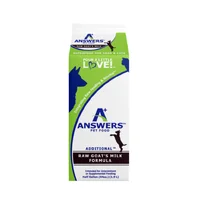
And how do you give that? How much? Just pour it in her food?I also started her on Answer’s raw goats milk- which I think made a hell of a difference
Do you get that locally? I see it's frozen. One of the places to get it needs $200 for free shipping. I think it comes from Colorado. I don't know how that would stay frozen. And do you give that on a regular basis or just when she's having a BM problem?
I always saturate the kibble good with water and then pour the Answers on top of the kibble like icing on a cake. The internet says start with a table spoon and then one can gradually move up to 8oz per day for 61lbs and up.And how do you give that? How much? Just pour it in her food?
Do you get that locally? I see it's frozen. One of the places to get it needs $200 for free shipping. I think it comes from Colorado. I don't know how that would stay frozen. And do you give that on a regular basis or just when she's having a BM problem?
I looked up “Answers raw goats milk near me” and it gave me a bunch of locations locally. I called each one until I found a store that had it.
“Whether you give raw goat milk on a regular basis or just for GI issues depends on your Doberman's individual gut sensitivity. It makes a great daily supplement for proactive gut health, but is especially famous for soothing acute GI upset.”
^^^^^That makes sense to me.
I used it until her stomach- (gastroenteritis) abated and then when we ran out.
Storage & Safety
- Thawing: Always thaw the milk in the refrigerator.
- Shelf Life: Once fully thawed, it stays fresh in the fridge for about 14 to 30 days, depending on the specific label.
- Shake Well: Always shake well before serving, as the nutrient-dense components can settle to the bottom
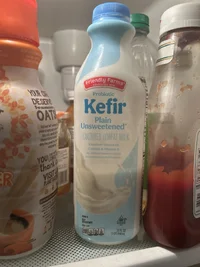
My daughter’s boyfriend gives his dog Friendly Farms Kefir. Now this is unpasteurized cows milk instead of goats milk but he says it helps with her sensitive stomach issues. Especially when his tends to eat a lot of acorns.
Nutritional Profile
- Probiotics: Contains 12+ live and active cultures to support gut health and digestion.
- Dairy Base: Made with pasteurized low-fat and nonfat cow's milk.
- Vitamins: Fortified with Vitamin A and Vitamin D3
Some things that are coming to my attention since I looked this up again…the Voyager Pollock has a 14% crude fat and since Freyja has developed a small lipoma, I was wondering if maybe that was contributing to the lipoma.
Further research tells me that the Pollock is indeed better. While chicken recipes relies on poultry fat and nutrient-dense organ meats, the pollock recipe utilizes wild-caught fish oils. The fish source provides a very high volume of anti-inflammatory Omega-3 fatty acids, which are exceptional for a Doberman's skin, coat, and joint health. If anything the increase of Omega 3 fatty acids help deter lipomas.
Since looking all this up again, I may start her back on a daily supplement of one of the two. Kefir seems to be easier to find in the stores but again, that is cows milk not goats milk and I believe goats milk is the better.
Thank you for that! Very good information and interesting. I wonder if I can find this at my Doggy Boutique that I frequent. They have a lot of Frozen stuff that I barely look at. Bet they have something like that. They have so many good holistic type of items.
Similar threads

- Replies
- 48
- Views
- 1K


- Replies
- 31
- Views
- 1K


- Replies
- 45
- Views
- 2K