• Disclaimer: Hello Guest, Doberman Chat Forums presents the opinions and material on these pages as a service to its membership and to the general public but does not endorse those materials, nor does it guarantee the accuracy of any opinions or information contained therein. The opinions expressed in the materials are strictly the opinion of the writer and do not represent the opinion of, nor are they endorsed by, Doberman Chat Forums. Health and medical articles are intended as an aid to those seeking health information and are not intended to replace the informed opinion of a qualified Veterinarian.”

The Downside of Linebreeding: It’s Time For a New Approach

Denissov43

Notable member
"Inbreeding/Linebreeding was once a valuable tool in shaping today’s breeds. As these have now reached a high degree of homogeneity, it has lost its importance and turned into a fatal and disastrous habit."​
Hellmuth Wachtel, PhD​

Inbreeding (which, for the purposes of this article, includes "linebreeding") has been the rule in dog breeding for the better part of two centuries. Before that, breeders bred "like-to-like." Records may or may not have been kept, depending on the literacy, social status or interest of the breeder. Pedigrees were of marginal interest, if they were considered at all. Registries, as we know them now, did not exist. New individuals might be introduced to the breeding pool at any time, so long as they displayed characteristics that the breeder wanted to perpetuate. Even an unplanned mating with a dog that would never have been deliberately selected might be shrugged off so long as some of the offspring proved useful.
In the nineteenth century, prominent European breeders of various domestic species, including dogs, became interested in maintaining the "purity" of their bloodlines. They had no knowledge of genetics, indeed the science had yet to be born.
Their breeding theories were a reflection of social attitudes of the times. It should also be kept in mind that these individuals were mostly wealthy men whose human pedigrees were considered better than those of "common" people. As pedigrees became more important, so did the regular appearance of significant names in those pedigrees. Eventually registries were established to keep official records. At some point, virtually all dog registries became closed. Most of this occurred before breeders had even a rudimentary knowledge of genetic science.
At first, inbreeding proved beneficial.
Breeders learned that by mating related individuals of the desired type, the resulting quality and uniformity of the offspring improved As people began to learn basic genetics in the early part of this century, they deliberately sought to fix desired traits, particularly in production livestock, by breeding near relatives. This practice continues to the present day. A sire will be "progeny-tested" by being bred to a group of his daughters. If the offspring measure up, he will be kept for stud. If they don’t, everybody goes to market. This drastic culling serves its purpose in livestock, but it is impractical and unacceptable in companion animals such as dogs.
Nature goes to great lengths to discourage inbreeding. Related animals rarely mate, which prevents genes for diseases and defects from coming together with any great frequency. Wild animals have a variety of behaviors which will eliminate or severely restrict inbreeding. In wolves, the species most closely related to dogs, only the alpha pair will breed. Pups stay with the pack for their first year. After that time they must find a place, often low-ranking, within the adult hierarchy. If a yearling cannot accept this or it becomes the brunt of too much negative social interaction, it will disperse. Dispersers may have to travel many miles before they can find an available territory and a mate, if they can find them at all. Those individuals which do not disperse will not be breeders unless they should someday attain alpha status, so the breeding of relatives is unlikely.
Sometimes circumstances give animals no choice but to mate with relatives. If those conditions persist for any length of time they create a "genetic bottleneck." The wolves of Isle Royale in Lake Michigan descend from a very small number of animals which crossed from the mainland decades ago during a hard winter when the lake froze over. Their present-day descendants have proved more than usually vulnerable to an assortment of diseases and parasites. When canine parvovirus reached Isle Royale, the wolf population plummeted so badly that some observers at the time feared the wolves would die out entirely.
In recent years, purebred dogs have experienced increasing problems with hereditary diseases and defects. The causes are complex, including genetic load, the presence of lethal equivalents in all individuals, genetic bottlenecks, closed gene pools, gene pool fragmentation, and genetic drift, but all are attributable to inbreeding.
Thanks to closed registries, breeds form exclusive gene pools. All gene pools, no matter how large or diverse, will have a genetic load — the difference between the fittest possible genotype and the average fitness of the population. "Fitness" is the individual’s over-all health, vigor and ability. It may or may not directly relate to traits breeders select for. (The English Bulldog, for instance, has an "ideal" physical form which virtually precludes females from being able to naturally whelp their young.) The greater the genetic load, the more genetic difficulties members of a breed are likely to suffer. In a closed gene pool, the situation may remain stable or deteriorate. It cannot get better.
Each individual within a breed also carries it’s own kind of load — four or five genes for potentially fatal diseases or defects. These are called "lethal equivalents." In most cases they will not affect the individual carrying them because a single allele, or form of the gene, will be insufficient to cause the problem. But when relatives are mated, the odds of matching up those alleles increases and as does the frequency the disease.
Every population must deal with genetic load and lethal equivalents, but when the population is prevented having genetic exchange with other similar populations, genetic diversity within the population begins to diminish. Some of this may be beyond anyone’s control. A breed’s function may have become obsolete, resulting in only a few surviving members. This was the case with the Portuguese Water Dog. All present-day PWDs descend from a handful of dogs. Social, political or environmental difficulties may also preclude breeding, causing populations to crash. Many breeds experienced a genetic bottleneck at the time of World War II. With much of the world at war, dog breeding was not a high priority and populations in areas of military action were often wiped out or severely depleted. In such a situation, breeders can only make do with what remains. It’s a tough row to hoe for the truly rare breeds, especially since the prevailing attitude that breeds must be kept "pure" prevents supplementing with fresh genetic material from similar, less impacted, populations.
Breed gene pools can fragmented into so many gene puddles when they are arbitrarily split along size, color or coat-type lines, with dogs of one color or variety prohibited from mating with those of another. No matter how diverse a breed may have been before such distinctions were made, afterwards breeders have fewer options when choosing mates and the eventual result will be increased inbreeding because there isn’t anywhere else to go.
One striking example of this is the Belgian Sheepdog in the United States. Outside the US this breed contains four varieties, all of which might occur in a single litter. The American Kennel Club lists three of varieties as entirely separate breeds. The fourth isn’t even recognized. In the US they cannot be interbred though throughout the rest of the world, they can.
Changes in social conditions may also fragment breed gene pools. The Australian Shepherd was originally a working ranch and farm dog. Today there are far more Aussies than there are "jobs" on farms and ranches; so most are companion animals. Over the past three decades, the breed has clearly split between working and conformation strains with a third, smaller, category of "versatility" animals whose breeders work toward a multi-purpose animal .There is also a population of "mini" Aussies—dogs whose size is below the breed norm. They are often registered as Australian Shepherds along with listing in a registry for minis. There is very little breeding between these various sub-groups though all trace back to more-or-less overlapping sets of founder animals.
One of the results of gene pool fragmentation is loss of alleles that may exist in the breed but didn’t happen to occur in the founders for that variety. Genetic drift can cause further loss. Genes not being specifically selected for tend to "drift" out of the gene pool. Many of these will be for things so subtle they might never come to a breeder’s direct attention. A dog has some 100,000 genes, only a relative few of which are for things we can readily observe or measure. Many of these genes cause minor variations in form or bodily function. Cumulative losses of such genes through genetic drift can reduce overall health and fitness without presenting consistent or identifiable signs; a dog may seem to be a poor keeper, unusually subject to minor ailments, or lacking in endurance. Even "typical" breed behaviors, such as herding ability, can be diminished in this manner, if breeders are not using the behavior as part of their selection criteria.
The use of popular sires, particularly multiple generations of them, can accelerate loss of alleles. A dog can only have a maximum of two alleles for any given gene. Excessive use of a single individual will skew the gene pool toward the alleles that dog happened to carry. Obviously, such a dog gets heavy use because he has desirable traits. Genes for those traits will become more common, but so will those for his lethal equivalents and more subtle ills. And if a deleterious gene is "linked" (sits close on the chromosome) to a desired gene the sire carries, the breed may suddenly find itself riddled with the problem that bad gene causes. It won’t be easy to eliminate unless breeders are also willing to give up the linked desired trait.
Proponents of inbreeding often point out that mongrels have more genetic problems than purebreds. While it is true that mongrels, as a group, have more individual kinds of diseases and defects than any single pure breed, it must be remembered that each breed represents only a portion of the canine gene pool, whereas mongrels encompass all of it. If mongrels’ defects are compared to those found among all pure breeds, the discrepancy disappears. Since mongrels usually are the result of random, unplanned breeding, the incidence of defects is low in the overall population. In pure breeds many of those same defects are common. For instance, progressive retinal atrophy and collie eye anomaly are rare in mongrels. Incidence of both is high in Collies.
It is becoming more and more apparent that the short-term gains of inbreeding are outweighed by its long-term costs.
Present-day breeders need to re-think their strategy.
Assortative mating—the mating of phenotypically similar but unrelated or less-related individuals—will allow breeders to reach their breeding goals while reducing the loss of alleles in the over-all population.
To accomplish this it is vital that each breeder has a thorough knowledge of breed pedigrees. The typical three to five generation pedigree may indicate few, if any, common ancestors. But what happens if the pedigree is extended many more generations?
If two dogs share no ancestors in three or four generations, but share many in the 6th, 9th, 10th and so on, breeding them would be inbreeding.
All members of a single breed are, of course, related to some degree, though how much varies from breed to breed. Somewhere back in each breed’s history there is a group of founders from whom all present-day dogs descend. Portuguese Water Dogs have very few, Australian Shepherds have quite a number, though not every Aussie goes back to all of them. It is important to know who the founder individuals were, particularly if the breed is rare, split into varieties or experienced a significant bottleneck at some point in its history. A large number of founders allows for greater diversity (assuming those founders were, themselves, unrelated), but if some are heavily represented in comparison to others due to inbreeding on their descendents, diversity is at risk.
Breeders should strive to increase the representation of the neglected founders whenever possible.
Calculation of inbreeding coefficients will give an indication of how inbred a dog or a prospective cross is. Knowing these numbers enables the breeder to make choices that will reduce inbreeding. Good books on animal breeding will have a section explaining how this is done, but calculating them by hand becomes cumbersome when working with a full pedigree.
There are pedigree programs on the market which will perform these calculations.
Perhaps the most important issue is making health a top priority. It is obvious even to those who promote inbreeding that screening for genetic diseases and not breeding affected individuals is important. As tests become available which will detect carriers of genetic problems, they should be put to use.
However, carrier status should not automatically preclude breeding of otherwise good individuals. Care should be taken that they aren’t bred to other carriers and those who buy puppies from a carrier parent should be advised to screen the pup if they want to breed it. But eliminating proven carriers as breeding stock is throwing our their many good genes while avoiding one bad one.
Australian Shepherd breeders are doing this with Pelger-Huet Anomaly. PHA is lethal to offspring that inherit two copies of the gene, resulting in reduced litter size and neonatal deaths. Carriers rarely suffer any effects. Knowledgeable breeders use a blood test to screen and carriers are bred to non-carriers.
Less specific aspects of health must also be considered. A dog that is a "hard keeper, or repeatedly comes down with one minor ill or another should not be a breeding prospect. These individuals likely carry a surplus of genes which individually have only a small negative effect on health but cumulatively have produced an unthrifty individual.
A common result of inbreeding is "inbreeding depression," typified by small litter size or difficulty producing or rearing young. Bitches from families that consistently produce small litters may be suffering inbreeding depression. Animals which can only be bred or raise their puppies if they receive extraordinary human assistance are poor breeding candidates. This is not to say that people shouldn’t properly house and care for their animals, but if a dog is indifferent to bitches in standing heat or a bitch needs to be physically restrained to keep her from resorting to fight or flight in an attempt to prevent mating, or won’t settle without veterinary intervention, or is apt to kill or damage her puppies through intent or neglect, these are signs of inbreeding depression and that animal shouldn’t be bred. Breeders should not go to excessive, near surgical, lengths to control the environment for newborns, nor should they use heroic measures to keep failing whelps alive. (For those who find this too callous: Save them if you will, but don’t breed them.)
Inbreeding gave us the many breeds of dog we enjoy today, but its time is past.
If purebred dogs are to remain viable into the next century breeders need to rethink their strategy and work toward their goals with more emphasis on over-all health and concerted efforts to reduce the level of inbreeding in their dogs.

divider.jpg

C.A. Sharp is editor of the "Double Helix Network News". This article appeared in Vol. VII, No. 1 (Winter 1999). It may be reprinted providing it is not altered and appropriate credit is given.
Feb. 26, 1999
 
Denissov - I see you have started a new thread for us all to follow yet you fail to return to the thread you started on what it is to be an excellent breeder and answer questions that were ask. I think when you post info you should be willing to answer questions so we can all learn.

I will share a quote from the Great Tess Hensler - (quote)Remember; it is better to marry the worst member of a good family than the best member of a bad family.(quote) Pedigree is important in the animal kingdom..

Their breeding theories were a reflection of social attitudes of the times. It should also be kept in mind that these individuals were mostly wealthy men whose human pedigrees were considered better than those of "common" people. As pedigrees became more important, so did the regular appearance of significant names in those pedigrees. Eventually registries were established to keep official records. At some point, virtually all dog registries became closed. Most of this occurred before breeders had even a rudimentary knowledge of genetic science.

I am not sure Herr Dobermann was rich - beings he had 3 or 4 jobs - Tax collector, dog pound and landlord at least part of his job was collecting rents for someone - that tends to make me think he was a workng man. The rich tend to sit in their castles and look down on everyone else and usually had someone who worked for them who actually did the work and study.

How would anyone have a rudimentary knowledge of genetic science when it has not been discovered yet??? What they had was specific traits and looks that they were seeking and without all this knowledge they quickly accomplished it. While they may not have known the far reaching results they accomplished quickly the traits they desired. This in and of itself was brilliant. They learned it by careful study of the resulting progeny and IMHO they were amazingt in what they accomplished without all this science. In fact they GAVE science the road to follow with the proof of results the careful following of lines - In other words they pointed the path for science to follow. We must work hand in hand and breeders are making adjustments as then learn more and they are taking the necessary steps to proceed with caution so as not to destroy all that they have built up to this point.

As I see it science job is to help find the answers that arise as we progress down the road. Or give us a better way through DNA to safely eliminate the undesirables while maintaining the original purpose or dog breed. Breeders job is to keep a gene pool to draw from while protecting the standard.

Pedigrees were and are important because the people developing them had specific traits that they were looking for and because science or genetics was not developed to the point it is today they had to study and follow the results of what they were producing. I agree that there are too many today breeding with out the understanding of this knowledge base to follow. They get two dogs and they are going to breed them with little thought or understanding of where they want to go beyond just breeding.

I agree science is new, but that does not equate to better necessarily. Science has been wrong a time or two and that is the problem with the johnny come latelies in the dog world. They seems to think they know better and that they don't need to study the history with understanding to know where we came from and where they should then try to go with these new found revelations. For sound breeding tactics we have to find the correct way to apply science along with the solid breeding practices of old. Genetics is all too new to throw out everthing.

For the most part inbreeding has faded into the background as the breed became more fluent, but I will say this - you can't compare what happens in nature to what happens in the world of purebred dogs because purebred dogs is a manipulation of man so by the very nature to start a new species you must inbreed in the beginning and bring in enough outside dogs in the original creation to hopefully develop a strong gene pool as you narrow the gap. Once you have dogs breeding true with the results you were looking for you close the gene pool.

Each individual within a breed also carries it’s own kind of load — four or five genes for potentially fatal diseases or defects. These are called "lethal equivalents." In most cases they will not affect the individual carrying them because a single allele, or form of the gene, will be insufficient to cause the problem. But when relatives are mated, the odds of matching up those alleles increases and as does the frequency the disease.
Every population must deal with genetic load and lethal equivalents, but when the population is prevented having genetic exchange with other similar populations, genetic diversity within the population begins to diminish. Some of this may be beyond anyone’s control.

To reiterate - "some of this may be beyond anyone's control - especailly if we want to maintain purebred dogs.

I would like to know if you applied this to your mastiff and neopolitian breeding program what results did you see as you continue down the the road??? Since it takes at least 10 years to even begin to starat seeing the results of your breeding what were you seeing that you did not like since you changed breeds and abandoned that program which you said was successful??? Please share this knowledge with us as it could help us all if there is soemthing to be learned from it.

I know you put me on ignore because you don't want to answer the questons I ask but how can you communicate if you are afraid of what someone asks and how can we all learn if we can't discuss?? I don't expect everyone to agree with me but I think we all can learn from the debates that ensue. If you run away from the debate we all can't learn.
 
However, the largest concern we are apt to have to face comes from the health research that all of us feel is so important. If we knit into our code of ethics acceptance of DNA tests as final, we may well destroy the breed in five to ten years.

We are dealing with a breed that came from mongrels…street dogs… and we must assume that any genetic disorder in the mongrels of central Europe in the 1890’s is in the DNA of our Doberman Pinschers. Any may emerge in tests if the assumption of the immutability of DNA stands up under more scrutiny.

The righteous zeal that sets the procedure in meat and food animals of eliminating the infected stock will be the knee-jerk reaction as it has to the Von Willebrand’s test results. Dogs with poor reports will not be acceptable to use to produce pups…even though they may be more brilliant, possess better temperaments, and be more beautiful than any around them. And Von Willebrand’s as far as Doberman Pinschers are concerned, has proved to be a disease rarely if ever has significance to living or longevity. When we get the prophesied tests for cardio, what will we do? I think of the dog I had that died a sudden death at 6 years. Had I known I would have him only for six years when I picked him, I would have still chosen him. The brilliance of mind, devotion, and beauty of body stand out. I would want the time with him; though wishing still it could have been twice as long. ..…

This is a quote from Frank Grover on the ADPEF.org web site on breeding. I thought it could open up some interesting discussion for those who wish to participate. Science has never created anything unless it was in a test tube. I don't want to live in a test tube.

http://americandobermanpinschereducationalfoundation.org/breed_today/franks_breeding_and_rescue
 
Hmmm... still waiting for a response. Darn, two sided debates offer so much more to learn from. I am not really interested in breeding but I do like to learn how people put their programs together.
 
I think it is important to understand first that inbreeding and line breeding are two totally different strategies and can't be lumped into the same sentence.

Inbreeding is the mating of two very close relatives - ex. Father to daughter, mother to son, half brother to half sister. This is used when a new breed is being formed inorder to intensify the specific traits one is wanting to "set" in the lines. With that also comes some hidden faults that can be intensified. Once a line is set pretty much what is the the genetic mix is there to stay. That is why in the beginning you hope that there is a wide variety of dogs used to bring about the product you are looking for and that it reduced the negative as much as possible.

LineBreeding is a tried and proven strategy breeders have used with success for many years. It is the mating of more distant relatives ex: Grandsire to granddaughter, Uncle to niece and its goal is to produce more consistent litters. Back in those days dogs were very prepotent meaning the genes were so strong you could predict what they would be like as adults - Each line back then had very distinct charastertics and breeders bred to what they liked. Often you will hear a judge say a dogs is "very typy" and this is mostly due to line breeding.

If you look at the history of the Doberman's that were imported to America, breeders took these dogs and developed several specific "types" from the mix depending one which dogs they crossed. Back in the early 50's, 60's and even into the 70's we saw dogs that were very distinct in type and by looking at the dogs you could tell which kennel they came from because of the line breeding. This is what we call prepotent.

Linebreeding certainly has its place in the purebred dog world and breeders should know the lines and breed accordingly to produce the best dog possilbe while sidestepping the landmines. We must understand that by the very nature of the purebred dogs there is a certain genetic load that can't be avoided because in the end they all came from the same beginnings.

Each breeder has to determine for themselves how much they want to linebreed and how tightly. In all things consdered every breeder I have every talked with agrees you have to go outside to bring in new blood to keep the line strong and healthy without loosing what you have worked so hard to maintain. This is not new to breeders who have been breeding for a while and understand the whole picture.

The problem is today we have way too many johnny come latelys who have no real knowledge of what breeding is really all about or how it plays out and that to me would include the author of the above article. Scientist are not breeders and neither sicene or genetics in breeding always work out in a nice neat little package that would allow us to label linebreeding as a bad thing especailly if they lump linebreeding and inbreeding in the same catagory.
 
One of the most hotly talked about topics with regard to pure-bred dogs is the use of in-breeding. This is a term that is often misused and is extremely misunderstood.
Part of the misunderstandings come from differences in the way the terms are used within the scientific/medical field, and how it is commonly used by breeders. These are the most commonly accepted definitions used by serious dog breeders and will be the definitions used within this article.
In-breeding - This is the breeding of closely related animals. Brother-Sister, Parent-Offspring, ½ brother - ½ Sister.
Line-breeding - This is the breeding of animals that share common ancestors but are not closely related. For example the dogs may share a common great-grandparent.
Out-cross - This is generally considered the breeding of animals with no common ancestors within the first 4 or 5 generations.

Common Misconceptions
In-breeding causes genetic diseases - Breeding closely related animals increases the possibility that any bad genes in a line will show up. It does not 'cause' genetic disease.
Out-crossed dogs are healthier - This is only partly true. There is a known phenomenon called Hybrid Vigor. Two animals of unrelated strains breed and the offspring is often bigger and grows faster than it's purebred cousins. This method is often used by farmers in order to get their animals to market sooner. But one of the biggest misconceptions of hybrid vigor is that it applies to all animals of mixed heritage. Hybrid Vigor only applies to the animals that are the direct offspring of the crossing of the unrelated strains. In other words if you continue to breed animals of different strains there generally will not be any additional increase in hybrid vigor. If the unrelated strains share common genes for genetic disorders, hybrid vigor will not over ride the risk of the disorder showing up. Out-crossing can also cause problems if widely divergent physical types are mixed due to differences in growth rates and bone and muscle sizes.

Benefits Of Each Type Of Breeding
By definition, purebred dogs have a smaller gene pool to draw on than mixed breed dogs. That smaller gene pool gives the breed its individual characteristics, such as physical appearance and temperament. It is what makes a poodle a Poodle and a Golden Retriever a Golden Retriever. But there is considerable controversy with regard to whether the gene pools of the modern pure-bred have become too small.
Inbreeding -
In-breeding is more likely to help "set" or "fix" a particular trait within a breed or a line by narrowing the gene pool to favor those traits. So if a breeder is looking to set a particular desirable feature of their line then in-breeding and choosing the offspring most strongly possessing that trait can be beneficial.
Here are samples of an in-bred pedigrees -
Parent/Offspring Brother/Sister
inbreeddi1.gif
inbreeddi2.gif

In the first pedigree Sydney is the maternal son of Annie, thus doubling on Annie's genes. Or another way to look at it is Annie is both Sydney's mother and Grand-mother. In the second example we have a full brother/sister in-breeding so we are doubling up on the genes from both Kiley and Annie.
In-breeding can also help identify those bad genes that exist within a line. Dogs possessing the bad genes can be eliminated from a breeding program and carriers also identified.
Intermittent in-breeding within a line or breed is not damaging to the long term health of the animals. However, in-breeding over successive generations can lead to reduced fitness and fertility problems among the offspring, resulting in a phenomena known as In-breeding Depression. It can take many generations to show up depending on the traits involved.
To use this method responsibly a breeder would not want to in-breed on animals with known genetic disorders, temperaments not in keeping with it's given breed, or known serious structural faults, or to in-breed frequently even on healthy-superior specimens.

Line-Breeding -
Line-breeding is another way to help "set" or "fix" desirable traits. With line-breeding you breed animals that are related, but you are also routinely introducing genes from other lines into the genetic mix. It takes longer to fix the desirable traits this way, but doing so lowers the risk of those problems associated with repeated in-breeding. With a tight line-breeding you might find the same 3, 4 or more dogs showing up numerous times in a 5 generation pedigree.
Here's an example of a tightly line-bred pedigree (I've identified those dogs whose names show up more than once by color)
inbreeddi3.gif

Loose line-breeding over successive generations will result in more variations of physical appearance than would in-breeding or tight line-breeding, but will keep the physical look and structure within the same general size and shape, it also carries fewer long term risks.
And a sample of loose line-breeding (as with the above pedigree I'll identify dogs whose names repeat by color):
inbreeddi4.gif

According to geneticists. Line-breeding can be carried on for many many generations without deleterious effects on the line or breed as long as the individuals involved have few hidden genetic disorders.

Out-Crossing -
Out-crossing in terms of pure-bred dogs is the breeding of unrelated dogs. On a pedigree no names will be repeated within the first 5 generations.
This type of breeding has both advantages and disadvantages. Which as it turns out are flip sides of the same argument. With out-crossing you are maintaining the greatest genetic diversity, but this also leads to the least consistency in terms of physical appearance and other traits.
Out-crossing does not guarantee that the animals won't develop genetic disorders, but it does tend to reduce the numbers of affected offspring. Your best chance of getting an animal that is less prone to developing a genetic disorder comes more from finding a conscientious breeder that screens their animals for hereditary disorders and breeds for the betterment of the breed.

All three methods of breeding have their place in a long term, well thought out breeding program. Talk to the breeder, ask questions as to what their goal is in doing a particular breeding. Ask about the risks and what problems are known to that line. And all lines have some because the perfect dog and the perfect lines are still goals of the future for all breeders.
--------------------------
Source
 
Hybrid Vigor only applies to the animals that are the direct offspring of the crossing of the unrelated strains. In other words if you continue to breed animals of different strains there generally will not be any additional increase in hybrid vigor. If the unrelated strains share common genes for genetic disorders, hybrid vigor will not over ride the risk of the disorder showing up. Out-crossing can also cause problems if widely divergent physical types are mixed due to differences in growth rates and bone and muscle sizes.

Excellent post Von and I was watching Animal planet the other day and it was taking about the crossing of a Lion with a female tiger and Hybrid Vigor - The offspring were twice as big as the parents but the males were sterile which often happens in crossing different animals in a controlled setting - it does not happen naturally in nature.

Then later they talked about the increased problems with joint problems etc. so as you said it does not continue to pass.

All three methods of breeding have their place in a long term, well thought out breeding program. Talk to the breeder, ask questions as to what their goal is in doing a particular breeding. Ask about the risks and what problems are known to that line. And all lines have some because the perfect dog and the perfect lines are still goals of the future for all breeders.

Well said Von and I agree. Just like the SA fad took over here I fear that now we are seeing the large oversized having strong influence in Europe to the detriment of the breed. The standard was raised once. Herr Dobermann actually produced a smaller dog more the size of a boxer - Wonder why he was not worried about massive size to get the job done. Bigger is not always better.
 
Great article Von, who is the author, it looks familiar... I think I have read it somewhere else? Good information all in these two articles! :glasses:
 
Are you just throwing this info out there or are you considering breeding?
Have you read the questions in the excelent breeder thread? Are you going to follow that program?

Paint; sorry did not even see a response to this post till now... weird!
Nope I have not familiarized myself with that thread, but will take a look at it and check it out!
thanx for the heads up!
 
<quote>
http://www.doberman-chat.com/community/index.php?threads/dog-breeder-excellence-should-be-the-standard-for-any-breeder.12655/
what does trialing, showing and titling have to do with sound breeding practices utilizing genetic research into pedigree's before breeding?
Where do you equate health to a titled dog?
A title means nothing... nothing... not in the scheme of what is a sound and healthy dog... they are great to achieve, we all want to achieve them, but that is not the standard by which one should determine if a dog SHOULD be bred or not...

The breeding practices that are mentioned here are: waiting for some life and health maturity of an age of 5-6 years before choosing to breed and breeding once OR maybe twice in the lifetime, first breeding being at 5-6 years of age.... He did not say that he waits 6 years between EACH breeding, the reference to me was 6 years for FIRST breeding, subsequent breeding if one did take place would have probably been the following year or a back to back breeding which would enable the dog to be retired at 7... we know that a dog can be successfully and healthily bred back to back when they are mature so that they can be retired early.. but he only said he breeds them once maybe twice... I felt this was wisdom..

Most breeders today choose the sire they want to use based on how beautiful he is and usually pick the most titled, decorated dog irrespective of the dogs health and or health testing as would be evidenced by Fedor's Del Nasi who was bred over 400 times in 7 years...
even though his progeny have died as puppies and before 3 years of age and he was not tested for DCM, NO holter or Echo's or EKG's and NO VWD testing.. he was only tested for PHLTV and HD... nothing else...an example of how NOT to breed a dog... </quote>

Denissov43 - the thread she is referring to that you are not familiar with is one you started. I pasted the link for you to go back and review in case you forgot. I have quoted some of your stuff from that article.

You quickly turned it to titling a dog instead of about what we were trying to discuss. For those who know me know I talk about a 4 legged stool - conformation, temperament, working ability and health - for a breeding program to be solid it must consider ALL aspects of the dog not just one facet. It is easy for those who are new to showing and breeding not to understand all that they think they hear, see and read about. It then confuses them and they are off and running half cocked.

FYI information Titling is important as it demonstrates several things about the dog - conformation, temperament, working ability and gosh a dog needs to be healthy to hold up to some of the rigors of road travel and constant showing which many of the top dogs do. You obviously have missed the point completely of a title. Not unusual as many don't understand it, but when someone is not actually involved in it then it is even harder for them to see and understand the importance and role it plays in evaluating a dog.

Didn't you choose Trotyl as a possibe stud dog??? You would not even know about him if he were not titled and out and about. Then you slam line breeding but isn't some of Trotyl's stuff back in Gemma Rose stuff??? I think that is what you said at one time.

We ask these questions because you bring them up then disappear and don't come back and respond.

So let's talk about Fedor - lived to 9 - The debate on cardio issues are still out and we still dont' have any concrete answers - We can health test up the ying yang but until it rears its ugly head we proceed in the blind. I am sure now that Fedor made it to 9 + years several are pretty glad to have him in their pedigree. Do you understand that with the genetic gene pool we have the more puppies produced you will have a higher # that develop problems. Anyone can breed one or two litter and not have any issues but eventually something will pop up. He obviously missed all the "bad" genes or combination of genes and has left a stamp on the future of all Dobermans for sure.

In discussing health at UDC Natls it was brought up that some dogs live long lives out of dogs who died early and vice versa - WHY??? We don't know, but it seems there is a lethal combination that when they meet it is disaster but then they are also missed sometimes. With a very small gene pool in Dobermans how do you think breeders should proceed until we have better testing as I do not see the stragety above solving the problem - only making it worse as it depletes the gene pool even further.??

Are you saying that waitng to 6 to breed the first time is really the way to go???? At that point you will have a very small litter if one at all and so even if they live to 15 there aren't enough living to make much of an influence on the gene pool. How would you solve that problem???

If the test tell us very little then how do we second guess??? Why do some dogs die early and some don't. And there are certainly enough rumors flying around about the Lex Luthor line to sink a battle ship so what info do you have on that pedigree to feel it is superior to another pedigree????

Very interesting discussion and I hope you come answer some of these questions to help us better understand exactly where you stand.
 
Most breeders today choose the sire they want to use based on how beautiful he is and usually pick the most titled, decorated dog irrespective of the dogs health and or health testing as would be evidenced by Fedor's Del Nasi who was bred over 400 times in 7 years...
even though his progeny have died as puppies and before 3 years of age and he was not tested for DCM, NO holter or Echo's or EKG's and NO VWD testing.. he was only tested for PHLTV and HD.

Read more: [URL='http://www.doberman-chat.com/community/index.php?threads/the-downside-of-linebreeding-it%E2%80%99s-time-for-a-new-approach.12719/#ixzz1weYn8ie1'][URL='http://www.doberman-chat.com/community/index.php?threads/the-downside-of-linebreeding-it%E2%80%99s-time-for-a-new-approach.12719/#ixzz1weYn8ie1[/QUOTE']http://www.doberman-chat.com/community/index.php?threads/the-downside-of-linebreeding-it%E2%80%99s-time-for-a-new-approach.12719/#ixzz1weYn8ie1[/URL][/QUOTE[/URL]]

Is this why you chose Trytyl to try a breeding - he is the most influential dog in NA this past decade??? He is beautiful and he is in just about every pedigree out there now. How do you see that decision fitting in with your philosophy and I also thnk you said it was a line breeding going to to some of GR stuff???

Compared to the # of dogs that lived do we know the percentages that died - 10% - 40% 60% and then it would be helpful to see how those percentages play out in other breeding lines. Just a thought. If a dog is bred over 400 times (and this might be exaggerated as I heard 200 so I would guess the truth lies somewhere inbetween - That could possible be 3 to 4,000 puppies do you think a certain percentage will die regardless of all the heath testing in the world???
 
I've had a read through this, and to give my opinion (former biology student here), I can agree partly with Denissov43, in that if linebreeding continues too long, it turns into inbreeding.

I've been researching the pedigrees of several kennels in Europe, and it is unbelievable how inbred the dogs are. It doesn't seem to be as much as an issue from pedigrees I've seen in the US or in Australia, as it is in Europe. Popular sire syndrome is a bit of an understatement. I know of the case of the seven sires back in the 50s in the US, but that was 60 years ago. This level of inbreeding continues in many European pedigrees today, and it is almost impossible to find a pedigree that does not have Fedor del Nasi, Prinz vom Norden Stamm, Tequila Mali del Citone, or Graaf Quirinus van Neederlands Stam in it. And this is not even going back 5 generations.

Keeping in mind that the DCM swab test is brand new, I still cannot fathom why breeders would knowingly breed to dogs whose parents AND grandparents dropped dead at such a young age. Assuming that DCM is caused by two genes and not just one, the heteropositives are not necessarily safe (we don't know whether the gene operates in conjunction with a second gene, for example) but the gene pool of the Doberman(n) is too small to avoid breeding with heteropositive dogs. It is another thing to not use this test at all and breed to dogs whose parents and grandparents died young. Out of the around 80+ European kennel sites that I've looked through, I've seen a grand total of 3 that used the DCM swab on their dogs. Sure, we can say that breeding negative to homopositive is an improvement on the homopositive already, but breeding heteropositive to heteropositive? Of course as we can see the strategy here is obviously not for the betterment of the litter's health, but to sell puppies - which is why they choose the most decorated dogs as sires etc. etc. such as the example given above by Dobs4ever with Fedor del Nasi. The only thing that's going to happen if this continues at such a high rate, is an increase of the overall health problems of the breed and not just DCM.

I've seen the longevity program on the DPCA website, but how many breeders actually take advantage of it and use the frozen semen? I think it's a great step forward in improving the health of our breed, but if other canine bodies don't step in and lend a hand progress is going to be extremely slow, if there is any at all. Of the entire Doberman(n) population, don't tell me there are only 23 sires who qualify for this program?

By the way, for those interested, here's a link to the 300 most popular sires used in Germany up until 2004, just to give you an idea of how vast the reach of popular sire syndrome can be:
http://www.dobermann-review.com/feature/300males/300 Males.pdf
(the number of litters and the sire's COI is on the top right corner)
 
Ataro - No one has said ONLY do line breedings - But you can't say throw it out completely as all bad or all inbreeding. They are two different approaches with different outcomes. I will tell you that is has its place just like anything else. ALL breeders know you have to go out for a generation or two and then you have to come back in . This is experience not the internet hype -

Consider this as I have been really rolling it around in my head and think of the inconsistencies -

When you breed out you get puppies that end up all over the place - and if you let it go then bloodlines deteriorate very quickly in one or two generations - Look at the BYB dogs - What happened??? Why did it happen. So that is why you will see 3 or 4 of the same dogs back in the 3rd through 5th generations of a pedigree then they went out.

First breed to the best dog - that would be the most winning dog if we believe that showing is the ONLY ultimate test of worthiness. That in and of itself limites the gene pool or saturates it if you will. But if you read the internet and let it make your decisions for you and go to a dog that is not well known then you did not make a wise choice in selecting the "best dog". Breeders must make their own choices and not be influenced by the internet.

Prior to 2011 we did not have the DNA test and the verdict is still out on how it will play out. Some think it is a major player and some don't - some dogs who are positive homo have lived beyond 10 years. We have to know why before we start throwing out all.

So real breeders have an advantage as they have experience plus testing to aid them in their NEW decisions. There was an interesting discussion on one list about the percentage of PDK4 neg dogs and I will throw it out there as 53% tested were neg. One person thought that this could be because the homo and hetro dogs did not live to be born. So that is why the population is so strong in the neg dogs. We have a tool now that we did not have a year ago so to go back and bash breeders for decisions they made when they didn't have the tool at all does not make sense.

We don't know all the facts on anything so it makes it even harder to make choices. But regardless breeders have to make them. The next 10 years NOT today will tell us if those choices were right or not.

The test was developed here in the USA not in Euro so not sure at this point how readily available it is over there and could be a factor as to why they are not using it as much yet but it is coming.

Yes I too was shocked back when I first started studing euro pedigrees to learn that they did as much line breeding as we did and in some cases more. But they have huge shows over there and huge attendance so the popular dogs are seen by a lot of folks and it is human nature to get wrapped up in the winning of the winning dog and then everyone wants to breed to him. Fortunateloy some make other choices -

But since we did not have the PDK4 test back then we can't really judge how they made their decisions and without necropsy reports to verify things it is all rumor and speculation. We can't make decisions based on rumor and speculation at least not good ones. We need the answers on why some lived out of a pedigree and why some died??? Not just use tunnel vision to throw out an entire line which would destroy the gene pool. As long as we have a gene pool to work with then we can succeed.

I feel confident that now that we have the PDK4 test breeders will use it to guide their future decisions as they did with the Vwd. But you have to consider that we are only 1 year out for the discovery. It take 10 years to study, breed and develop a breeding program. If you keep changing breeds what did you learn??? Nothing because you were not in it long enough to study how your program was working or not. It is then the next 10 years that then set your path.

Breeding is like a 4 legged stool. You can't focus on only one aspect and have a successful program - conformation, temperament, trainability and health - it takes all 4 to breed correctly. Do we need to look at new things absolutely but remember those therories also have to be proven and tested by time.
 
Dobs4ever I think you've misunderstood what I meant - I was referring to European breeders, and not the ethical good breeder in general (whether they are Asian, South American etc.) if you look at many European pedigrees, there is almost ONLY linebreeding, and in some cases e.g. Gino Gomez del Citone very close inbreeding. And it's gotten to the point where it is almost impossible to truly outcross. This was their mistake and I'm not saying it applies all over the world. And I was referring to recently - not breeding in the past. I want to get Ashra tested for the PDK4 gene and so I actually looked up the DCM test, and found that it is affordable and easy. The College of Veterinary Medicine of NC State University posts testing kits worldwide, you do the swab test at home, and they email you the results for a fee of $51 (not including shipping) - there is no reason for breeders worldwide not to take advantage of it. Some are using it, but what's worse is many don't even know the test exists (that goes to show just how interested they are in the health of the breed over there)

And I think it's not just the breeders who are sucked into the popular sire syndrome, it's also partly due the fault of buyers. Everyone wanted a Fedor del Nasi puppy, lots of people want a Leo vom Märkischen Land puppy... or a Trotyl de Black Shadow puppy as I've read recently on the boards. The supplier has to feed the demand. And I'm not just referring to buyers as exclusively those who do not breed, it happens even when the breeder is the buyer.

About the dogs testing negative, it would make sense if there's a second gene involved. Then the picture would be looking more like --++ rather than just -- (of course, the ++ hasn't been marked yet). However, from looking at the pedigrees affected by DCM, I so far have never seen any DCM pop up after skipping three generations (given that heteropositives and so on have been taken into account). I'm going hypothesize here (I could be wrong) - I would say that DCM could appear with heteropositives even with just one of the 2 genes (assuming that there are two which are jointly responsible) although it looks to be less severe, i.e. the dog dies at 8 or 9, rather than at say age 4.
 
I agree we need to take advantage of the testing but I am not sure how or whose responsiblility it is to make sure the WORLD knows about it. I know working as closely as I do with DPCA and UDC I get the info delivered to my e mail. I am not sure how long it might take the rest of the world to catch up. I know ther is supposedly another protein DNA test that was discovered in Euro - I have not been able to find much on it or how to get it yet and it has been about 6 months so don't know it it was accurate info or not.

But regardless you can't destroy a gene pool to eliminate everything at once. I did think it was very interesting that someone thought that the gene itself was self limiting by some of the Postive puppies aborbing and not being delivered. If so that could explain a lot of things like about how some live and some don't and how some produce it and some don't. Science is not alwasy black or white nor is it simple and it has many twist and turns until we completely understand it.

I will say htis before all the testing breeders used what worked and line breeding is a big part of what we have today. Both good and bad. I don't think linebreeding or not is the deciding factor on if you are a good breeder or not. There are many factors that play into it. As you are discovering the more you limit things the harder it is to find what you want. I am not saying that is wrong but it does correlate to the gene pool in some ways. If we limite it too much we destory the very thing we want to preserve.

Purebred dogs by nature carry a certain genetic load that you will not evade complete simply because of the small # of dogs that were used to create it to begin with.

I do agree with you that buyers have to take some responsibility and think about this - which is what I was trying to say above but did not make it clear - Buyers want a certain list of criteria for their puppy - Breeders want a certain critiera for their puppies and sometimes they do not match so you just need to find the breeder who matches with you. It doesn't mean all the others are bad - they just have differences of opinion and until we have solid sound genetic proof we are all shooting blind and working to keep the gene pool viable til the real answer comes along.

I do want to thank you for a very useful discussion on both differences and likeness of opinions. I feel this is valuable and helps us all learn. Truth is one could be right or neither could be right and the answer might lie in some yet undiscovered curve!!! We need to work together and even what was done 10 years ago has changed drastically. 10 years ago peo0ple made decisions based on what they knew then and where science was Just look at what DNA has done to turn things upsdie down. Now we hav eto uderstand all the facets of DNA and we have but scrateched the surface. I love it.
 
I would say that the FCI should take responsibility in releasing all new information about health testing, or medical discoveries, seeing as it is the largest canine governing body in the world. But honestly, I'm from Australia and even though I'm currently living in Mexico, I've never been involved with Doberman(n)s in the US, I'm not a breeder - and yet I know about the DNA test. I would think (and hope) that breeders worldwide would take more of an interest in bettering the health of the breed and read up on related articles, not just on who is top stud of the year.

Regarding the other test, are you talking about the troponin test that came out last year in Europe? Here's more information about it with a link to requesting forms for the test:
http://www.dobermannbreedcouncil.co.uk/troponin.html
 
I inquired with My cardiologist specialist and he has no faith in the Troponin testing... he also give NO weight or value to the Muers testing (YET) as its a decade away from knowing anything conclusive, So those of us that did the test are merely offering up information for further research.
Both Cardiologists I spoke to here in Arizona, said that the ONLY conclusive testing is the yearly holter monitor and the EKG and ultra sound testing. This runs $500 per dog per year and dogs over 5 should have it done twice a year... its the ONLY thing that shows anything conclusive but only when the disease has taken hold. Medication now available can add years to the life of a dog whose condition is caught early on! One gal in Doberman Data group in Facebook attests that her dog was caught with the disease at 7 and he is now 10 and on meds and fine... he is tested yearly now...
so DCM genetic testing is still inconclusive but making head way and there are tests in Germany and in Denmark that can also be done which is also baseline info for future knowledge of the disease in OUR breed. The disease manifests itself differently in diffferent breeds. Presently the Boxer is the highest incidence of DCM in any purebred dog... Dobermans are right behind them it seems to me...
 
I was wonder the same thing, I guess great minds think alike ;)

Beautiful beau's Momma;
I have been a breeder on and off since 1982 or 83.... Dobies, later Rotties, Later Neapolitan Mastiff's and now I will be breeding my two once they are fully vested in titles that they can achieve.. then I will breed Gemma first and then Baba after he is all titled and tested.
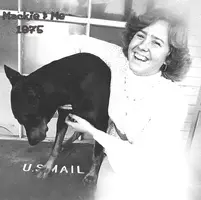
Its a labor of love of the breed for me since 1977 when I lost my beloved Mackie (Marienburg Sunhawk son) titled in AKC and obedience and died in February of 1977 of osteosarcoma... :( never forgotten though!

Mackie and Me 75 copy.webp
 

Back
Top