• Disclaimer: Hello Guest, Doberman Chat Forums presents the opinions and material on these pages as a service to its membership and to the general public but does not endorse those materials, nor does it guarantee the accuracy of any opinions or information contained therein. The opinions expressed in the materials are strictly the opinion of the writer and do not represent the opinion of, nor are they endorsed by, Doberman Chat Forums. Health and medical articles are intended as an aid to those seeking health information and are not intended to replace the informed opinion of a qualified Veterinarian.”

DCM Due to Diet - FDA UPDATE 6/27/19

We would love to feed raw, of course, but my last boy did end up with a swiss cheese intestine from a bone and that is not something I want to go through again and I don't trust a lot of the pre-made stuff. *sigh*
Having the meat and bone grinder has reduced my extreme fear of feeding bone. I won’t give a whole bone. It must be pulverized.
Giving ACV on their food or in their water helps to keep their gut ph to a 2 which is what it should be to digest their food and bones. Feeding kibble increases their gut ph, which slows digestion rate so you need to add ACV to maintain a healthy gut ph level.
 
Whole Dog Journal's
Blog August 2, 2018
Please Don’t Panic About the “Grain-Free Thing”
Posted at 02:33PM

By Nancy Kerns

I’ve been getting calls, emails, social media messages, and countless forwarded articles from other websites and publications – perhaps even from you! And the first thing I want to tell you is to take a breath!

The FDA recently issued a warning (linked here) that it is investigating a possible link between diet and dilated cardiomyopathy (DCM) in dogs.

The warning spread like wildfire through social media channels, but unfortunately, it also rapidly got dumbed down to a ridiculous level; it quickly evolved into something like “grain-free foods cause canine heart disease,” or worse yet, “boutique foods might kill your dog. The FDA characterizes the issue as a “potential association” between diets with very specific attributes (and certainly not ALL grain-free diets) and canine DCM – not a cause.

Please note that the FDA’s headline did not say anything about “grain-free diets” causing heart problems – though almost all the blog posts and articles in other publications have been saying exactly that. If you read the FDA’s statement, you will see that they said there may be a link between some grain-free diets and canine DCM, but there are also many other things going on that may be responsible for an observed rise in cases of canine DCM.
p1cjtt6i3a2b5t271kqlot41egc6.jpg


Linda Case, long-time animal nutrition expert and author of Dog Food Logic, has written an in-depth article for WDJ’s September issue that goes into lots of detail about what is known about the dietary causes of DCM, including several issues regarding taurine and the amino acids (cysteine and methionine) that dogs use to produce taurine. Please revisit wholedogjournal.com in a couple of weeks to see her article about the connections between diet and DCM in dogs. Hint: It’s not as simple as the possibility that the diets are lacking the amino acid precursors to taurine.

[Whole Dog Journal has covered taurine deficiency in the past, regarding vegetarian diets for dogs, low-fat dog foods, and canine congestive heart failure.]

But for now, hopefully to put your mind at ease, I’m going to briefly discuss some of the pertinent facts that make the story a little more complicated than the “grain-free diets cause heart disease” headlines.

What We Know About Dilated Cardiomyopathy in Dogs
The FDA received a report from Cardiac Care for Pets, a practice that employs 19 veterinary cardiologists in Maryland, Kentucky, Virginia, and Texas, that they had seen a spike in canine DCM cases – and not just in the breeds that have a genetic predisposition to developing DCM, but also in breeds that are not known for an inherited propensity for the condition. Their report also included the fact that all of the cases had something in common: all the dogs had been eating diets heavy in peas, lentils, chickpeas, and potatoes.

Other veterinary cardiologists were noticing the same thing. The FDA received reports recently of about two dozen additional cases, including three dogs that died of the condition. After reviewing the medical records of these dogs, the FDA felt it was prudent to issue a measured warning, in part to alert dog owners and veterinarians to be aware of signs of the condition in potentially affected dogs (which, it is hoped, will elicit more data). Its warning, specifically, stated that vets and dog owners should be alert for signs of DCM in dogs eating foods “containing peas, lentils, other legume seeds, or potatoes as main ingredients.”

That’s our emphasis, but it is repeated in the FDA’s warning:

“Diets in cases reported to the FDA frequently list potatoes or multiple legumes [our emphasis again] such as peas, lentils, other ‘pulses’ (seeds of legumes), and their protein, starch, and fiber derivatives early in the ingredient list, indicating that they are main ingredients.” [Again, our emphasis.]

What is a “main ingredient”? There isn’t a legal definition, but in our book, it’s anything in about the first five ingredients on the list. As you probably know, food ingredients are listed on labels (by law) in order of their weight in the formula before the food is cooked. The first four to six ingredients generally represent the majority of what is in the food.

That said, the FDA’s warning also addressed “multiple legumes.” Our readers should be alert to the fact that food manufacturers sometimes list smaller amounts of several similar ingredients, or several constituent parts or “fractions” of the same ingredient. This not only visually minimizes the seeming presence of those ingredients in the food, but also makes the total of the ingredients ahead of these fractions seem to be present in more significant amounts than they actually are.

For example, it would appear that a food that lists its ingredients as “Chicken, peas, pea protein, pea fiber…” contains more chicken than any other single ingredient. But if you added up the total amount of pea-based ingredients, they would surely outweigh the chicken. This is what the FDA is getting to with its warning about “multiple legumes” – foods in which the legumes, taken together, might outweigh the animal protein sources.

If You Feel Your Dog's Food is Connected to DCM:
Based on the FDA’s report, here are our first take-away points:

  • No matter what your dog eats, if she has any signs of DCM – including decreased energy, cough, difficulty breathing, and episodes of collapse – you should make an appointment to see your veterinarian ASAP, preferably one who can refer you to a veterinary cardiologist.
  • If you feed your dog a food that contains any potatoes, peas, lentils, or other seeds of legumes (such as chickpeas/garbanzo beans, soybeans, other types of beans, and alfalfa seeds), look at the ingredients list. If the food contains one or more of these ingredients high up on the ingredients list, has several of these ingredients, and/or is a limited-ingredient diet – typically, one containing only one animal protein source and one or two carbohydrate sources – the possibility is good that the food is one of the type that is being looked at as possibly causing a higher incidence of DCM.
  • In contrast, foods that are not limited-ingredient foods and contain just one of those ingredients, or that have one or two of these ingredients fairly low on the ingredients list (say, as the fifth or sixth or lower-level ingredient/s on the list), are not the kind of diet that has been connected with DCM.
  • If you feed your dog a diet that meets the description of the foods that have been described by the FDA as potentially problematic (foods that have potatoes, peas, lentils, or other seeds of legumes as main ingredients), consider these points:


p1cjtt6i3cb4p1g7dpi8quk4nb7.jpg

"Now what should we buy?"


- Are you feeding your dog this food because it’s the only diet you have been able to find that does not trigger other health problems in that dog? If so, continue feeding the diet, but carefully monitor your dog for any hint of signs of DCM. Also, discuss possible alternative diets and/or a blood test for taurine levels, with your veterinarian.
- Are you feeding your dog this food because you like the company, or it was recommended to you, or for no particular reason? Then consider switching to a diet that either contains fewer or none of these ingredients, and read on for more recommendations.

Not All Grain-Free Foods Are Under Suspicion
Within a matter of days of the FDA’s press release, we watched in dismay as the issue was reduced to, in the majority of cases, “grain-free diets cause heart canine heart disease. ”

Please understand that there are grain-free diets that do not contain potatoes, peas, lentils, or other seeds of legumes as main ingredients. For example, there are many raw diets, fresh-cooked/frozen diets, canned diets, and even some dry/kibble diets that are grain-free that do not contain potatoes, peas, lentils or other seeds of legumes. Not all grain-free diets have been implicated as concerning as regards canine DCM.

But, as we have been saying for some time (most recently here), grain-free diets have gotten inordinately popular for no particular reason. Many dog owners buy these products because they have heard some vague argument that “grains are bad for dogs” – an ill-informed blanket generalization we have fought against for ages. There is no particular advantage – and actually, several disadvantages – to feeding a grain-free diet (of any kind) to a dog who doesn’t have any problems with eating and digesting grain.

Points to Consider About Grain-Free Dog Food
  • Grain-free diets are often far higher in fat and calories than many dogs require. In dogs who gain weight easily, there is a very real danger of having to reduce the amount of food that one feeds the dog so much (in order to keep him from gaining too much weight), that he is at risk to become malnourished. In other words, if you cut his portion of a super-high-calorie diet to a reasonable number of calories, he may not get enough of the vitamins and minerals he needs.
  • Commercial diets that contain grains have been around longer and have been more thoroughly tested (in clinical settings and through common use) for far longer than diets that use increasingly novel non-grain sources of carbohydrates.
  • As Linda Case explains further in her article in the September 2018 issue, certain types of diets (specifically, diets that contain lamb meal and rice diets, soybean-based diets, diets high in rice bran or beet pulp, and high-fiber diets heavy in soybeans), have been previously identified as possible dietary causes of low taurine levels in dogs – something that is known to contribute to the development of DCM.
Our advice has long been to feed a grain-free diet only to dogs who have a problem with digesting multiple grains. (And, if you know which grain is giving your dog problems, you could also find a food that contains different grains, instead.)

However, we would not want to be on the record as saying “all grain-free foods are bad.” That’s another ridiculous overstatement. There are some terrific grain-free foods on the market – and some dogs do far better on these products than any grain-containing foods they have been fed. Owners have to look for products that work well for their individual dogs – and be willing to change as their dogs’ needs change.

Overreaching by Those With an Axe to Grind
It was bad enough to see the FDA’s warning reduced by a combination of poor reporting, poor reader comprehension, and social media hysteria to “grain-free foods cause canine heart disease.” But some media outlets also included statements from an animal nutrition expert whose opinions on diets are consistent with those of the pet food industry corporate giants; she has repeatedly been quoted as implicating “boutique” pet foods in the current rash of reported cases of DCM. What’s a boutique food? She doesn’t define this, but we suspect it’s anything made by any company whose annual sales are less than umpteen million…

This same expert has also implicated foods that contain “exotic ingredients,” which she provided a partial list for in one article: “kangaroo, lentils, duck, pea, fava bean, buffalo, tapioca, salmon, lamb, barley, bison, venison, and chickpeas.” Hmm.

All in all, we have lost track of the number of times she has been quoted as saying that pet owners should avoid “boutique, grain-free, or exotic ingredient diets” – and, unfortunately, this over-broad and ill-defined description is finding its way into more and more discussions of this concerning issue.

We have one more bone to pick with this expert; one of her articles on this topic suggests that dog owners do themselves a favor and “stop reading the ingredient list!” This makes us absolutely see red, as it harkens back to the “bad old days” of pet food. Twenty years ago, the making of pet food was a black box. “You guys, we are the experts here, trust us!” was the message of Big Pet Food. Consumers could no more find out where a food was made or where its ingredients were sourced than find out where the company CEOs ate breakfast. A suggestion that consumers shouldn’t worry their pretty little heads about what is actually in the food they buy for their dogs, and which is listed on the label by law for the protection of consumers and their dogs, is downright insulting.

We’d like to suggest that concerned owners keep reading labels and educating themselves about canine nutrition, and, for now, limit themselves to the facts that are currently known by the FDA about this spate of canine DCM cases (here is that link again!). Also, Linda Case’s excellent article in the September issue of WDJ will also help shed much-needed light on this complex and concerning issue.

 
The vets at our office are recommending anyone who has been on a grain free food to supplement with taurine and if they have been on it for 9 months or more to have a cardiology consultation.

Nero has historically gotten the shits on non-grain free foods. I will try switching him back to one though as an adult and see. I guess he will be seeing the cardiologist though... thankfully I get a good discount.
 
Having the meat and bone grinder has reduced my extreme fear of feeding bone. I won’t give a whole bone. It must be pulverized.
Giving ACV on their food or in their water helps to keep their gut ph to a 2 which is what it should be to digest their food and bones. Feeding kibble increases their gut ph, which slows digestion rate so you need to add ACV to maintain a healthy gut ph level.

I had a Weston #32 that I dropped a small fortune on but sold it when my last boy passed. It's the only way I would raw feed again, for sure.
 
Another thing to keep in mind is supplementing can be a complicated thing. It's not as simple as give your dog a pill and all is well. In the case of taurine, it should be given with vitamin b3 or 6 (I forget and my notes aren't close) but a b complex is best. It helps with absorption. Without it, no matter how inexpensive taurine is, you are throwing money down the drain because it is not being absorbed.
Since meat as well as shellfish and eggs are high in taurine it doesn't have to be complicated. Adding a "topper" is all that would be needed.
 
Since meat as well as shellfish and eggs are high in taurine it doesn't have to be complicated. Adding a "topper" is all that would be needed.

And canned Sardines (in Water and not from China) 3x's a week. And this is only for a dog that does not have any issues.
 
To bounce off this thread, what brands of kibble are the best with grains or should I just supplement with taurine?
 
This is an update I received today!!


Some FDA Answers Regarding Investigation into a Possible Connection Between Diet and Canine Heart Disease
upload_2018-8-10_14-48-20.webp
The FDA provided an update today (8/10/18) to their investigation into a potential link of canine heart disease and diet.
http://truthaboutpetfood.com/some-fda-answers-regarding-investigation-into-a-possible-connection-between-diet-and-canine-heart-disease/
upload_2018-8-10_14-48-20.webp
Apologies for 2 emails in one day...
Wishing you and your pet(s) the best,
Susan Thixton
Pet Food Safety Advocate
Author Buyer Beware, Co-Author Dinner PAWsible
TruthaboutPetFood.com
Association for Truth in Pet Food

Become a member of our pet food consumer Association. Association for Truth in Pet Food is a a stakeholder organization representing the voice of pet food consumers at AAFCO and with FDA. Your membership helps representatives attend meetings and voice consumer concerns with regulatory authorities. Click Here to learn more.
What’s in Your Pet’s Food?
Is your dog or cat eating risk ingredients? Chinese imports? Petsumer Report tells the ‘rest of the story’ on over 5,000 cat foods, dog foods, and pet treats. 30 Day Satisfaction Guarantee. Click Here to preview Petsumer Report. www.PetsumerReport.com

Some FDA Answers Regarding Investigation into a Possible Connection Between Diet and Canine Heart Disease
By Susan Thixton
- August 10, 2018

The FDA provided an update today (8/10/18) to their investigation into a potential link of canine heart disease and diet.

Posted on the FDA website:

On July 12, 2018, FDA issued a public notification about the agency’s investigation into reports of canine dilated cardiomyopathy (DCM) in dogs eating certain pet foods. While it is early in the investigation, the Center for Veterinary Medicine recognizes that you may have questions. Below we have compiled answers to address some of the frequently asked questions raised by pet owners and veterinarians.

1. What potential connection is the FDA investigating?
FDA is investigating a potential dietary link between canine dilated cardiomyopathy (DCM) and dogs eating certain pet foods containing legumes like peas or lentils, other legume seeds, or potatoes as main ingredients. We began investigating after FDA‘s Center for Veterinary Medicine (CVM) received a number of reports of DCM in dogs eating these diets. DCM itself is not considered rare in dogs, but these reports are unusual because many of the reported cases occurred in breeds of dogs not typically genetically prone to the disease and were reported to have been fed the same type of diet (labeled as “grain-free”).

2. What is the FDA doing about this possible connection?
The FDA’s Center for Veterinary Medicine (CVM) and the Veterinary Laboratory Investigation and Response Network, a collaboration of government and veterinary diagnostic laboratories, are investigating this potential association. We are working with board certified veterinary cardiologists and veterinary nutritionists to better understand the clinical presentation of the cases. The agency has also been in contact with pet food manufacturers to discuss these reports and to help further the investigation. In addition, we are analyzing information from case reports submitted by pet owners and veterinarians. We will continue to work with all of these stakeholders to help advance our ongoing investigation.

3. What is canine dilated cardiomyopathy (DCM)?
DCM is a disease of a dog’s heart muscle and results in an enlarged heart. As the heart and its chambers become dilated, it becomes harder for the heart to pump, and heart valves may leak, which can lead to a buildup of fluids in the chest and abdomen (congestive heart failure). If caught early, heart function may improve in cases that are not linked to genetics with appropriate veterinary treatment and dietary modification.

4. Why did the FDA notify the public about the possible connection if the agency doesn’t have definitive answers?
While it is early in the investigation, the FDA’s Center for Veterinary Medicine (CVM) felt a responsibility to shed light on an early signal that we have been made aware of and to solicit reports from pet owners and vets that may know of related cases. The data provided through reports will help inform the investigation.

5. How many cases have been reported to the FDA?
Prior to issuing our public notification on July 12, 2018, the FDA received sporadic reports involving 30 dogs and seven cats. In the reports we received, some of the dogs showed signs of heart disease, including decreased energy, cough, difficulty breathing, and episodes of collapse. We are aware that the veterinary cardiology community has received more reports (approximately 150 as of 7/12/18). Since issuing the public notification, CVM has received many additional reports, but we are still in the process of reviewing them.

6. What brands of food have been included in the reports to the FDA?
There is a range of different brands and formulas included in the reports. Rather than brands, the common thread appears to be legumes, pulses (seeds of legumes), and/or potatoes as main ingredients in the food. This also includes protein, starch and fiber derivatives of these ingredients, (e.g., pea protein, pea starch, or pea fiber). Some reports we have received also seem to indicate that the pets were not eating any other foods for several months to years prior to exhibiting signs of DCM.

7. What are legumes?
Legumes are part of the Fabaceae plant family, and are the fruit or seed of these plants. Common legumes include peas, beans, lentils, chickpeas, soybeans, and peanuts. Legumes are used for both human and animal food and have become a common plant-based source of protein.

8. Does the FDA think this possible link includes diets with rice?
Rice is a grain, not a legume. The current reports do not suggest there is any link between diets with rice and DCM in dogs.

9. Are sweet potatoes and red potatoes classified as potatoes?
Yes.

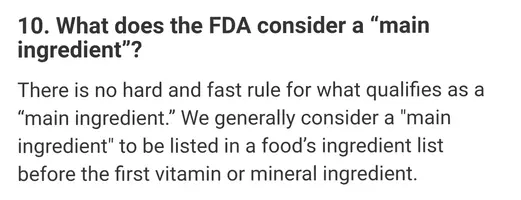
10. What does the FDA consider a “main ingredient”?
There is no hard and fast rule for what qualifies as a “main ingredient.” We generally consider a “main ingredient” to be listed in a food’s ingredient list before the first vitamin or mineral ingredient.

11. Does the FDA know what it is about these foods that may be connected to canine DCM?
At this time, it is not clear what it is about these diets that may be connected to DCM in dogs. Taurine deficiency is well-documented as a potential cause of DCM, but it is not the only cause of DCM. Nutritional makeup of the main ingredients or how dogs process them, main ingredient sourcing, processing, amount used, or other factors could be involved.

12. How do I know if my pet’s food is one of the diets discussed in the FDA’s public notification?
We suggest reviewing the ingredient list on your pet’s food to see whether legumes and/or potatoes are listed as one of the main ingredients.

13. Should I avoid grain-free diets?
High levels of legumes or potatoes appear to be more common in diets labeled as “grain-free,” but it is not yet known how these ingredients are linked to cases of DCM. Additionally, legumes and potatoes may appear as ingredients in foods that are not labeled as “grain-free.” Changes in diet, especially for dogs with DCM, should be made in consultation with a licensed veterinarian.

14. Do I need to change my dog’s diet?
At this time, we are not advising dietary changes based solely on the information we have gathered so far. If you have questions or concerns about your dog’s health or its diet, we suggest that you consult your veterinarian for individualized advice that takes into account your dog’s specific needs and medical history.

15. What’s the safest diet for my dog?
Different dogs have different nutritional needs based on a number of factors, so nutrition advice is not one-size-fits-all. The FDA recommends consulting your veterinarian for personalized advice about what to feed your dog.

16. What should I do if my dog is experiencing symptoms of DCM?
If your dog is showing possible signs of DCM or other heart conditions, including decreased energy, cough, difficulty breathing and episodes of collapse, you should contact your veterinarian. Your veterinarian may ask you for a thorough dietary history, including all the foods (including treats) the dog has eaten.

17. How do vets and consumers submit reports to the FDA?
CVM encourages pet owners and veterinary professionals to report cases of DCM in dogs suspected of having a link to diet by using the electronic Safety Reporting Portal or calling their state’s FDA Consumer Complaint Coordinators.

18. What information does the FDA need included in the reports?
Please see “How to Report a Pet Food Complaint” for additional instructions and information.

19. How long will the FDA’s investigation take?
There is no way to know how long the investigation will take, but CVM is hopeful that as we gather more data from case reports, we will gain a better understanding of this possible connection. We will continue to convey our observations publicly as the investigation progresses.

Wishing you and your pet(s) the best,

Susan Thixton
Pet Food Safety Advocate
Author Buyer Beware, Co-Author Dinner PAWsible
TruthaboutPetFood.com
Association for Truth in Pet Food

atpfbannersmall-295x120.jpg

Become a member of our pet food consumer Association. Association for Truth in Pet Food is a a stakeholder organization representing the voice of pet food consumers at AAFCO and with FDA. Your membership helps representatives attend meetings and voice consumer concerns with regulatory authorities. Click Here to learn more.

What’s in Your Pet’s Food?
Is your dog or cat eating risk ingredients? Chinese imports? Petsumer Report tells the ‘rest of the story’ on over 5,000 cat foods, dog foods, and pet treats. 30 Day Satisfaction Guarantee. Click Here to preview Petsumer Report. www.PetsumerReport.com

2018listseal_B-small.png


The 2018 List
Susan’s List of trusted pet foods. Click Here to learn more.


Have you read Buyer Beware? Click Here

Cooking pet food made easy, Dinner PAWsible

Find Healthy Pet Foods in Your Area Click Here
 
This is going to take a long time to figure out! I would be supplementing if I had a dog on Kibble!
I'm beginning to believe in any Doberman, is to start supplementing at 2yrs old. Even in a Raw Fed one! Like adding extra Heart also.
 
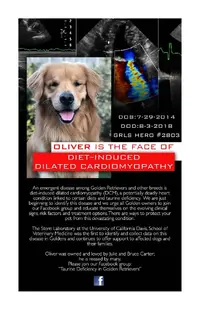
I thought I would update here the hero dog who started this investigation into grain free pet foods who possibly use too many legumes. May his story save many dogs lives from here on out.

Be cautious of Acana...that is the food with the highest incidence right now. Avoid food with legumes in the first 10 ingredients for now until more info is found. If interested there is an all breed fb group Taurine-Deficient Dilated Cardiomyopathy I will try to post here as I can but know that I can't forward everything so it would be best if others joined and shared any new information they found here.

FB_IMG_1535293593184.webp
 
I will be trying to give an update on this. Sorry but not until our boys Cardio Appointment which is sometime in Nov. Our boys Cardiologist is one of the Vets investigating this. So will try and find out what I can.
 
To bounce off this thread, what brands of kibble are the best with grains or should I just supplement with taurine?

Kinda looks like the new info that Rits put out, states that it does not matter if you supplement with taurine; if you feed kibble with potatoes and legumes, it blocks taurine.

I am like @Jasmine0430 and feed TOTW, potatoes and legumes are in top 10 ingredients.

So maybe if we all come together and figure it out, we can find a good kibble that will work for our Dobes.

I think I saw that @Rits said that Orijen is a good option. When I get time I am gonna look at those ingredients. But damn, Orijen is not cheap, $85 for 25lb bag.

Any other experiences or ideas on a kibble that meet these new recommendations?

Or is this like the umpteenth scientific study like with human consumption of coffee?? One min causes strokes but reduces Parkinson’s. Then the next 12 week study says it causes Parkinson’s but reduces heart attack with slight increase of cancer risks????? Lol....
 
well... without looking TOOOOO much into it (yeah, right)....

If I take the Dog Food Reviews 2018 top list as a starting point (they've already filtered out other brands using several methods) and remove anything with Legumes and Potatoes...

FROMM - Classic Adult (4 stars on Dog Food Advisor) looks clear but Gold seems to have potatoes/lentils in a lot of their products

Holistic Health Extension - 4 stars on Dog Food Advisor but seems like a reasonably priced option with no peas, legumes, potatoes (their GRAIN FREE versions do have potatoes and beans)

Horizon Amicus - just for the little guys, it seems

Horizon Legacy - peas, pea starch, pea fibre are top ingredients

Nutri Life - some recipes have potatoes, some have peas

Orijen Original - does have several types of beans and lentils in the ingredient list (their six fish and tundra has beans and peas)

Leonard Powell Signature Series - Potatoes, peas, and beans

Tender and True - peas, chickpeas (beans), potato flour

Ziwi Peak - looks clear but VERY expensive but you feed way less than kibble

The new non-Grain Free food we just moved to has brown rice as a second ingredient so it got booted in the Dog Food Review article but is a 4 star on Dog Food Advisor.... *BIGGEST SHRUG EVEEEEEER*

Or is this like the umpteenth scientific study like with human consumption of coffee?? One min causes strokes but reduces Parkinson’s. Then the next 12 week study says it causes Parkinson’s but reduces heart attack with slight increase of cancer risks????? Lol....

I still try to drink as much wine as possible in the off chance it really is good for your heart and causes weight loss :D
 
Thanks LifeofRubie.

I also did a scan through the Dog Food Advisory.

Orijen looks to be the best that I’ve seen so far with these ingredients in order:
Deboned chicken, deboned turkey, atlantic flounder, whole eggs, whole atlantic mackerel, chicken liver, turkey liver, chicken heart, turkey heart, whole atlantic herring, dehydrated chicken, dehydrated turkey, dehydrated mackerel, dehydrated chicken liver, whole dehydrated egg, whole red lentils, whole pinto beans, whole green peas, chicken necks, chicken kidney, whole green lentils, whole navy beans, whole chickpeas,

The one big question I have is that all the Orijen kibble is pretty high in protein 38%-43%. Of course it is, the first 15 ingredients are meats.

I thought I read somewhere on here to try and keep the protein in between 28%-30%??
 
It's not going to be easy. I had started going through Kaiser's treats and samples. Potato and peas are everywhere!

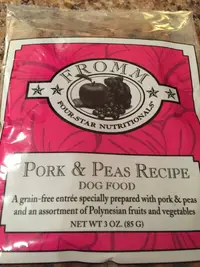
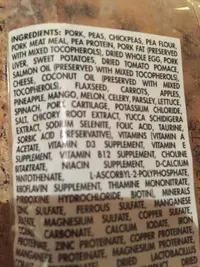
Here is Fromm. The recipe name is at least accurate about its main ingredients.
image.webp

How many pea things and still sweet potato shows up??
image.webp

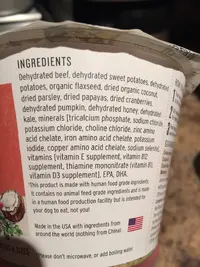
Here is Honest Kitchen. We use this for longer hikes. It seems we can't even trust the 'better' brands.
image.webp

Ziwipeak is a winner but you need to finish a bag within 8 weeks of opening. The cat is on this (and Acana) even she can't finish her little bags fast enough that I have to use the rest on Kaiser. The smaller bags are unreasonably priced.
 
Orijen looks to be the best that I’ve seen so far with these ingredients in order:
Deboned chicken, deboned turkey, atlantic flounder, whole eggs, whole atlantic mackerel, chicken liver, turkey liver, chicken heart, turkey heart, whole atlantic herring, dehydrated chicken, dehydrated turkey, dehydrated mackerel, dehydrated chicken liver, whole dehydrated egg, whole red lentils, whole pinto beans, whole green peas, chicken necks, chicken kidney, whole green lentils, whole navy beans, whole chickpeas,

The one big question I have is that all the Orijen kibble is pretty high in protein 38%-43%. Of course it is, the first 15 ingredients are meats.

I thought I read somewhere on here to try and keep the protein in between 28%-30%??

Does the placement in the ingredient list determine the inability to absorb Taurine?

And yes, I BELIEVE I've seen recommendations on here to take it slow with the Orijen because it can be very, very rich. That Fromm and Health Extensions do looks appealing to me but I wish they had fish options in their lines.


It's not going to be easy. I had started going through Kaiser's treats and samples. Potato and peas are everywhere!

Here is Fromm. The recipe name is at least accurate about its main ingredients.
View attachment 88110

How many pea things and still sweet potato shows up??
View attachment 88111

Here is Honest Kitchen. We use this for longer hikes. It seems we can't even trust the 'better' brands.
View attachment 88112

Ziwipeak is a winner but you need to finish a bag within 8 weeks of opening. The cat is on this (and Acana) even she can't finish her little bags fast enough that I have to use the rest on Kaiser. The smaller bags are unreasonably priced.

That is the Fromm Four-Star line which is different than the classic!
 
The one big question I have is that all the Orijen kibble is pretty high in protein 38%-43%. Of course it is, the first 15 ingredients are meats.

I thought I read somewhere on here to try and keep the protein in between 28%-30%??
I know I've mentioned the low percentages before because anything over 30% gave Kaiser the runs. I also believe Orijen would not be well suited to a dog with a sensitive tummy - even Acana was too rich for K. I later learned that large type dogs with their fast growth should not be on high protein diets - same reason why puppy food shouldn't be fed - the dog will grow according to his genetics, no need to speed it up. What I don't understand is how kibble protein and raw protein compare. I solved K's poop problem with raw and stopped researching at that point.
 
Does the placement in the ingredient list determine the inability to absorb Taurine?
The lower down, the less there are. However you need to count how many legumes there are if there are many in different forms, then it does make a bulk of the food. This is how companies get them lower in the list is by splitting the ingredients. Dr. Stern says if it's not a top 5 it's ok. FDA seems to suggest it's ok only if it comes after the minerals. Because of the unknown, most people are choosing to avoid it all together for now. I believe both statements can be found in the provided text posted earlier. I'll try to find it again.

This is why I was originally okay with Origin Original since they were so far down the list...but the more I got to thinking and deciding not to test their levels to find out, the less risk I want to take.

Again, if you plan to test your dobes taurine levels to be sure, do not change food until after you get the results back.
 
FROMM has some of the better ingredients but their Protein % goes from 23%-25%.

So from too high of protein with Orijen to considerably low protein in Fromm...... can we just find a good middle ground % with little to no peas, potatoes and legumes??

As always, experts more knowledgeable than me, correct me if I state inaccurate info.
 
Dr. Stern says if it's not a top 5 it's ok. FDA seems to suggest it's ok only if it comes after the minerals. Because of the unknown, most people are choosing to avoid it all together for now. I believe both statements can be found in the provided text posted earlier. I'll try to find it again.

Here I am with that!

SOURCE: Questions & Answers: FDA Center for Veterinary Medicine’s Investigation into a Possible Connection Between Diet and Canine Heart Disease

FDA:
Screenshot_20180829-114750~2.webp


Dr. Sterns suggestion:
"I think pet owners should be looking at their label to ensure they are not containing ingredients like legumes that's peas lentils chickpeas white potatoes or sweet potatoes, probably within atleast the first 5 ingredients. If that's the case, they should talk to their veterinarian about whether an evaluation for possible heart disease is in order and then think about getting those dogs on a different diet."

SOURCE (~2min mark):
 

Back
Top