• Disclaimer: Hello Guest, Doberman Chat Forums presents the opinions and material on these pages as a service to its membership and to the general public but does not endorse those materials, nor does it guarantee the accuracy of any opinions or information contained therein. The opinions expressed in the materials are strictly the opinion of the writer and do not represent the opinion of, nor are they endorsed by, Doberman Chat Forums. Health and medical articles are intended as an aid to those seeking health information and are not intended to replace the informed opinion of a qualified Veterinarian.”

DCM Due to Diet - FDA UPDATE 6/27/19

This same thing happened back in the 80's where thousands of cats were dying.
They finally found out the reason was the lack of Taurine in the cat food.

Taurine is only one of the supplements we are giving (1,000mg 2x a day) our boy Yago for his DCM.
 
681217403.png


Is it Peas, Processing, or a Combination?
upload_2018-5-30_8-12-53.webp
Veterinarians are researching a potential link between grain free pet foods to taurine-deficient dilated cardiomyopathy in dogs. The early suspicion is towards legume ingredients. But does pet food processing (along with transportation and storage) also play a role in nutrient deficient illness?
http://truthaboutpetfood.com/is-it-peas-processing-or-a-combination/
upload_2018-5-30_8-12-53.webp
Wishing you and your pet(s) the best,
Susan Thixton
Pet Food Safety Advocate
Author Buyer Beware, Co-Author Dinner PAWsible
TruthaboutPetFood.com
Association for Truth in Pet Food

Become a member of our pet food consumer Association. Association for Truth in Pet Food is a a stakeholder organization representing the voice of pet food consumers at AAFCO and with FDA. Your membership helps representatives attend meetings and voice consumer concerns with regulatory authorities. Click Here to learn more.
What’s in Your Pet’s Food?
Is your dog or cat eating risk ingredients? Chinese imports? Petsumer Report tells the ‘rest of the story’ on over 5,000 cat foods, dog foods, and pet treats. 30 Day Satisfaction Guarantee. Click Here to preview Petsumer Report. www.PetsumerReport.com


Is it Peas, Processing, or a Combination?
By Susan Thixton
- May 29, 2018

Veterinarians are researching a potential link between grain free pet foods to taurine-deficient dilated cardiomyopathy in dogs. The early suspicion is towards legume ingredients. But does pet food processing (along with transportation and storage) also play a role in nutrient deficient illness?

What is dilated cardiomyopathy?

From Washington State University College of Veterinary Medicine: “DCM is a disease of the heart muscle that results in weakened contractions and poor pumping ability. As the disease progresses the heart chambers become enlarged, one or more valves may leak, and signs of congestive heart failure develop.”

Dr. Joshua Stern of U.C. Davis has been studying/documenting cases of taurine-deficient dilated cardiomyopathy (DCM) in Golden Retriever dogs a little over a year. His research has connected “diets of concern” in diagnosed Golden Retrievers as grain free kibble diets; pet foods that contain high levels of legume ingredients (pea ingredients most commonly used). Some of the dogs diagnosed have experienced a reversal of DCM through a change of diet and taurine supplementation (supervised by veterinarians).

From a document published by Veterinary Cardiology Specialists:

Dilated Cardiomyopathy (DCM) is becoming more prevalent in golden retrievers. Dr. Joshua Stern, DVM, PhD, DACVIM (Cardiology) at UC Davis, starting seeing a pattern and recognized that many cases were due to dietary taurine deficiency in golden retrievers fed grain free diets. Here is what we know so far:

Background

Taurine is an amino acid that is found in high concentrations in heart and muscle. Among its many functions, it aids in normal contractile function. Evidence shows that taurine helps mediate calcium channel transports and modulates calcium sensitivity of the myofibrils.

Taurine deficiency as a cause of dilated cardiomyopathy (DCM) is not a new issue. Taurine deficiency in cats was characterized by Pion et al in the late 1980s. Taurine deficiency has since been characterized as a cause of acquired DCM in dogs as well.

Currently identified diets of concern in these golden retrievers

According to Dr. Stern, the majority of cases they are seeing at UC Davis are from grain free diets that are high in legumes, like acana pork and squash singles.

Dr. Stern of U.C. Davis stated in an open letter from 2017: “Unfortunately, many owners have identified concerns and proceeded with supplementation or diet change without first obtaining appropriate diagnostic criteria. This approach has led to more confusion and an inability to definitively say whether some dogs have an inherited cardiomyopathy or a nutritionally derived heart disease.”

It is significant for pet owners to work with their veterinarian if they suspect any heart issue AND it is significant for practicing veterinarians to report all suspect “nutritionally derived heart disease” to Dr. Stern. The science behind the suspicions must be documented.

Note in the above information from Veterinary Cardiology Specialists – under “Currently identified diets of concern” – the document specified diets “like Acana pork and squash singles”. Provided to TruthaboutPetFood.com by an anonymous source – Champion Pet Food (manufacturer of Acana and Orijen pet foods) stated to a consumer:

All our ACANA and ORIJEN diets are formulated to meet the nutritional levels established by the AAFCO dog food nutrient profiles for all life stages. Cysteine and methionine content are available for taurine production in the dog’s body, and taurine itself is naturally present from the meat ingredients we include in the food.

Further discussion.

From the National Research Council: “Dogs do not require taurine in their diet as they can manufacture it from sulfur containing amino acids. Thus, as long as there is sufficient dietary cysteine and/or methionine the dog will be able to synthesize ample taurine. Sufficient methionine is defined as 1.2g per day/1000kcal food equivalent; total sulfur containing amino acids should constitute more than 1.4g/1000kcal food.”

Is it the processing that should be closely examined as a potential cause of taurine deficiency?

Meat contains taurine. Meat contains cysteine and methionine. As example, from “The potential protective effects of taurine on coronary heart disease” – 100 grams of raw beef contains 43.1 mg of taurine. Broiled beef per 100 grams contains 38.4 mg of taurine. Chicken (light meat) raw per 100 grams contains 17.5 mg of taurine – broiled chicken (light meat) per 100 grams contains 14.5 mg of taurine.

In other words, with normal processing (example broiling) taurine levels in meat should be sufficient for dogs and cats; we should not be seeing nutritionally derived taurine deficient Dilated Cardiomyopathy in pets. But (most) pet food ingredients are not subject to normal processing.

Borrowed from a 2016 TruthaboutPetFood.com post…

kibble-ingredients.jpg


Quoted text below is from MadeHow.com.

Emphasis added in the following for heat or cooking of ingredients…

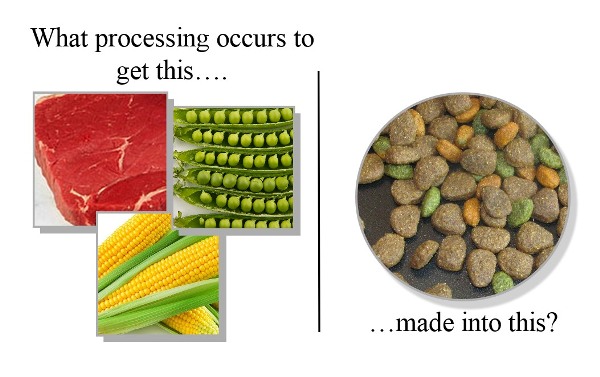
Kibble is a cooked dough-type pet food (comparable to dough used to make a cookie or a cracker – with meat). Because it is made from dough, all ingredients in a kibble pet food need to be ground fine before mixing. Raw ingredients are “brought together in a mixer” with added supplements (mixer can hold 10,000 pounds or more of ingredients). Next the dough “is heated in the preconditioner prior to introduction to the extruder.” “The extruder, essentially a giant meat grinder, is where the primary cooking phase for dry extruded pet food products occurs. The dough is cooked under intense heat and pressure as it moves toward the open end of the extruder.” At the end of the extruder the dough is forced through a “shaping die” and cut into desired shape. “Kibble is dried in an oven until its moisture content is low enough to make it shelf stable like a cookie or cracker.”

And then there is the consideration of meat meal ingredients (common to kibble and some canned pet foods)…

meatmeal.jpg


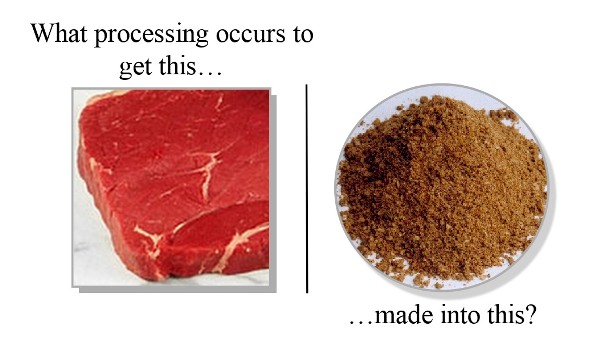
Meat meals are made by finely grinding meat and bone. Actually many meat meals are sourced from animal “frames” (skeletal remains after mechanical separation of meat) that contain very little meat. The ground material is cooked and separated from the remaining moisture. The solids are dried into a powder like substance (above – meat meal). This processing occurs before ingredients arrive at the pet food plant (where it is cooked again in the pet food).

All of this processing destroys the natural nutrient content of the meat (if there is any actual meat in the pet food to begin with) including destruction of amino acids such as cysteine and/or methionine used to produce taurine.

And then…if by chance the proper level of required amino acids (such as cysteine and/or methionine for dogs to produce taurine) is in the pet food immediately after all of this processing, we then have the concern of heat exposure in warehousing and during transportation – which can further destroy nutrients. All kibble and canned pet foods are warehoused in non-climate controlled buildings at the manufacturer, at the distributor and in delivery trailers. (The only pet foods that are warehoused and transported under refrigeration are raw or lightly cooked sold frozen.)

What we really need is veterinarians to take a close examination of the processing of some pet foods. The role that processing and warehousing might play in nutritionally derived taurine deficient Dilated Cardiomyopathy in pets (as well as other nutritionally derived illnesses). All that is known about the destruction of nutrients in human food due to processing is slow to progress to the pet food industry. This needs to change.


Wishing you and your pet(s) the best,

Susan Thixton
Pet Food Safety Advocate
Author Buyer Beware, Co-Author Dinner PAWsible
TruthaboutPetFood.com
Association for Truth in Pet Food

atpfbannersmall-295x120.jpg

Become a member of our pet food consumer Association. Association for Truth in Pet Food is a a stakeholder organization representing the voice of pet food consumers at AAFCO and with FDA. Your membership helps representatives attend meetings and voice consumer concerns with regulatory authorities. Click Here to learn more.

What’s in Your Pet’s Food?
Is your dog or cat eating risk ingredients? Chinese imports? Petsumer Report tells the ‘rest of the story’ on over 5,000 cat foods, dog foods, and pet treats. 30 Day Satisfaction Guarantee. Click Here to preview Petsumer Report. www.PetsumerReport.com

2018listseal_B-small.png


The 2018 List
Susan’s List of trusted pet foods. Click Here to learn more.


Have you read Buyer Beware? Click Here

Cooking pet food made easy, Dinner PAWsible

Find Healthy Pet Foods in Your Area Click Here
 
mail


FDA Investigates Potential Connection to Diet and Heart Disease in Dogs
upload_2018-7-13_1-37-15.webp
The U.S. Food and Drug Administration is alerting pet owners and veterinary professionals about reports of canine dilated cardiomyopathy (DCM) in dogs eating certain pet foods containing peas, lentils, other legume seeds, or potatoes as main ingredients.
FDA Investigates Potential Connection to Diet and Heart Disease in Dogs


FDA Investigates Potential Connection to Diet and Heart Disease in Dogs

By Susan Thixton
- July 12, 2018

The U.S. Food and Drug Administration is alerting pet owners and veterinary professionals about reports of canine dilated cardiomyopathy (DCM) in dogs eating certain pet foods containing peas, lentils, other legume seeds, or potatoes as main ingredients.

The FDA issued the following pet food consumer alert today (July 12, 2018):

The U.S. Food and Drug Administration is alerting pet owners and veterinary professionals about reports of canine dilated cardiomyopathy (DCM) in dogs eating certain pet foods containing peas, lentils, other legume seeds, or potatoes as main ingredients. These reports are unusual because DCM is occurring in breeds not typically genetically prone to the disease. The FDA’s Center for Veterinary Medicine and the Veterinary Laboratory Investigation and Response Network, a collaboration of government and veterinary diagnostic laboratories, are investigating this potential association.

Canine DCM is a disease of a dog’s heart muscle and results in an enlarged heart. As the heart and its chambers become dilated, it becomes harder for the heart to pump, and heart valves may leak, leading to a buildup of fluids in the chest and abdomen. DCM often results in congestive heart failure. Heart function may improve in cases that are not linked to genetics with appropriate veterinary treatment and dietary modification, if caught early.

The underlying cause of DCM is not truly known, but is thought to have a genetic component. Breeds that are typically more frequently affected by DCM include large and giant breed dogs, such as Great Danes, Boxers, Newfoundlands, Irish Wolfhounds, Saint Bernards and Doberman Pinschers. It is less common in small and medium breed dogs, except American and English Cocker Spaniels. However, the cases that have been reported to the FDA have included Golden and Labrador Retrievers, Whippets, a Shih Tzu, a Bulldog and Miniature Schnauzers, as well as mixed breeds.

Diets in cases reported to the FDA frequently list potatoes or multiple legumes such as peas, lentils, other “pulses” (seeds of legumes), and their protein, starch and fiber derivatives early in the ingredient list, indicating that they are main ingredients. Early reports from the veterinary cardiology community indicate that the dogs consistently ate these foods as their primary source of nutrition for time periods ranging from months to years. High levels of legumes or potatoes appear to be more common in diets labeled as “grain-free,” but it is not yet known how these ingredients are linked to cases of DCM. Changes in diet, especially for dogs with DCM, should be made in consultation with a licensed veterinarian.

In the reports the FDA has received, some of the dogs showed signs of heart disease, including decreased energy, cough, difficulty breathing and episodes of collapse. Medical records for four atypical DCM cases, three Golden Retrievers and one Labrador Retriever, show that these dogs had low whole blood levels of the amino acid taurine. Taurine deficiency is well-documented as potentially leading to DCM. The Labrador Retriever with low whole blood taurine levels is recovering with veterinary treatment, including taurine supplementation, and a diet change. Four other cases of DCM in atypical dog breeds, a Miniature Schnauzer, Shih Tzu and two Labrador Retrievers, had normal blood taurine levels. The FDA continues to work with board certified veterinary cardiologists and veterinary nutritionists to better understand the clinical presentation of these dogs. The agency has also been in contact with pet food manufacturers to discuss these reports and to help further the investigation.

The FDA encourages pet owners and veterinary professionals to report cases of DCM in dogs suspected of having a link to diet by using the electronic Safety Reporting Portal or calling their state’s FDA Consumer Complaint Coordinators. Please see the link below about “How to Report a Pet Food Complaint” for additional instructions.


As reminder to consumers, the pet food industry began utilizing pea protein, pea starch and pea fiber ingredients in pet foods without ‘official permission’. Pet food regulations require that all ingredients go through an Association of American Feed Control Officials (AAFCO) process prior to their use in pet food/treat products. That ‘process’ is discussion at AAFCO to ingredient safety (with State Feed Officials and FDA), and properly defining the ingredient. But…pet food ingredient suppliers and pet food manufacturers ignored that requirement and flooded the market with grain-free pet foods for years BEFORE the ingredients were ever discussed and/or defined at AAFCO. Not one State Department of Agriculture stopped them – FDA did not stop them. Both agencies scolded ingredient suppliers and pet food manufacturers at one AAFCO meeting, but not one authority took regulatory action to stop the use of a (basically) illegal ingredient. Years after their use, AAFCO defined the ingredients which approved their use in pet food. And now – those very ingredients are under FDA investigation.

Wouldn’t it have been better to investigate the safety of these ingredients PRIOR to allowing their use in pet food?


Wishing you and your pet(s) the best,

Susan Thixton
Pet Food Safety Advocate
Author Buyer Beware, Co-Author Dinner PAWsible
TruthaboutPetFood.com
Association for Truth in Pet Food

atpfbannersmall.jpg

Become a member of our pet food consumer Association. Association for Truth in Pet Food is a a stakeholder organization representing the voice of pet food consumers at AAFCO and with FDA. Your membership helps representatives attend meetings and voice consumer concerns with regulatory authorities. Click Here to learn more.

What’s in Your Pet’s Food?
Is your dog or cat eating risk ingredients? Chinese imports? Petsumer Report tells the ‘rest of the story’ on over 5,000 cat foods, dog foods, and pet treats. 30 Day Satisfaction Guarantee. Click Here to preview Petsumer Report. www.PetsumerReport.com

2018listseal_B-small.png


The 2018 List
Susan’s List of trusted pet foods. Click Here to learn more.


Have you read Buyer Beware? Click Here

Cooking pet food made easy, Dinner PAWsible

Find Healthy Pet Foods in Your Area Click Here
 
I just read this and am a bit concerned as some of the brands I currently use have peas as the 3 or 4th ingredient. Do you buy taurine in pet stores or at a regular vitamin shop?
 
I have been giving (with lots of other supplements) NOW Brand Taurine Powder to our boy (with Occult DCM) for the past 2 1/2yrs. 1/4tsp is 1000mg. He gets 1000mg 2x’s per day. It mixes great with his coarse ground Raw.
Get it on Amazon. Get a 2 pack for $18.75

We also supplement our Female 500mg 2x’s a day. She turned 2yrs in March.
 
Are Dogs With DCM Taurine-Deficient?

Dogs Fed Grain-Free Kibble May Be at Risk for Heart Disease
July 09, 2018
Story at-a-glance
  • Veterinary researchers have uncovered a link between grain-free kibble, taurine deficiency and the heart disease called dilated cardiomyopathy (DCM) in certain breeds of dog
  • It appears feeding grain-free/low-protein kibble to large dogs, especially predisposed breeds, increases their risk for taurine deficiency-related DCM
  • The high starch/carb content of grain-free kibble, along with other ingredients and anti-nutrients in the formulas, as well as the manufacturing process used to produce dry pet food, depletes taurine levels and may inhibit a dog’s ability to absorb and process the remaining taurine
  • Until there is much more information on what is causing the uptick in taurine deficiency-related DCM in dogs, I recommend all dogs be supplemented with high-taurine foods, regardless of their current diet
  • Pet parents concerned about their dog’s heart health, especially owners of DCM-susceptible breeds eating grain-free kibble, should discuss their concerns with their veterinarian
By Dr. Karen Shaw Becker

Thirty years ago, researchers at the School of Veterinary Medicine at University of California, Davis discovered the link between taurine deficiency and dilated cardiomyopathy (DCM), a heart muscle disease in cats.1 According to Morris Animal Foundation, "The veterinary community was stunned" by this news, in part because the UC-Davis researchers were able to prove that DCM was reversible when cats received the amount of taurine they needed in their diet.2

Of course, most holistic veterinarians and others knowledgeable about veterinary nutrition and who understand the link between diet and disease weren't surprised. Taurine, which is an amino acid, is found in meat, and cats, as meat-eating obligate carnivores, haven't developed the ability to make their own taurine.

This means it's an essential amino acid for cats — they must get it from their diet, and 30 years ago when UC-Davis veterinarians made their discovery, we were well into the age of processed pet food, having made cats (and dogs) almost entirely dependent on humans for their nutrition.

Pet food formulators often guessed at the effects of extensive processing on nutrients. This is especially true for pet food (feed) that blends leftover pieces and parts from the human meat processing industry with other sources of questionable nutrients before they are rendered and cooked at high temperatures, depleting the nutrients that existed before processing, as well as altering the chemical composition of ingredients (and often creating toxic byproducts along the way).

Are Dogs With DCM Taurine-Deficient?
As soon as the UC-Davis researchers published their findings in cats back in the late 1980s, veterinary cardiologists began looking for taurine and other nutrient deficiencies in their canine patients with DCM.

No direct cause-and-effect relationship could be established, since the vast majority of dogs with DCM weren't taurine-deficient. Taurine is not considered an essential amino acid for dogs because like many other species, their bodies have the metabolic capacity to manufacture taurine from the dietary amino acids cysteine and methionine.

To further confuse the issue, while the disease is inherited in certain breeds, for example, the Doberman Pinscher, in other breeds it is indeed linked to taurine deficiency. In the mid-1990s, UC-Davis conducted a study of American Cocker Spaniels with DCM and found low taurine levels in many of the dogs. The study authors wrote in their abstract:

"We conclude that ACS [American Cocker Spaniels] with DCM are taurine-deficient and are responsive to taurine and carnitine supplementation. Whereas myocardial function did not return to normal in most dogs, it did improve enough to allow discontinuation of cardiovascular drug therapy and to maintain a normal quality of life for months to years."3

A 2003 study showed that some Newfoundlands had taurine deficiency-related DCM,4 and two years later, another study was published about a family of Golden Retrievers with taurine deficiency and reversible DCM.5 As veterinary cardiologists continued to encounter cases of taurine deficiency-related DCM in dogs, and continued to search for a common link, diet was thought to play a major role in development of the disease.

UC-Davis Is Currently Conducting Research on Taurine Deficiency-Related DCM in Golden Retrievers
The dogs receiving the most focus right now due to escalating rates of DCM related to taurine deficiency are Golden Retrievers. Veterinarian and researcher Dr. Joshua Stern, Chair of the Department of (Veterinary) Cardiology at UC-Davis, and owner of a Golden Retriever Lifetime Study participant named Lira, is looking into the situation.

He's collecting blood samples and cardiac ultrasound results from Goldens both with DCM and without the disease. Stern agrees diet plays a role, but he also suspects there are genes at work that increase the risk of the condition in the breed.

"I suspect that Golden Retrievers might have something in their genetic make-up that makes them less efficient at making taurine," Stern told the Morris Animal Foundation. "Couple that with certain diets, and you've given them a double hit. If you feed them a diet that has fewer building blocks for taurine or a food component that inhibits this synthesis, they pop up with DCM."6

Dr. Stern has written an open letter to veterinarians and owners of Goldens that you can read here. In it, he briefly explains his research and recommends a four-step process dog parents can undertake if they believe their pet is at risk for, or is showing signs of DCM:

1. If you believe your dog is at risk for taurine-deficient Dilated Cardiomyopathy (DCM) and wish to have taurine levels tested, please request a whole blood taurine level be submitted (lithium heparin tube) for analysis. The laboratory I recommend can be found here.

2. If you believe your dog is showing signs of DCM already, please seek an appointment with a board-certified cardiologist to have an echocardiogram and taurine testing obtained simultaneously — do not change foods, do not supplement prior to the appointment.

3. If you receive taurine test results that come back as low, please seek an appointment with a board certified cardiologist to have an echocardiogram performed to determine if your pet needs cardiac medications and the appropriate supplements to be used (DO NOT SUPPLEMENT OR CHANGE FOODS UNTIL YOU HAVE THE CARDIOLOGY EVALUATION COMPLETED).

If you live in close to UC Davis, we can arrange research-funded cardiology evaluations for your dog if you contact at this email address.

4. If you receive cardiologist-confirmed DCM results, please take an image of the food bag, ingredient list and lot number. Please also request a copy of the images from the echocardiogram from your cardiologist (ensure that you have full DICOM image copies on a CD). Please download and complete the full diet history form found at this link.

Please email the image of food bag, a three-generation pedigree, diet history form, copies of the taurine level results and medical record to this email address. A member of our laboratory team will contact you to discuss our thoughts and possibly request additional information, food samples or blood samples for further testing.

Stern wants to get to the bottom of this issue as fast and as medically appropriately as possible. He hopes to publish his initial findings soon and offer scientifically based guidelines for Golden parents regarding diet and DCM. If you're interested in published research on taurine deficiency and canine DCM, Stern also created a collection of files you can download at this link.

A Particular Brand of Grain-Free Kibble Is Implicated in Some Cases of Diet-Related DCM in Goldens
Although Stern doesn't discuss specific diets in his letter linked above, according to Dr. Janet Olson of Veterinary Cardiology Specialists:

" … [T]he majority of cases [of taurine deficiency-related DCM in Golden Retrievers] they [Stern and his team] are seeing at UC-Davis are from grain free diets that are high in legumes, like ACANA pork and squash [kibble]."7

Other sources, including a Golden Retriever owner in Mountain View, CA who contacted us, also mention the same food — ACANA Pork and Squash Singles Formula limited ingredient kibble made by Champion Petfoods. According to my Mountain View source, Dr. Stern has been following a group of Goldens with DCM who had been eating the ACANA formula, and a year later, after changes to their diet, taurine supplementation and in some cases, the use of heart medications, all 20+ dogs either fully or significantly recovered.

Consumers who've contacted Champion about the issue receive a response stating that taurine isn't an essential amino acid for dogs, and ACANA and ORIJEN diets are formulated to meet the nutritional levels established by the AAFCO dog food nutrient profiles for all life stages. (Since taurine isn't considered an essential amino acid for dogs, AAFCO dog food nutrient profiles establish no minimum requirement for taurine.)

Champion acknowledges that a taurine deficiency may contribute to the incidence of DCM in genetically susceptible dogs, but states their diets aren't formulated for dogs with "special needs."

Are All the Starchy Ingredients in Grain-Free Kibble to Blame?
Since grain-free dry dog food is a relatively new concept, it's quite possible there's something about the high-starch (carb) content in these diets that depletes taurine levels and/or makes the taurine less bioavailable. The problem might be related to a chemical reaction (called the Maillard reaction) between taurine and a carbohydrate during the extrusion process that depletes the digestible taurine level in the food.

And while legumes are being singled out as the potential problematic ingredient, grain-free kibble is often higher in both whole carbohydrates and purified starches (e.g., pea starch, potato starch and tapioca starch) than grain-based dry dog food. The higher the starch level in any pet food, the less protein is included.

In a study published in 1996 on the effect of high heat processing of cat food on taurine availability, the researchers noted, "These results suggest that Maillard reaction products promote an enteric flora that favors degradation of taurine and decreases recycling of taurine by the enterohepatic route."8

Said another way: The byproducts of the chemical reaction between amino acids and sugars (carbs) in dry cat food alter the microbiome (gut bacteria), causing degradation of the taurine in the food, reducing its availability to the cat, and also preventing the taurine from being efficiently recycled by the cat's body.

An earlier study published in 1990 that looked at taurine levels in a commercial diet that was fed heat-processed to some cats and frozen-preserved to others drew the same conclusion. The researchers stated " … processing affects the digestive and/or absorptive process in a manner that increases the catabolism of taurine by gastrointestinal microorganisms."9

Other Factors That Influence the Taurine Content of Pet Food/Feed
A 2003 study published in the Journal of Animal Physiology and Animal Nutrition looked at taurine concentrations in the ingredients often used in both home prepared and commercial pet diets, as well as how cooking influences taurine content.10

The researchers reported that animal muscle tissue, especially marine animals, contains high levels of taurine, whereas plant-based ingredients contained either low or undetectable amounts. Also, the amount of taurine that remains after cooking is somewhat dependent on the method of food preparation. When an ingredient was cooked in water (e.g., boiling or basting), more taurine was lost unless the water used to cook the food was included with the meal.

Food preparation that minimized water loss (e.g., baking or frying) retained more of the taurine, however, it's important to note that heat processing in any form destroys anywhere from 50 to 100 percent of taurine present in raw food. In addition, extended periods of storage of processed pet foods, and freezing, thawing and grinding of raw pet food also depletes taurine content.11

Another UC-Davis study published in 2016 evaluated the taurine status of large breed dogs fed low-protein diets (lamb and rice formulas), since they are now known to be at increased risk for taurine deficiency-related DCM.12 The researchers specifically looked at the ingredients rice bran and beet pulp used in many of these diets, and determined that while rice bran didn't seem to be a primary cause of taurine deficiency, beet pulp may be a culprit.

Both rice bran and beet pulp bind bile acids (bile acids should be recycled, which effectively recycles taurine) in the small intestine, and increase excretion (which is undesirable) because it depletes taurine by interfering with the enterohepatic recycling of taurine-conjugated bile salts and lowers total body taurine levels.

Grain-free/"low-protein" commercial diets are very high in carbohydrates, which displace amino acids. They also contain anti-nutrients (e.g., saponins, trypsin inhibitors, phytates and lectins) that may interfere with taurine absorption. When you add in the high-heat processing used to manufacture kibble, it's hardly surprising these diets aren't an adequate source of taurine for many dogs.

How You Can Protect Your Dog
Those of us who are passionate about animal nutrition have been having a painful awakening for some time now about just how nutrient-deficient many dogs and cats are today. The taurine-DCM issue in dogs is yet another example that animals need much higher levels of bioavailable amino acids from a variety of sources than most are consuming.

Unfortunately, some processed pet food advocates are using the link between grain-free dog foods and DCM to try to push pet parents back in the direction of grain-based diets. Don't be fooled. The problem with grain-free formulas isn't the lack of grains! It's the high level of starchy carbohydrates coupled with the extreme high-heat processing methods used to produce these diets.

Until we have much more information on the subject, my current recommendation is to supplement all dogs with high-taurine foods, no matter what type of diet they're eating. An easy way to do this is to simply mix a can of sardines into your pet's meal once a week. You can also find the taurine content of many other foods on page two of this study and also in this Raw Feeding Community article.

If you have a breed or breed mix known to be susceptible to DCM (e.g., Golden Retriever, Doberman Pinscher, Cocker Spaniel, Boxer, Great Dane, Scottish Deerhound, Irish Wolfhound, Saint Bernard, Afghan Hound, Dalmatian, Portuguese Water dog, Old English Sheepdog, Newfoundland), especially if you've been feeding grain-free kibble, or if for some other reason you're concerned about your dog's heart health, I recommend following Dr. Joshua Stern's four-step process outlined above, starting with a visit to your veterinarian.

 
mail


Dodds Responds to FDA Statement on Canine Heart Disease, Taurine Deficiency and Potential Dietary Causes

The Food and Drug Administration (FDA) released a statement on July 12, 2018 that it is investigating a possible connection between grain-free diets and dilated cardiomyopathy (DCM), which is also known as canine heart disease (CHD). Dr. Dodds explains taurine deficiency, references research studies to date, and provides commentary.

The Food and Drug Administration (FDA) released a statement on July 12, 2018 that it is investigating a possible connection between grain-free diets and dilated cardiomyopathy (DCM), which is also known as canine heart disease (CHD).

We address the FDA’s statement later in this article and provide our commentary. First, we must consider the many factors that need to be accounted for in this situation:

  • Genetics
  • Diet
  • Scientific research thus far
  • Taurine requirements for dogs
  • The interaction between foods when passing through the body
  • The interaction between foods and the body itself
Researchers are only beginning to scratch the surface on the last two factors for human and animal nutrition. Yes; nutritional knowledge has been increasing dramatically over the past century, but this latest contention that grain-free foods may be associated with some adverse effects on the heart just highlights how little we actually know and understand.

Overview
  • Taurine is an amino acid.
  • Amino acids are found in animal-based protein sources and plant sources like soy at varying amounts, depending on the type of meat or plant.
  • Taurine deficiency can lead to CHD in humans, cats and dogs.
  • All breeds and sizes of dogs can develop CHD. However, CHD is more common in larger and giant breeds such as Great Danes, Boxers, Newfoundlands, Irish Wolfhounds, Saint Bernards and Doberman Pinschers. American and English Cocker Spaniels also have a higher incidence.
  • The FDA reported that these new cases included Golden and Labrador Retrievers, Whippets, a Shih Tzu, a Bulldog, Miniature Schnauzers, and mixed breeds.
  • At this time, taurine is not considered an essential, food-sourced amino acid for dogs. Taurine is synthesized in the liver from the amino acids cysteine and methionine, which should provide sufficient quantities to meet dogs’ metabolic needs.
  • Taurine can still and is be present in dog food. However, a pet food label does not need to reflect this presence or meet any minimum requirement per the Association of American Feed Control Officials (AAFCO).
  • Cats, however, do have a need for food-sourced taurine to prevent CHD; and AAFCO does have a minimum requirement amount for cat food.
  • Whether cooking adversely affects or significantly degrades amino acid levels in foods is debated as relatively little is proven due to the variables identified in the published research.
  • A study by Spitze et al. found, “The amount of taurine that remained in a feed ingredient after cooking depended upon the method of food preparation. When an ingredient was constantly surrounded by water during the cooking process, such as in boiling or basting, more taurine was lost. Food preparation methods that minimized water loss, such as baking or frying, had higher rates of taurine retention.”
  • Remember, cysteine is one the essential amino acids that dogs need to form taurine. A study by Weiss et al. concluded, “Eight (including cysteine) of the 20 standard amino acids decompose at well-defined, characteristic temperatures, in contrast to commonly accepted knowledge. Products of decomposition are simple. The novel quantitative results emphasize the impact of water and cyclic condensates with peptide bonds and put constraints on hypotheses of the origin, state and stability of amino acids in the range between 200 °C and 300 °C.” Put simply, high temperatures do cause the breakdown or change these amino acids, including cysteine.
Confluence of Foods
No research has been conducted yet to determine if grain-free diets could cause heart disease in dogs.

Below, we have abbreviated a few of the previous studies conducted on potential dietary causes of CHD:

Plasma and whole blood taurine in normal dogs of varying size fed commercially prepared food
Delaney et al., June 2003

  • 131 normal dogs consuming commercially prepared dog food had blood drawn 3-5 hours post-meal to be analyzed for plasma amino acids and whole blood taurine.
  • No effect of age, sex, body weight, body size, or diet was seen on plasma and whole blood taurine concentrations.
  • Mean whole blood taurine concentrations were lower in dogs fed diets containing whole grain rice, rice bran or barley.
  • The lowest whole blood concentrations were seen in dogs fed lamb or lamb meal and rice diets.
  • Plasma methionine and cysteine concentrations were lower in dogs fed diets with animal meals or turkey, and whole grain rice, rice bran or barley.
Taurine deficiency in Newfoundlands fed commercially available complete and balanced diets
Backus, et al., October 2003

  • Objective: To determine taurine status in a large group of Newfoundlands related by environment, diet, or breeding to a dog with dilated cardiomyopathy and taurine deficiency.
  • Animals: 19 privately owned Newfoundlands between 5 months and 11.5 years old that had been fed commercial dry diets meeting established nutrient recommendations.
  • Procedure: Diet histories were obtained, and blood, plasma, and urine taurine concentrations and plasma methionine and cysteine concentrations were measured. In 8 dogs, taurine concentrations were measured before and after supplementation with methionine for 30 days. Ophthalmic examinations were performed in 16 dogs; echocardiography was performed in 6 dogs that were taurine deficient.
  • Results: Twelve dogs were considered taurine deficient. For dogs with these low plasma concentrations of taurine, there was a significant linear correlation between plasma and blood taurine concentrations. For dogs with greater taurine plasma concentrations, blood taurine concentrations did not vary substantially. Taurine-deficient dogs had been fed lamb meal and rice diets. Retinal degeneration, dilated cardiomyopathy, and cystinuria were not found in any dog examined for these conditions. The taurine deficiency was reversed by a change in diet or methionine supplementation.
  • Conclusions and clinical relevance: Results indicate a high prevalence of taurine deficiency among an environmentally and genetically related cohort of Newfoundlands fed apparently complete and balanced diets. Blood taurine concentrations indicative of taurine deficiency in Newfoundlands may be substantially less than concentrations indicative of a deficiency in cats.
Low Plasma Taurine Concentration in Newfoundland Dogs is Associated with Low Plasma Methionine and Cyst(e)ine Concentrations and Low Taurine Synthesis
Backus et al., 2006

Backus and his team of researchers expanded the 2003 prospective study.

  • Compared 216 privately owned Newfoundlands to Beagles.
  • All dogs were fed the same kibble that consisted of lamb meal & rice. The abbreviated top ingredients were lamb meal, brown rice, ground rice, rice bran, chicken fat (preserved with mixed tocopherols and ascorbic acid), flax seed, dehydrated alfalfa meal, dried egg product, avocado oil, lecithin, and brewers dried yeast. Note: beet pulp was not listed as an ingredient.
  • Based on current knowledge (2006) of taurine metabolism, diet-induced taurine deficiency has several possible causes including: 1) insufficient synthesis of taurine; 2) extraordinary loss of taurine or its precursors in urine; 3) accelerated gastrointestinal loss of taurine in bile acid conjugates; and, 4) low dietary concentrations and poor bioavailability of sulfur amino acids.
  • Plasma taurine concentration was low in 8% of dogs. Dogs with low plasma taurine were older, less active, had more medical problems and treatments, and had lower plasma albumin, cyst(e)ine, tryptophan, and alpha-amino-n-butyric acid concentrations than the other dogs.
  • Of the nine taurine-deficient, clinically evaluated dogs, three had CHD that was reversed by taurine supplementation and one had retinal degeneration.
  • When given a diet apparently adequate in sulfur amino acids for three weeks, the researchers compared six Newfoundlands to six Beagles. The Newfoundlands had lower concentrations of plasma taurine and cysteine and blood glutathione, lower de novo taurine synthesis, and greater fecal bile acid excretion.
  • The difference in taurine status between Newfoundlands and Beagles appears explained by differences in de novo taurine synthesis. On the bases of metabolic body weight and liver weight, the Newfoundlands had less than half of the taurine synthesis rates of Beagles. Relative to Beagles, Newfoundlands consumed less food on a metabolic body weight basis to maintain their body weight. This difference agrees with previous findings on metabolic energy requirements in dogs. As a consequence, Newfoundlands had lower total intakes of methionine and cysteine relative to the Beagles. Lower concentrations of plasma cysteine and blood glutathione in Newfoundlands, relative to Beagles, probably reflect lower intakes of methionine and cysteine by the Newfoundlands. So, Newfoundlands would appear to have a higher dietary sulfur amino acid requirement than Beagles, a model breed used in nutrient requirement determinations.
  • These findings support the theory that taurine deficiency in dogs may be related to the consumption of certain dietary ingredients. Scientific and clinical evidence supports the hypothesis that dilated cardiomyopathy is associated with low blood taurine concentration in dogs.
  • The authors noted, “Taurine deficiency in dogs is suggested to result from reduced sulfur amino acid bioavailability in dietary ingredients that are heat processed, such as rendered meat meals.”
Dietary beet pulp decreases taurine status in dogs fed low protein diet
Ko and Fascetti, 2016

  • 18 medium/large mixed-breed dogs were split into three groups.
  • Each group was fed purified diets that contained either rice bran, beet pulp, or cellulose. Each of these diets included 12% protein containing 0.23% methionine and 0.12% cysteine. This prevented an excess of substrates for taurine synthesis that might overwhelm the effects of fibers on the taurine metabolism studied. 12% protein is higher than the minimum requirement of protein for maintenance of dogs described in National Research Council, and 0.35% of sulfur amino acid concentration in the diets is within the range of total sulfur amino acid requirement (0.2–0.4 % of diets) for maintenance of adult dogs.
  • Before feeding the three groups these diets, the researchers fed them all the same expanded diet with 29.5% protein containing 0.58% methionine and 0.46% cysteine (as-fed basis) which was prepared to maintain an excess production of taurine for the maintenance of taurine homeostasis in these dogs, as determined by short-term nitrogen balance experiments.
  • The beet pulp group, compared to the cellulose and rice bran groups, showed significantly lower taurine concentrations in plasma, in whole blood, and lower apparent protein digestibility, and higher bile acid excretions after twelve weeks.
  • In summary, rather than rice, dietary beet pulp showed the most significant effect in lowering plasma and whole taurine concentrations, in part, by decreasing the protein digestibility (sulfur amino acid bioavailability), by enhancing fecal excretion of bile acids and possibly, by enhancing degradation of taurine by the gut microflora in dogs. These findings may result from the greater effect of beet pulp fiber than rice bran or cellulose on intestinal bacterial fermentation that cleaves taurocholic acid and destroys the taurine released. In conclusion, since cellulose was the control fiber, and rice bran caused similar responses as cellulose, the study authors concluded that rice bran is unlikely the cause of the increased risk of taurine deficiency in dogs fed lamb and rice diets.
FDA Statement
This section of the FDA statement caught our eye:

Diets in cases reported to the FDA frequently list potatoes or multiple legumes such as peas, lentils, other “pulses” (seeds of legumes), and their protein, starch and fiber derivatives early in the ingredient list, indicating that they are main ingredients. Early reports from the veterinary cardiology community indicate that the dogs consistently ate these foods as their primary source of nutrition for time periods ranging from months to years. High levels of legumes or potatoes appear to be more common in diets labeled as “grain-free,” but it is not yet known how these ingredients are linked to cases of DCM. Changes in diet, especially for dogs with DCM, should be made in consultation with a licensed veterinarian.

The FDA is simply stating a trend. These types of trends lead to much needed research.

The FDA is not dismissing the prior research as invalid. As the FDA puts it, “The underlying cause of DCM is not truly known, but is thought to have a genetic component.”

The FDA is also not saying you should stop feeding grain-free foods.

Should you stop feeding grain-free foods?
If you’ve stopped feeding grains to your companion dog, think back to the many reasons why you stopped. It could be to prevent leaky gut syndrome, to help curb food sensitivities or intolerances to a particular grain, to maintain optimal weight in your dog, etc.

What we suggest you do, if you are concerned, is to have your veterinarian take a blood sample to measure the methionine, cysteine and taurine levels in both whole blood and plasma, and send it to a diagnostic laboratory experienced with the appropriate reference ranges for circulating taurine. If the levels are lower than normal for dogs, please discuss the appropriate next steps with your veterinarian. As well, please send the information on your dog, including the food you are feeding, breed, health regarding CHD and retinal degradation, age and weight to the FDA no matter what the results are. You and your dog would potentially be helping millions of other dogs.

Finally, we noted that a veterinary nutritionist has made some nuanced statements on this issue, but they could be dismissed because a direct correlation was not stated. However, if one just skimmed the article, the impression being made is that boutique, grain-free, unbalanced home-prepared and raw diets are to blame for the current presumed uptick in cases of CHD.

For the boutique and raw segments of the pet food industry mentioned here, we assume the author is referring to small pet food manufacturers. Many of these manufacturers are transparent in identifying their sourcing of ingredients. Additionally, many do not include beet pulp in their formulations. These manufacturers also meet the AAFCO standards. If they do not meet these standards, the labels clearly state that.

As most of us know, the grain-free pet food trend was started primarily in the boutique pet food segment. Now, we are seeing grain-free foods pop up from the major pet food manufacturers. When we looked at the formulations from some major pet food manufacturers, many of those foods contained beet pulp. We are not saying or implying that beet pulp is causative of DCM here, because we just don’t have the requisite definitive information.

With regard to the comments about raw food, researchers document the degradation of amino acids when cooked. As Bermingham and her team found comparing raw to kibble diets, “Fecal weight and volatile fatty acids levels were lower and the apparent digestibility of protein and energy were higher in dogs on the raw diet.”

We are advocates for home-prepared food. However, we agree that the recipes used may not meet the minimum AAFCO nutrient requirements. If you do choose to go that route, please work with a veterinary or animal nutritionist who has a degree and experience in animal nutrition.

As more research is completed, AAFCO may need to adjust their minimum nutrient requirements and add more optimal requirements so that foods can be more appropriately formulated for breed type, size and age.

In our view, neither a balanced raw nor cooked diet is inherently “better” than the other. We work with many dogs that thrive on raw food diets, and others that do less well on raw foods but thrive on freshly prepared cooked foods. As we keep coming back to, every dog is an individual, and we believe that individual needs should outweigh a devotion to any one way of feeding.

W. Jean Dodds, DVM
Hemopet / NutriScan
11561 Salinaz Avenue
Garden Grove, CA 92843


References


“AAFCO.” The Association of American Feed Control Officials, 2018, http://www.aafco.org/.

Backus, R.C., et al. “Taurine Deficiency in Newfoundlands Fed Commercially Available Complete and Balanced Diets.” Journal of American Veterinary Association, vol. 223, no. 8, 15 Oct. 2003, pp. 1130–1136., http://www.ncbi.nlm.nih.gov/pubmed/14584742.

Backus, R.C., et al. “Low Plasma Taurine Concentration in Newfoundland Dogs Is Associated with Low Plasma Methionine and Cyst(e)Ine Concentrations and Low Taurine Synthesis.” The Journal of Nutrition, vol. 136, no. 10, 1 Oct. 2006, pp. 2525–2533., http://academic.oup.com/jn/article/136/10/2525/4746691.

Baech, Sussi, et al. “Increasing the Cooking Temperature of Meat Does Not Affect Nonheme Iron Absorption from a Phytate-Rich Meal in Women.” The Journal of Nutrition, vol. 133, no. 1, 1 Jan. 2003, pp. 94–97., http://academic.oup.com/jn/article/133/1/94/4687640.

Bermingham, Emma, et al.. “Key Bacterial Families (Clostridiaceae, Erysipelotrichaceae and Bacteroidaceae) Are Related to the Digestion of Protein and Energy in Dogs.” PeerJ, vol. 5, 2 Mar. 2017, http://www.ncbi.nlm.nih.gov/pmc/articles/PMC5337088/.

Delaney, S.J., et al. “Plasma and Whole Blood Taurine in Normal Dogs of Varying Size Fed Commercially Prepared Food.” Journal of Animal Physiology and Animal Nutrition, vol. 87, no. 5-6, June 2003, pp. 236–244., http://www.ncbi.nlm.nih.gov/pubmed/12752830.

“FDA Investigating Potential Connection Between Diet and Cases of Canine Heart Disease.” U.S. Food and Drug Administration, Center for Biologics Evaluation and Research, 12 July 2018, http://www.fda.gov/AnimalVeterinary/NewsEvents/CVMUpdates/ucm613305.htm.

Freeman, Lisa. “A Broken Heart: Risk of Heart Disease in Boutique or Grain-Free Diets and Exotic Ingredients.” Clinical Nutrition Service at Cummings School, 4 June 2018, http://www.vetnutrition.tufts.edu/2018/06/a-broken-heart-risk-of-heart-disease-in-boutique-or-grain-free-diets-and-exotic-ingredients/.

Ko, Kwang Suk, and Andrea Fascetti. “Dietary Beet Pulp Decreases Taurine Status in Dogs Fed Low Protein Diet.” Journal of Animal Science and Technology, vol. 58, Aug. 2016, http://www.ncbi.nlm.nih.gov/pmc/articles/PMC4971673/.

Spitze, A. R., et al. “Taurine Concentrations in Animal Feed Ingredients; Cooking Influences Taurine Content.” Journal of Animal Physiology and Animal Nutrition, vol. 87, no. 7-8, July 2003, pp. 251–262., http://www.onlinelibrary.wiley.com/doi/abs/10.1046/j.1439-0396.2003.00434.x.

Weiss, Ingrid, et al.. “Thermal Decomposition of the Amino Acids Glycine, Cysteine, Aspartic Acid, Asparagine, Glutamic Acid, Glutamine, Arginine and Histidine.” BMC Biophysics, vol. 11, no. 2, 2018, http://www.ncbi.nlm.nih.gov/pmc/articles/PMC5807855/.

Wojcik, Oktawia, et al.. “The Potential Protective Effects of Taurine on Coronary Heart Disease.” Atherosclerosis, vol. 208, no. 1, 2010, http://www.ncbi.nlm.nih.gov/pmc/articles/PMC2813349.
 
What we suggest you do, if you are concerned, is to have your veterinarian take a blood sample to measure the methionine, cysteine and taurine levels in both whole blood and plasma, and send it to a diagnostic laboratory experienced with the appropriate reference ranges for circulating taurine. If the levels are lower than normal for dogs, please discuss the appropriate next steps with your veterinarian. As well, please send the information on your dog, including the food you are feeding, breed, health regarding CHD and retinal degradation, age and weight to the FDA no matter what the results are. You and your dog would potentially be helping millions of other dogs.
In case people don't want to read it all, this is important. Thank you for posting.
 
Shellfish – Excellent sources of Taurine, with high levels in clams, scallops, krill and shrimp. Fish – Cold water fish such as sardines or salmon are excellent, natural sources of Taurine

Edit - oops I guess this was already mentioned my bad
 
So I reached out to the company that we buy our food from and asked if they had taurine level measurements that weren't listed on the bag. This was their response:

We are aware of some research conducted by the FDA on grain-free diets and are monitoring the situation closely. Taurine is yet to be considered a requirement for dogs and dogs can synthesize Taurine given the proper precursors in their diet. In addition, the FDA has contacted the makers of the potential associated foods, and we have not been contacted. Please also note that we continue to offer diets that include grains. If you have any additional questions, would like further details or would like us to help you choose the best Holistic Select diet for your dog please don’t hesitate to call our dedicated team. We are available at 1-800-225-0904 M-F 8am-5pm ET.

I found it interesting that they weren't notified by the FDA which makes me feel a little better.

This is the ingredient list for the food we're currently feeding:
Salmon, Anchovy and Sardine Meal, Potatoes, Peas, Menhaden Fish Meal, Dried Ground Potatoes, Canola Oil (preserved with Mixed Tocopherols), Dried Plain Beet Pulp, Pea Fiber, Flaxseed, Pumpkin, Natural Flavor, Cranberries, Apples, Brewers Dried Yeast, Salt, Papayas, Choline Chloride, Blueberries, Pomegranates, Vitamin E Supplement, Inulin, Dried Kelp, Zinc Proteinate, Mixed Tocopherols added to preserve freshness, Zinc Sulfate, Niacin, Ferrous Sulfate, Iron Proteinate, Vitamin A Supplement, Yucca Schidigera Extract, Ascorbic Acid (Vitamin C), Ground Cinnamon, Ground Fennel, Ground Peppermint, Copper Sulfate, Thiamine Mononitrate, Copper Proteinate, Manganese Proteinate, Manganese Sulfate, d-Calcium Pantothenate, Sodium Selenite, Dried Enterococcus faecium Fermentation Product, Pyridoxine Hydrochloride, Riboflavin, Vitamin D3 Supplement, Biotin, Dried Lactobacillus bulgaricus Fermentation Product, Dried Enterococcus thermophilus Fermentation Product, Calcium Iodate, Vitamin B12 Supplement, Folic Acid, Dried Bacillus licheniformis Fermentation Product, Dried Bacillus subtilis Fermentation Product, Dried Aspergillus oryzae Fermentation Product, Dried Trichoderma reesei Fermentation Product, Dried Rhizopus oryzae Fermentation Product, Dried Lactobacillus acidophilus Fermentation Product, Dried Lactobacillus casei Fermentation Product, Rosemary Extract, Green Tea Extract, Spearmint Extract.

But I think we'll actually change to the non-grain free version in a couple of months
Anchovy and Sardine Meal, Brown Rice, Oatmeal, Rice, Salmon Meal, Canola Oil (preserved with Mixed Tocopherols), Oats, Flaxseed, Dried Plain Beet Pulp, Pumpkin, Salmon Oil, Cranberries, Apples, Brewers Dried Yeast, Potassium Chloride, Papayas, Choline Chloride, Blueberries, Pomegranates, Vitamin E Supplement, Inulin, Dried Kelp, Zinc Proteinate, Mixed Tocopherols added to preserve freshness, Zinc Sulfate , Niacin, Ferrous Sulfate, Iron Proteinate, Vitamin A Supplement, Yucca Schidigera Extract, Glucosamine Hydrochloride, Ascorbic Acid (Vitamin C), Ground Cinnamon, Ground Fennel, Ground Peppermint, Copper Sulfate, Thiamine Mononitrate, Copper Proteinate, Manganese Proteinate, Manganese Sulfate, d-Calcium Pantothenate, Sodium Selenite, Dried Enterococcus faecium Fermentation Product, Pyridoxine Hydrochloride, Riboflavin, Vitamin D3 Supplement, Biotin, Dried Lactobacillus bulgaricus Fermentation Product, Dried Enterococcus thermophilus Fermentation Product, Calcium Iodate, Vitamin B12 Supplement, Folic Acid, Dried Bacillus licheniformis Fermentation Product, Dried Bacillus subtilis Fermentation Product, Dried Aspergillus oryzae Fermentation Product, Dried Trichoderma reesei Fermentation Product, Dried Rhizopus oryzae Fermentation Product Dried, Lactobacillus acidophilus Fermentation Product, Dried Lactobacillus casei Fermentation Product, Rosemary Extract, Green Tea Extract, Spearmint Extract.

So seems like we don't need to knee-jerk a change in what we're feeding?

In case people don't want to read it all, this is important. Thank you for posting.

I wonder if insurance would cover that testing...
 
I wonder if insurance would cover that testing...


Most likely not. They like to have a diagnosis and you don't want that.

Just my thoughts on this taurine thing. Could it be a contributing factor? Absolutely! I just don't believe that give your dog taurine and it's problem solved. Especially in the doberman. DCM is inherent in the breed, probably lots of contributing factors that we just don't know yet.
Another thing to keep in mind is supplementing can be a complicated thing. It's not as simple as give your dog a pill and all is well. In the case of taurine, it should be given with vitamin b3 or 6 (I forget and my notes aren't close) but a b complex is best. It helps with absorption. Without it, no matter how inexpensive taurine is, you are throwing money down the drain because it is not being absorbed.
Not saying for a minute that supplementing is not important, just that you really need to know what you are doing or you can do more harm than good.
I am lucky enough to have a holistic vet that believes proper nutrition is key to health that guides me through the process.
 
I completely agree that grain free shouldn't be used unless there is an allergy.

All I recall about kibble is that the first three ingredients have to be meat but not any 'meal', and something about carbs within the first 5 ingredients. You can tell I haven't kept up with the kibble posts on here but I know you will hunt it down :thumbsup2:

Something I learned about large fish like salmon is that they bioaccumulate metals so we should avoid feeding too much of that. This has been the logic for humans so it makes sense for dogs too. I was feeding trout raw and I thought it was awesome as a cool protein for the summer, but I had to stop that too.

Our omega 3 supplement was coming from Alaskan Salmon but once that's finished we will all be switching to one that is sourced from small fish...anchovy mackerel I think. So the anchovy and sardine ingredients are the only thing that stand out as positives to me from the ingredient listing you posted, but they are still listed as a meal.

mmm... I'm not so concerned with the 'meal' part, honestly. And I do know about larger fish having elevated levels of metals (fish that eat fish that eat fish, right?) which is why I like the second food better; most of the protein comes from your anchovies and sardines. It's not an all stages food, though, so Moo can't be on it, yet.

We would love to feed raw, of course, but my last boy did end up with a swiss cheese intestine from a bone and that is not something I want to go through again and I don't trust a lot of the pre-made stuff. *sigh*
 

Back
Top