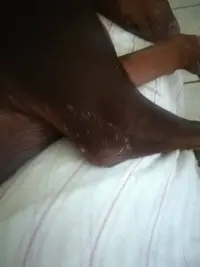
I've been thinking about giving him Omega fatty acid treats to see if it does help I don't think it's anything environmental either we haven't changed laundry soap or anything like that. It might have been a tick and flea shampoo someone recommended to me which if that's the case I still don't understand why it would still be occuring I used it once but regardless thank you!!
Look for only Organic shampoos and nothing with Oatmeal in them. Lots of baths can cause skin issues such as taking out the natural oils in the skin and cause drying.
I would add a good Omega 3 Fish Oil and a Organic Raw Egg every day to food. Also you can get Vit E gel caps and put a pin hole in it. Then put the Vit E on the area. Coconut oil also. But they might want to lick it off. So put add the Organic coconut oil to the food.
I would be careful using flea and tick shampoos. We use Wondercide products.
Would not use the Oatmeal one.
20 Dog Shampoo Ingredients To Avoid | Dogs Naturally
https://www.
dogsnaturallymagazine.com/20-
ingredients-
dont-
want-
dogs-
shampoo
To be on the safe side,
you don’t want any of these
ingredients in your
dog’s
shampoo: 1. Sodium benzoate preservative. When sodium benzoate and citric acid or ascorbic acid (vitamin C) are mixed together they may become benzene – a cancer-causing chemical associated with …

By:
Melissa Boland -
Reading Time: 8 minutes
Are you concerned about what’s in the shampoo you use for your dog? If you’re not, you probably should be.
Your dog’s skin is her largest organ and anything you use on her skin and coat can be absorbed into the body. So you want to avoid bathing your dog with anything that might be toxic.
But let’s face it, reading the ingredient list on your dog’s shampoo is a fuzzy task – and not just because the text is so small. It’s also really hard to understand those chemical-sounding names. How are you to know what’s safe and what isn’t?
Good Or Bad Ingredients
The
labels are full of tricky definitions making it hard to know what to look for. The same ingredient can be classified as a mild skin irritant or one that’s known to cause cancer, depending on the manufacturing process.
If we could inspect the facility and the manufacturer’s books to see if they spend the extra time and money to remove the contaminants that are present after synthesis … and then see how they dispose of the contaminants, we could more easily classify ingredients as “good” or “bad.”
Complicating things further is the fact that
many manufacturers buy the source ingredients and then mix them to develop their product. So, the manufacturer of your dog’s shampoo likely isn’t purchasing coconut oil and synthesizing it to develop sodium lauryl sulfate.
They’re purchasing the sodium lauryl sulfate and mixing it with other chemicals they purchased to develop their final formulation. Where they purchased that sodium lauryl sulfate and how it was synthesized may not be on their due diligence radar.
If the manufacturer of your dog’s shampoo didn’t do their research and pay the additional money for sodium lauryl sulfate that was cleaned of contaminants,
they may be introducing dangerous byproducts into your dog’s shampoo.
Welcome To Greenwashing
Whether the dog shampoo manufacturer purchased clean or contaminated source ingredients, the only “ingredient” likely to be listed on the label is “all-natural coconut-based cleaner.”
Welcome to greenwashing – marketing a product as natural, no matter how loose the claim, in order to boost sales.
While there are no studies that have tested dog shampoo brands for contaminants to bring all of this into focus, we can get a general sense of the product and
validate the “natural” claims by looking at the ingredients.
Avoid The Top 14
These “top 14” ingredients can be a litmus test for determining whether a product is natural, safe and non-toxic.
If the shampoo contains ANY of these ingredients you should NOT use the product on your dog.
1. Proprietary blend of coat and skin conditioners and moisturizers. I know what you’re thinking: “That isn’t an ingredient!” You’re right. But it IS frequently listed on dog shampoo labels. If you see this statement do NOT purchase this product. This is what manufacturers say when they don’t want you to know what’s in the bottle.
2. Artificial fragrance can come from hundreds to thousands of separate ingredients – none of which have to be listed on the label.
Some synthetic fragrances have been linked to cancer as well as reproductive and developmental toxicity.
3. Pthalates are likely not listed on the label. If you see “fragrance,” it’s very likely that pthalates are present. They’re used to bond the fragrance to the other ingredients. Pthalates are hormone disruptors … think endocrine system issues.
4. Artificial colors are synthesized from petroleum and are
linked to organ damage, cancer, birth defects, and allergic reactions. Artificial colors aren’t “pure” chemicals. Many of them are contaminated with byproducts and are purchased by the manufacturer to visually enhance the product.
(What? You thought your shampoo was naturally hot pink?)
5. Formaldehyde preservatives. You won’t see “formaldehyde” on the list of ingredients; but it’s still around. When formaldehyde got a bunch of bad press, it was reformulated into a “slow-releasing” compound.
While it may release less formaldehyde than its precursor, it’s still formaldehyde, which has been known to trigger an immune response that can include
burning, itching, blistering, or scaling of skin.
The jury is still out on whether these chemicals are linked to cancer, as they haven’t been thoroughly tested.
If you see any of these names on the bottle, avoid the product: Bromopol, Doazolidinyl urea, DMDM Hydantoin (often mis-typed on dog shampoo bottles as DHDH hydantoin), Imidazolidinyl urea, Quaternium-7, -15, -31, -61, and Sodium hydroxymethylglycinate.
6. Isothiazolinone preservatives. Methylisothiazolinone and Methylchloroisothiazolinone are both known skin irritants that have been associated with
significant allergic reactions. There’s strong evidence that methylisothiazolinone is also a neurotoxin.
7. Paraben preservatives are thought to be “stored” in the body and have a cumulative effect posing health risks such as
estrogen disruption, cancer, and reproductive issues. They may be listed on the bottle as butylparaben, methylparaben, or propylparaben.
8. Cocamide-MEA is a surfactant that is restricted for use in cosmetics because it has high contamination concerns from nitrosamines. Nitrosamines are contaminants that can form under certain conditions – such as high temperature or acidic pH (3-5 or lower).
They’re a class of chemicals that are thought to be carcinogenic, have reproductive toxicity, developmental toxicity and organ system toxicity.
Nitrosamines can also contaminate waste water. If you begin to think that the nitrosamine warning is alarmist, think again.
One of the top-selling “natural” dog shampoos on the market has Cocamide-MEA listed as an ingredient. The tested pH of this product was 3.5 … that’s well within the range for nitrosamines to develop.
9. Triethanolamine is very closely related to Cocamide-MEA and may be listed as Cocamide-TEA. It’s used as a surfactant and pH adjuster. Like Cocamide-MEA, it’s at high risk of being contaminated with nitrosamines.
10. Mineral oil in dog shampoo helps the skin retain its own moisture by providing a protective barrier over it. Sounds great, right? It also keeps the skin from releasing its own natural oils and eliminating toxins … and that’s not so great.
It’s a liquid mixture of hydrocarbons from crude oil.
It’s a possible toxin and allergy inducer. There are a lot of articles online suggesting that pet parents put a drop of mineral oil in their dogs’ eyes before a bath, saying the mineral oil will protect the eyes from stinging if you get detergent or soap in them.
Don’t do this!
Only pharmaceutical-grade mineral oil has been cleaned of contaminants like complex hydrocarbons and benzene
. Other grades of mineral oil are not completely free of contaminants.
11. SD Alcohol 40 (often called isopropyl or SD-40) is
drying to both the skin and hair oils. SD-40 also enhances skin absorption – meaning it is easier for the other toxic ingredients to enter through the skin when SD-40 is present. Many ear cleaning products are primarily SD-40.
12. Polyethylene glycol (PEG) is a humectant – used to help the skin retain moisture. While it is a known skin irritant, the scarier side of PEG is that it is a “penetration enhancer” – meaning it’s a carrier for other chemicals, helping them cross through the skin and into the bloodstream. It gets worse … it may also be contaminated with dioxane and ethylene oxide!
13. PEG-40 Lanolin is a polyethylene glycol derivative of lanolin. There is limited evidence of it causing organ toxicity. The bigger concern is that it may be contaminated with dioxane and ethylene oxide.
14. Propylene glycol is a skin conditioner, solvent and humectant. Like polyethylene glycol, it’s a penetration enhancer. It’s also a suspected immune system toxin, neurotoxin, reproductive toxin and skin toxin.
6 More To Avoid
Next, we look at six more ingredients that may cause allergic reactions or irritate sensitive skin. These ingredients have a
high probability of being contaminated with toxic byproducts.
Why “high probability”? There are no governing agencies that set standards or regulations for manufacturers in the pet industry, and no one’s testing these formulations to check for byproducts.
Studies that tested very popular human products found contaminants in some very popular “green marketed” brands!
To be on the safe side, you don’t want any of these ingredients in your dog’s shampoo:
1. Sodium benzoate preservative. When sodium benzoate and citric acid or ascorbic acid (vitamin C) are mixed together they may become benzene – a cancer-causing chemical associated with leukemia and other blood disorders. If not mixed with citric or ascorbic acid, sodium benzoate is considered safe.
2. Sodium Lauryl Sulfate (SLS) is a surfactant, detergent, and emulsifier used in a LOT of products. In its powder form, SLS is a known skin irritant and may be inhaled causing organ system toxicity.
SLS may be contaminated with toxic solvents from the manufacturing process. It’s readily absorbed into the eyes where it’s been shown to cause eye irritation and damage eye proteins. Even at very low concentrations, SLS has been shown to remain in a person’s system (brain, heart, and liver) for 4 to 5 days.
Combine that with the fact that SLS is a known penetration enhancer and there’s a possibility of exposing the eyes to some damaging chemicals. If that didn’t steer you away from SLS, the final blow is the manufacturing process, called ethoxylation, is a highly polluting environmental toxin.
3. Sodium Laureth Sulfate is used as a cleaning agent (surfactant) with a high risk for contamination with 1,4-dioxane (dioxane), a known carcinogen, and ethylene oxide – also a known carcinogen, developmental toxin, immunotoxin, and allergen.
The sulfates are derived from coconut oil and as a result manufacturers market them as “all natural plant based & vegan” ingredients.
4. Ammonium Laureth Sulfate is a surfactant known to cause skin irritation and may be contaminated with dioxane and ethylene oxide. Is the foamy texture it produces worth the risk?
5. Polysorbates are a fragrance component, a surfactant, an emulsifying and stabilizing agent. This ingredient starts out as sorbitol – a harmless sugar alcohol usually derived from corn syrup. It’s then treated with ethylene oxide.
Depending on how much ethylene oxide was used, the polysorbate has a number behind its name. For example, Polysorbate 20 is treated with 20 parts ethylene oxide. If the ethylene oxide isn’t completely cleaned out of the final ingredient, it’s contaminated with a known carcinogen.
6. Cocamidopropyl betaine is a synthetic surfactant associated with skin irritation and allergic reactions
. It’s used to make the product thick and foamy. Like the sulfates, cocamidopropyl betaine is derived from coconut oil.
During processing, it’s mixed with the chemicals amidoamine and 3-dimethylaminopropylamine, which can remain in the final product. These contaminants can form nitrosamines under certain conditions (high temperature or acidic pH).
Certified Organic Is Safest
You put a high level of trust in the manufacturer of your dog’s grooming products, yet there are no regulations that hold manufacturers to standards for ingredient purity, verification of “natural” claims or disclosure of manufacturing processes.
Certified organic dog grooming products go through a much higher level of scrutiny. All ingredients are reviewed throughout their lifecycle – from where and how they are grown, harvested, processed, transported, packaged and shipped.
Certified organic dog grooming products also verify that there are no GMO ingredients, no pesticides, herbicides, artificial colors, or artificial fragrance.
Bottom line
When searching for your next dog shampoo …
Search for “certified organic dog shampoo” not “natural dog shampoo.”
If you do search for “natural dog shampoo” don’t purchase the product if it contains any of the 20 ingredients listed here!
Melissa Boland
Melissa Boland was diagnosed with breast cancer on the same day that her beloved toy poodle Henry Clay passed away after his third battle with cancer. Melissa and her family began to take a closer look at the food and products they put in and on their bodies; they found that many products labeled “natural” contained ingredients that were anything but natural. Learning about this common practice in the pet products market focused Melissa on a new life mission: to educate pet owners about product ingredients and to develop 4-Legger (4-Legger.com), a line of pet products which is USDA Certified Organic to food standards that consumers can trust.
15 Ingredients To Avoid In Dog Shampoo and What To Do ...
https://farmdognaturals.com/.../
15-ingredients-that-should-not-be-in-
your-
dogs-
shampoo
- Artificial Colors: Often dog shampoos that are supposed to be herbal come with a lovely green tint. …
- Cocomide DEA or MEA: Notice this foam producing ingredient has the trendy “Coco” prefix that …
- Cocamidopropyl Betaine: This ingredient sounds like a coconut who married a chemist. It is an …
- Formaldehyde: Everyone’s favorite embalming elixir for the dead is now available in your …



 ....


