Just remember that coconut oil is an omega 6 so be sure to keep it balanced with the omega 3 EFA.
Coconut oil also has antibiotic properties, as does honey and can be used on skin abrasions, cuts etc.
I will mix coconut oil, lavender essential oil and purified water in a spray bottle and spritz it on my dogs after their bath and massage it in and will spritz on the legs and underside before walks. It help keep mosquitos away.
One of the best Honey's is Manuka Honey from New Zealand.
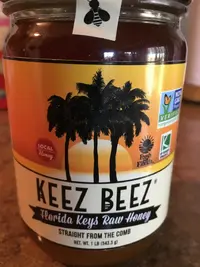
Also some people give local sourced honey (not the crap from stores) from bee farmers to dogs that have allergies. Best to give before allergy season starts.
10 Proven Manuka Honey Uses & Benefits
Manuka honey, produced in New Zealand by bees that pollinate the Manuka bush, is one of the most unique and beneficial forms of
honey in the world. There are many Manuka honey uses that range from healing sore throats and digestive illnesses, to curing Staph infections and gingivitis.
Historically honey has been used for medicinal purposes dating back thousands of years. Seeing that it is one of nature’s richest antimicrobial sources, it shouldn’t surprise us to hear that many archeologists claim that while excavating the tombs of Egyptian royals from thousands of years ago, they discovered unspoiled honey in pots! (
1)
Learn why regular honey just doesn't cut it.
Click here for your free printable on why Manuka honey is a must buy!
Whether it was with the Far Eastern Vedic tradition or ancient Greek mythology, or in Biblical times, where the promised land was known as the “land flowing with milk and honey.” cultures around the globe have praised honey for being an amazing healing treasure.
Yet because of industrialization, honey
isn’t what it used to be. Like most things today, not all honeys are created equal. In addition to the more than 300 varieties of honey to choose from, you have the following options:
- Raw or pasteurized
- Filtered or unfiltered
- Comb (with the edible beeswax inside) liquid, or whipped
- Local or imported
As a rule of thumb, you get what you pay for. Most products at conventional supermarkets are not much different from
high fructose corn syrup. To get good honey today, you pretty much have to go to your local health food store, local farm co-op or go online to purchase the real deal.
Manuka Honey Nutrition Facts
What makes Manuka honey different is its amazing
nutritional profile. Regular raw honey is already known for its tremendous nutritional and immune boosting abilities. Generally speaking, the typical raw unfiltered honey is a rich source of: (
2)
- Amino acids
- B vitamins (B6, thiamin, niacin, riboflavin, pantothenic acid)
- Calcium
- Copper
- Iron
- Magnesium
- Manganese
- Phosphorus
- Potassium
- Sodium
- Zinc
Yet with Manuka honey, the
nutritional content is up to 4 times that of normal flower honeys. This is what is called the Unique Manuka Factor.
Unique Manuka Factor
In 1981, researchers at the New Zealand University of Waikato discovered that
Manuka honey has a considerably higher level of enzymes than regular honey. These enzymes create a natural hydrogen peroxide that works as an antibacterial. Some strains of this New Zealand honey are particularly rich in hydrogen peroxide, methylglyoxal and dihydroxyacetone.
This medicinal trilogy helps make up what is referred to as the
Unique Manuka Factor (UMF), a global standard in identifying and measuring the antibacterial strength of Manuka. (
3) Essentially, the UMF is a guarantee that the honey being sold is of a medicinal quality.
UMF is not found in the nectar of all Manuka flowers and, comparatively speaking, regular Manuka only contains the hydrogen peroxide antibacterial property that is common to most types of honey.
What separates UMF Manuka from other Manuka varieties is that it has both the natural hydrogen peroxide and its own natural UMF antibacterial property, which greatly enhances it effectiveness. The UMF properties of Manuka is extremely stable and, unlike the hydrogen peroxide common in most honey, is not easily destroyed by heat, light and enzymes in the body.
How to Verify Genuine UMF Manuka Honey
The minimum UMF rating recognized is UMF5, however, it is not considered beneficial unless it carries a
UMF 10+ level of antibacterial activity in the honey. Anything ranging from UMF10-UMF15 is a useful level, and anything UMF16 and up is considered a superior quality.
Genuine UMF Manuka Honey will have these
four things:
- It will have a UMF trademark clearly labeled on the front of the container.
- It will be from a New Zealand UMF licensed company and labelled in New Zealand.
- It will have the UMF company’s name and license number on the label.
- It will have a UMF rating number of 5-16+. If it is labeled without the UMF or without a number, then it is not the genuine article.
According to the UMF association the UMF rating actually tests the antibacterial performance of a honey and compares it to phenol, a disinfectant. The Active Manuka Honey Association(AMHA) that does the testing states:
“The presence of the special non-peroxide activity can be detected only by an array of scientific testing directly relating to the phenol standard. The rating has a one-to-one relationship to the phenol standard. ”
This means that a UMF rating of 20+ is equivalent in strength to a 20% solution of phenol. The ideal UMF rating varies depending on your purpose, but laboratory studies have shown that manuka honey with a non-peroxide activity level of UMF®12 to UMF®15 is effective against a wide range of very resistant bacteria.
Here is an explanation of what manuka honey UMF you should use:
0-4 Non-therapeutic
4-9 Maintenance level with general honey health benefits
10-14 Supports natural healing and bacterial balance
15+ Superior levels of phenols that are highly therapeutic but shouldn’t exceed taking 1 tbsp at a time
Another measurement used is the KFactor, created by Manuka honey maker Wedderspoon. According to the Wedderspoon website, “KFactor 12 guarantees 65 percent of the pollen grains in the honey are Manuka pollen grains, KFactor 16 guarantees 75 percent of the pollen grains in the honey are Manuka pollen grains and KFactor 22 guarantees 90 percent of the pollen grains in the honey are Manuka pollen grains.” (
4)
Top 10 Manuka Honey Benefits
Manuka honey health benefits have been touted in the natural health world for a long time and even more in recent years because a growing body of research is starting to support thousands of years of folk medicine use. Some of the top Manuka honey uses are:
1. SIBO, Low Stomach Acid, Acid Reflux
Small intestine bacterial overgrowth (SIBO), low stomach acid and acid reflux go hand-in-hand. Because of Manuka honey’s known natural antibiotic qualities, it is a great medicine for any bacteria related disorder. In fact, in a recent study, one dangerous bacteria related to all three conditions,
Clostridium difficult was found to be quite susceptible to Manuka honey’s bactericidal effects. (
5) So taking
Manuka honey is very beneficial at reducing reflux and balancing your digestive system to heal stomach and intestinal imbalances.
2. Acne and Eczema
The Internet is filled with patient testimonials that
Manuka honey works marvelously for acne and eczema patients. At this time there are no clinical trials to support these claims, but this doesn’t bother me at all. Taking into account its proven antimicrobial and healing properties, it makes every bit of sense to assume that honey can help with these skin conditions. Most people claim that applying honey on affected areas for a few minutes, and then washing off with gentle soap and water usually does the trick. Repeat this every day or every other day for the best results!
3. Staph Infections (MRSA)
You’ve probably heard of the super bug that has plagued hospitals the past several years, methicillin-resistant Staphylococcus aureus (or MRSA). What has happened is that antibiotic overuse and drug ineffectiveness has caused certain strains of
Staph to become virtually indefensible using typical hospital and nursing home medical protocols. Spreading so rapidly, most people affected by MRSA end up getting so infected that they require invasive procedures or devices such as surgeries, artificial joints or intervenes tubing to save their lives (
6)
This past March, however, UK researchers from
Cardiff Metropolitan University have offered us some natural hope. They discovered that
Manuka honey down-regulates the most potent genes of the MRSA bacteria. Some scientists now suggest that regular topical use on cuts and infections (especially in the hospital and nursing home setting) may keep MRSA naturally at bay.
4. Burns, Wounds & Ulcers
According to a recent article in the
Jundishapur Journal of Natural Pharmaceutical Products,
“The use of honey leads to improved wound healing in acute cases, pain relief in burn patients and decreased inflammatory response in such patients.” (
7) Moreover, because of its rich anti-oxidant, anti-bacterial and anti-inflammatory characteristics, Manuka honey has been shown to prevent infection in people with venous ulcers. (
8) It has also been used quite effectively as a wound dressing to promote rapid, improved healing.
5. Tooth Decay & Gingivitis
Several studies have come out recently describing how Manuka honey can help cure gingivitis and periodontal disease. Due to its superior antimicrobial properties, researchers from the
School of Dentistry, University of Otago (Dunedin, New Zealand) discovered that chewing or sucking on a
Manuka honey product not only caused a 35% decrease in plaque, it led to a 35% reduction in bleeding sites in people suffering from gingivitis! (
9) Also calcium, zinc, and phosphorus are all important nutrients for
healing teeth.
6. IBS and IBD
When evaluating the effect that Manuka honey has on experimentally induced inflammatory bowel disease in rats, researchers from
Chandigarh Postgraduate Institute of Medical Education and Research discovered several astounding findings: (
10)
- Manuka honey at different doses provided protection against TNBS-induced colonic damage.
- There was significant protection with Manuka honey 5 g/kg as well as with 10 g/kg body weight compared with the control.
- All the treated groups showed reduced colonic inflammation and all the biochemical parameters were significantly reduced compared with the control in the Manuka honey treated groups.
- Manuka honey at different doses restored lipid peroxidation as well as improved antioxidant parameters. Morphological and histological scores were significantly reduced in the low dose Manuka honey treated group.
- In the inflammatory model of colitis, oral administration of Manuka honey 5 g/kg and Manuka honey 10 g/kg body weight significantly reduced the colonic inflammation.
So Manuka honey not only healed intestinal inflammation and pain, but also repaired free radical damage, and protected against further damage!
7. Sore Throats and Immunity
In 2007, data published in the
Journal of Leukocyte Biology suggested that, “A 5.8-kDa component of Manuka honey stimulates immune cells via TLR4.” (
11) This is interesting because previous studies have indicated that honey stimulates cytokine production from human monocytes.
Coupling with this 2011 research showing how
Manuka stops the growth of sore throat-causing Strep bacteria, it is no wonder that so many people benefit almost instantly from taking a spoonful of honey when they don’t feel well. (
12) And recently it has even been approved by the National Cancer Institute to be used to
heal inflammation in the throat from chemotherapy!
8. Allergies and Sinusitis
There are many anecdotal accounts of people receiving allergy relief after eating honey are all over the internet. There is even a study with honey and birch pollen that had remarkable results. The participants were given regular honey, honey with birch pollen added to it, and some used only their allergy medicines as a control group. The results were impressive:
“…patients reported a 60% lower total symptom score, twice as many asymptomatic days, and 70% fewer days with severe symptoms, and they used 50% less antihistamines compared to the control group.”
They also found that there was very little difference between the birch pollen honey users and the regular honey users! So,
taking Manuka honey on a regular basis can really help your seasonal allergies and lessen your need for medications! (
13)
9. Beauty Treatment & Health Booster
Taken daily Manuka honey has an elixir effect that boosts energy and enhances your quality of life. Because of its nutrient dense profile, it boosts vitality, youthful energy, and has been known to improve skin tone and texture.
Use it in a homemade
face wash to exfoliate and fight free radicals in the skin. Use it in your
shampoo or a hair mask, to boost the shine of your hair. One of my favorite uses is in a
detox drink, to get the most benefits inside and out!
10. Improves Sleep
Manuka Honey helps to promote restful deep sleep. It slowly releases the glycogen needed for essential bodily functions during sleep. Adding honey to milk at bedtime helps the body release melatonin into the brain which is necessary for deep sleep.
There are many health disorders associated with poor sleep such as, heart disease, type II diabetes, stroke, and arthritis. Since honey is proven to aid in quality sleep; it also helps lower the risk of these and many other heath problems.
Manuka Honey Side Effects
Sources like WebMD claim that people allergic to bees should use Manuka honey with caution due to possible allergic side effects. (
14)
Take Manuka with caution if you’re allergic to bees and report any adverse reactions to your natural health care provider immediately.
How to Use Manuka Honey
To experience the most benefit, you should take a dose of about 1-2 tablespoons of Manuka honey a day. The easiest way is to just take it straight, but if it is a little too sweet for you, then you can add it to your favorite herbal tea, over yogurt, or on sprouted grain toast.
If you want to enhance the immune boosting effect or heal a sore throat, add 1 teaspoon
cinnamon. Research shows that the antimicrobial properties of cinnamon and Manuka honey are so
powerful, that they can really help you recover fast! (
15)
Another great way to take advantage of the healing Manuka honey uses, is to make our
Super Secret Detox Drink, but substitute Manuka honey for stevia.