Backyard Chickens?

My friend with the chickens got a duck! I can't remember now if she hatched it or just got in very young. But he is adorable! or she? We don't know yet, I guess. I just meet it today and, damn, forgot to take a picture! But he looks like a Paint horse LOL He's black and white. Very cute! She introduced him to the chicken coop group and within a day or so he was accepted and doing fine. When she walked him out from the house he followed her the whole way! She had let the chickens out and when she was ready to put them back in she could not find the duck! She put all the chickens away and looked and looked and finally found him sitting by the back door by the house! He's like, Okay I've had enough. Isn't this the way back? :)

I got another dozen eggs too. :D
I'd love a duck in the future. Their personalities intrigue me! But oh boy good thing she just got one, I hear they are quite messy. I don't think she will have an issue with just the one creating too much of a mess in the chickens area.
 
Tending to our first hurt chicken. Don't know whats wrong with him but we noticed he was walking with a limp on Saturday afternoon. We removed him from the flock so he could rest in a quiet area on his own before he got a chance to get picked on.

Progressed to not being able to put weight on his foot and his toes won't splay out so we are thinking maybe a sprain? We are also giving him Poultry boost that has B vitamins in it in case it is a vitamin deficiency. He could hobble around by using his wings for balance. No signs of break or any pain when we flex all the toes and his leg. He can grip his toes around our fingers.

We built him a sling to get weight off his legs for an hour each day. Otherwise he rests in his little box and does figure out how to stand up and turn around. We have been giving him outside time so he can get some sunshine, a chance to graze and see if there is any progress. We took his pen outside all day Sunday and bless his little chicken heart, he immediately raised his neck feathers, and spread out his wing to sunbathe. :love:

He eats, drinks, preens, and coos at us so he seems happy other than not being able to put weight on his leg! We are stumped and we're hoping the rest and vitamins, and some boiled egg for a little extra protein helps get him back on the mend... :(


Drumstick in his sling. He has access to normal water, water with b-vitamins (I started mixing this in his food instead) and a warm mash of his food with a baby aspirin.
42549082_10156052374097326_4586473959104446464_o.jpg


This is why he only gets supervised time in the sling (and he was moved inside to make this easier on us...spoiled guy). I went to let the chickens out in the morning, came back to this. Little stinker!
42489749_10156052374507326_658633964986040320_o.jpg


Fast asleep after filling his crop full of food. Zzzzz
42450981_10156052374612326_6245732095994363904_n.jpg
 
Tending to our first hurt chicken. Don't know whats wrong with him but we noticed he was walking with a limp on Saturday afternoon.


Could it be bumble foot?

What is Bumblefoot?

Bumblefoot is basically an infection caused by the staphylococcus bacteria which enters the chicken’s system through a cut, scratch, injury or a chafed and irritated area on its foot. The infection creates an abscess full of pus. It affects all species of poultry and occurs worldwide. Since this infection is quite common among backyard chicken flocks, you may discover that something “fowl” is afoot while visiting your chooks one day. But, don’t retreat, treat!


Symptoms of Bumblefoot

First things first-is it really Bumblefoot? Your strong winged wonders can and do flap themselves up and down and here and there throughout the day. Their naturally curious nature takes them to places that they should and should not be- when you march to the beat of chicken feet you could end up just about anywhere. From fence posts, tractors and hay wagons to dog houses, decks and laundry line posts, your clucky chooks will inevitably investigate. And, what flaps up, needs to flap back down-landings such as these from precarious heights and/or onto rough surfaces can lead to injury. So, if you notice a chook or two limping or favoring a particular leg, it may not necessarily be Bumblefoot, but rather, due to a rough landing. Either way, it warrants closer observation.

Because Bumblefoot mimics a typical foot or leg strain or injury, one of the first signs of this condition is limping. Chickens that have Bumblefoot will limp and sit or rest more often than usual to avoid pain. Chooks may not want to roost and opt for sleeping on the ground instead. Another telltale sign is swelling of the joints in the toes and foot in general.


Basically, Bumblefoot develops in three distinct stages, with each stage being more serious than the previous.

Stage 1:

The first stage of Bumblefoot is characterized by pinkish- red rough areas on the top or bottom of the chicken’s feet or between its toes.

Stage 2:

The second stage manifests itself with increased redness, sores, inflammation and infection. The chicken in question will most likely be feeling a little pain upon walking and landing.

Stage 3:

During stage three, the final and most serious stage of this infection, any sore that has not been treated will turn dark brown-ish black. Chickens are in a good deal of pain and will avoid any movement or activity that puts pressure on their sore weak foot or feet.

Who Gets Bumblefoot?

Now, while Bumblefoot affects all breeds of chickens, heavier breeds and males are definitely more susceptible due to the pressure that the extra body weight exerts on their foot pads. That being said, any overweight bird can be more prone to a Bumblefoot infection, as well.

In addition to weight, this type of infection can also be attributed to nutritional deficiencies, too much protein in your flock’s diet, as well as, an excessive amount of uric acid in their system. A healthy balanced diet = healthy happy chickens who are less likely to develop infections. Chickens who do not get enough vitamins A and B or who get too much protein are more likely to get infections. Normally, a chicken’s body excretes any excess uric acid, a waste product; however, individual genetics, a digestive system malfunction, recurring illness and infections, an unbalanced diet, sedentary chooks or a wet and/or soiled environment can cause the uric acid to remain in the chicken’s bloodstream.

If you do discover a chook with a Bumblefoot infection, you should do a quick check of all your chooks’ feet just in case. It’s always better to be safe than sorry, because in the wonderful yet wacky world of chickens, we backyard chicken keepers know very well that ,while out and about, chooks often don their monkey suits and play the delightful game of monkey see, monkey do! Curious chickens follow other curious chickens.


It's something that worries me this time of year. I increase their protein intake to help with molt. I'm never quite sure if I have crossed the line on protein.

 
Could it be bumble foot?

What is Bumblefoot?

Bumblefoot is basically an infection caused by the staphylococcus bacteria which enters the chicken’s system through a cut, scratch, injury or a chafed and irritated area on its foot. The infection creates an abscess full of pus. It affects all species of poultry and occurs worldwide. Since this infection is quite common among backyard chicken flocks, you may discover that something “fowl” is afoot while visiting your chooks one day. But, don’t retreat, treat!


Symptoms of Bumblefoot

First things first-is it really Bumblefoot? Your strong winged wonders can and do flap themselves up and down and here and there throughout the day. Their naturally curious nature takes them to places that they should and should not be- when you march to the beat of chicken feet you could end up just about anywhere. From fence posts, tractors and hay wagons to dog houses, decks and laundry line posts, your clucky chooks will inevitably investigate. And, what flaps up, needs to flap back down-landings such as these from precarious heights and/or onto rough surfaces can lead to injury. So, if you notice a chook or two limping or favoring a particular leg, it may not necessarily be Bumblefoot, but rather, due to a rough landing. Either way, it warrants closer observation.

Because Bumblefoot mimics a typical foot or leg strain or injury, one of the first signs of this condition is limping. Chickens that have Bumblefoot will limp and sit or rest more often than usual to avoid pain. Chooks may not want to roost and opt for sleeping on the ground instead. Another telltale sign is swelling of the joints in the toes and foot in general.


Basically, Bumblefoot develops in three distinct stages, with each stage being more serious than the previous.

Stage 1:

The first stage of Bumblefoot is characterized by pinkish- red rough areas on the top or bottom of the chicken’s feet or between its toes.

Stage 2:

The second stage manifests itself with increased redness, sores, inflammation and infection. The chicken in question will most likely be feeling a little pain upon walking and landing.

Stage 3:

During stage three, the final and most serious stage of this infection, any sore that has not been treated will turn dark brown-ish black. Chickens are in a good deal of pain and will avoid any movement or activity that puts pressure on their sore weak foot or feet.

Who Gets Bumblefoot?

Now, while Bumblefoot affects all breeds of chickens, heavier breeds and males are definitely more susceptible due to the pressure that the extra body weight exerts on their foot pads. That being said, any overweight bird can be more prone to a Bumblefoot infection, as well.

In addition to weight, this type of infection can also be attributed to nutritional deficiencies, too much protein in your flock’s diet, as well as, an excessive amount of uric acid in their system. A healthy balanced diet = healthy happy chickens who are less likely to develop infections. Chickens who do not get enough vitamins A and B or who get too much protein are more likely to get infections. Normally, a chicken’s body excretes any excess uric acid, a waste product; however, individual genetics, a digestive system malfunction, recurring illness and infections, an unbalanced diet, sedentary chooks or a wet and/or soiled environment can cause the uric acid to remain in the chicken’s bloodstream.

If you do discover a chook with a Bumblefoot infection, you should do a quick check of all your chooks’ feet just in case. It’s always better to be safe than sorry, because in the wonderful yet wacky world of chickens, we backyard chicken keepers know very well that ,while out and about, chooks often don their monkey suits and play the delightful game of monkey see, monkey do! Curious chickens follow other curious chickens.


It's something that worries me this time of year. I increase their protein intake to help with molt. I'm never quite sure if I have crossed the line on protein.
Nope. That was the very first thing I checked. I wish it was so I had an answer!
 
Nope. That was the very first thing I checked. I wish it was so I had an answer!
Darn! It sounded like that was it! But knowing you, I figured that you had already explored that. ;) I hope you get to the bottom of it! Poor thing!

I'm glad you put some pictures of the sling. When I first read that, I'm thinking, A sling? I pictured someone with a sling around their neck and arm! LOL when I saw the picture, the light bulb went on LOL. :speechless: Oohh, a sling! :spit: Duh.
 
Leaning towards a slipped tendon with a secondary twisted tibia. There is a taping method to help the muscles re-develop the right way to hold the tibia where it should be. Basically, when he stands, his foot from the top is slightly rolled inwards with his hock touching the other hock. Put his ankles together and push out his hock, his leg is perfect and his foot lays flat!

He's still alert, eating and drinking like a king, talks to us every time we interact with him, enjoys his sunbaths, and managed to run across the yard twice, wings flappin for balance, so he could hang out with us on the deck lol. He shows no signs of depression. With all of that taken into account, my husband and I both agreed that he obviously wants to live.

We are taking him to a vet that deals with chickens either Thursday or Friday (as soon as they are available) to hopefully get a better idea of what we are dealing with and go from there...I'm hoping it is a slipped tendon that they can pop back into place. We've taken quite a liking to him, he falls asleep in our arms when we get him out to clean his cage, do exercises for him, or whatever we need to do, so we really hope something works out so he can live on his life.


His leg looks exactly like this chick's right leg but without being able to put weight on it and the foot slightly rotated inwards, the outer toe in the air. This chick has a twisted tibia and was able to correct it with taping, therapy, and rest.
twisted tibia.webp
 
Leaning towards a slipped tendon with a secondary twisted tibia


I spent some time with my homesteading friends this week. I was telling them about your roo. They think you're right. They said with the bigger breeds it's pretty common. They suggested you put the roosting bar no higher than 3ft off the ground and that should help prevent future injuries.
How is he btw?
 
I spent some time with my homesteading friends this week. I was telling them about your roo. They think you're right. They said with the bigger breeds it's pretty common. They suggested you put the roosting bar no higher than 3ft off the ground and that should help prevent future injuries.
How is he btw?
Roosting bar is only a foot and 1/2 off the ground or so. We made sure of that since this is a larger breed. He most likely twisted it due to poor genetics and conformation. As he grew, his leg failed. :(

Thanks for asking about Drumstick. He is not better but not any worse. Still alert and acting like a chicken...minus the leg issue. We have an appt tomorrow with the vet to see if they can confirm or find anything so we can decide where to go from there. It was hard to find a chicken vet. This vet office isn't our normal vet but they were really caring over the phone and said most of the staff had chickens, so that made us feel better. Prayers there is positive news like a slipped tendon... but if nothing can be done, which we are aware is very likely, then we will take him home and spoil him the rest of the day. Either way I told my husband that the vet visit would be money well spent no matter so we know what we are dealing with in the future.

I know some may feel like its just a chicken but we have grown attached to them, especially when we are caring for them 3-4x a day when one of them isnt well. And some of them go out of their way to connect to you and show their personality to you. Drumstick is one of them.

MVIMG_20180928_153946.webp

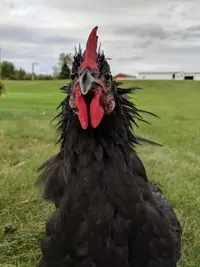
Are you taking pictures?
IMG_20180928_155120.webp

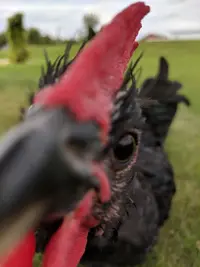
Hello in there!
MVIMG_20180928_155108.webp

He likes getting the back of his head and neck scratched.
MVIMG_20180928_155227.webp

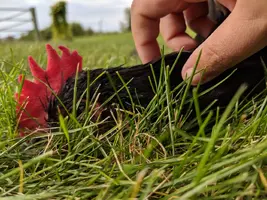
So much so that he lays his head down and falls asleep, lol
MVIMG_20180928_155237.webp

His rooster pin feathers are coming in. Here he is all ruffled and goofy.
IMG_20180928_155056.webp
 
Last edited:
I know some may feel like its just a chicken


Not me! It's been a long time since I lived on a farm where they are just considered dinner.
I got a stern reminder this past week. Our friends currently have 50 chickens they raise to butcher size and in the freezer they go. Normally not so many but were experimenting with breeds to see which is better as meat birds. I can't imagine being there on butcher day.

I hope the vet has good news for Drumstick. We have a chicken vet also. Always an interesting experience to go there. It's a group of vet's that treat unique pets. Never fail to see something interesting when we go.
 
His rooster pin feathers are coming in. Here he is all ruffled and goofy.
Aww, he's adorable and I totally understand the love you have for him. Getting attached to animals is not new to me LOL he is part of the family now! Good luck at the Vets. And I'm really interested to hear what they have to say.
 
Aww, he's adorable and I totally understand the love you have for him. Getting attached to animals is not new to me LOL he is part of the family now! Good luck at the Vets. And I'm really interested to hear what they have to say.

Great news! No broken leg. Just a broken toe! :woot:

Drumstick is splinted up for 3 weeks and can go back with his flock so long as they are nice to him. He will learn how to walk again and his toe will heal. He may always have a little limp once he heals but he showed no pain while the vet was manipulating his toes. She said his leg may have twisted just from him not using it and him adjusting to it. His leg was perfectly normal with only a little swelling this morning, go figure! But he still was favoring it.

She asked us what his purpose was going to be... Umm pet lol. Maybe breeding. The vet and tech both laughed and said they understood and that they can see why we were attached. So she gave us 3 options. Splint his foot and see what happens, xray and splint, or do nothing and see what happens. She said she thinks it may be toe but it's so hard with chickens because they have so many bones in their feet and he wasn't reacting to any pain to help her out but she didn't feel it was his leg.

They were fairly priced (entire visit cost what the other vet was wanting just for an xray!) so we went ahead with an x-ray so we could KNOW exactly what was going on. The xray showed that his legs were all healthy but yep he had broken his outer toe right at the joint on one of the last knuckles. That break was causing his toe to curl up under his middle toe and making it difficult to walk.


We are both so happy this nice rooster gets to continue to enjoy life! And now we have an awesome chicken vet. ‍:thumbsup:

IMG_20180929_080450.webp

 
That's great news about it just being a toe and he's being such a good boy in the vehicle!
 

Back
Top