
You are using an out of date browser. It may not display this or other websites correctly.
You should upgrade or use an alternative browser.
You should upgrade or use an alternative browser.
Backyard Chickens?
- Thread starter Dragonborn
- Start date


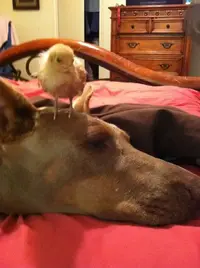

Holy
 !Daisy would not do that.would end with a flip and gulp.

Judith
Hot Topics Subscriber
These are mine although I only have three of them now as the Rhode Island Red top left ent to live with my son as the rooster started attacking her for some reason, the white one is Silky cross, the Black Rock and the rooster are litter mates , he is one bad ass , her runs after Steve and Buddy but does not bother me or Bella.

, he is one bad ass , her runs after Steve and Buddy but does not bother me or Bella.


This forum is awesome!!! I'll have to live vicariously through you guys.
I grew up in my grandparents farm (Cuba). Chickens, cows, pigs, goats, horses an it continues. I always wanted to be a farmer like them. Slaughtering bothered me as a kid but I always helped in the process especially making pork sausages yummy.
I live in Miami, FL. City life sucks for introverts. Maybe when I get old I can buy a property in BFE and live off the land like I always wanted and teach my grandchildren all about rural living.. Reading your conversations makes me so happy. Wish I could get my husband on that boat =\
I grew up in my grandparents farm (Cuba). Chickens, cows, pigs, goats, horses an it continues. I always wanted to be a farmer like them. Slaughtering bothered me as a kid but I always helped in the process especially making pork sausages yummy.
I live in Miami, FL. City life sucks for introverts. Maybe when I get old I can buy a property in BFE and live off the land like I always wanted and teach my grandchildren all about rural living.. Reading your conversations makes me so happy. Wish I could get my husband on that boat =\


Interesting! He knows they are the male species and drives them off!he is one bad ass , her runs after Steve and Buddy but does not bother me or Bella.

I love all the colors! They certainly are bright and pretty! I guess that's why I love my Appaloosa's. I love color!
Dobs4ever in your chick photo there is one that is two toned color....which one did he grow up to be? Just wondering how that color ended up.
The little black and beige one in front of the feeder.

Dobs4ever
Hot Topics Subscriber
That is the black cochin standing right to the left of the black barred rock rooster in the picture of them grown up. She is mostly all black now. The cochins have feathers on their legs and feet - I did not get a good picture of my gold cochin with black feathers on her neck. I will work on that.
I do think the baby chicks are just adorable, precious AND fragile. Once I get them to 2 weeks I feel we are past the hump. You have to teach them to eat and drink because they are just one day old when I get them.
In spring I will probably add 2 or 4 more hens. NO MORE ROOSTERS though I do love my barred rock. He comes running first to me when I go to the coop.
I do think the baby chicks are just adorable, precious AND fragile. Once I get them to 2 weeks I feel we are past the hump. You have to teach them to eat and drink because they are just one day old when I get them.
In spring I will probably add 2 or 4 more hens. NO MORE ROOSTERS though I do love my barred rock. He comes running first to me when I go to the coop.
Oh yes! I'll tell you, I was at a county fair over the summer where they have a kind of 'petting zoo' area with all kinds of animals. They had some piglets and a llama but those were fenced in where you couldn't handle them much. But they DID have several others baby animals where they could be touched and picked up. Baby chicks, ducks, bunnies, guinea pigs.... and I was likeI do think the baby chicks are just adorable, precious AND fragile.
LOL Because it was children everywhere, grabbing, dropping (horrors!) and taking the animals out on the grounds to sit with them. I felt like a mother hen, wide eyed and frantic! LOL It's bad enough to watch my own twin grandchildren, showing them how to handle them, watching that they are not dropped etc....along with watching all the other children that weren't mine! LOL You how that is??? Wishing I could say something (and I did at times!  ) It felt like a three ring circus! I asked someone who looked like she was in charge (hmmm...oozing "pack leadership" ?? ) but she was not! Just a visitor like me. I said, "There should be someone here supervising these poor animals!!" It was hotter than hell that day too. One little bunny was so freaking cute.....all white with black spots down his back that looked just like buttons....all the kids wanted him! The poor thing looked frazzled. When my grandchildren picked him up I said, "Maybe we should give him a rest." As soon as he was put back, someone else picked the poor thing back up. I was like,
The chicks were especially fragile, as you say, and I couldn't help but hold my breathe whenever a child picked them up! They never know how tight they are holding them! One grandmother asked me if I would hold the chick so her grandchild could see it. She knew that if the child picked it up she had a tendency to squeeze!! I could feel how fragile that little chick was! omg. lol It was a stressful part of the day for me!! LOL I felt so bad for the baby animals and I knew by the end of the day or end of the fair, some would not make it out alive.

Dobs4ever
Hot Topics Subscriber
So true MB - their little bones are thinner than toothpicks - I don't pick mine up at all. You have to keep the temp at 95% for the first 2 weeks. I about died from the excess heat but they thrive on it. By 3 weeks they have some of their feathers so you can let the temp down a little but still they can't take cold til about 4 weeks and mostly feathered.
I did have one catastrophy - Helio always went with me to the crate and watched. I opened the door and did not notice one jumped out right into his mouth. I started counting and saw one missing turned to look and Helio had it but it was dead already. Then one got out about 3 weeks later and he caught it but did not kill it before I got it. That is the little black sex link. Sure ruffled her feathers though.
I am questioning Judith's pictures though - just like all her pictures they are vibrant and look like movie stars!!!! I do always admire her beautiful pictures even of chickens............They look almost painted ...come on Judith whats the secret???
I did have one catastrophy - Helio always went with me to the crate and watched. I opened the door and did not notice one jumped out right into his mouth. I started counting and saw one missing turned to look and Helio had it but it was dead already. Then one got out about 3 weeks later and he caught it but did not kill it before I got it. That is the little black sex link. Sure ruffled her feathers though.
I am questioning Judith's pictures though - just like all her pictures they are vibrant and look like movie stars!!!! I do always admire her beautiful pictures even of chickens............They look almost painted ...come on Judith whats the secret???
Judith
Hot Topics Subscriber
Dobs4ever , ha ha Susan thank you , really no secret I have been among chickens since I was a toddler both lots of grandparent had chickens and I just about lived in the chicken coop I just love chickens, My partner has racing pigeons so the chickens get whatever the pigeons get, de-flead with ivomec [dip a cotton wool bud into ivomec and rub on the back of the neck] the coop is sprinkled with disinfectant powder we get at the farm store to get rid of mites, all these things can stop them laying , the white chicken is about eight years old and still going strong.
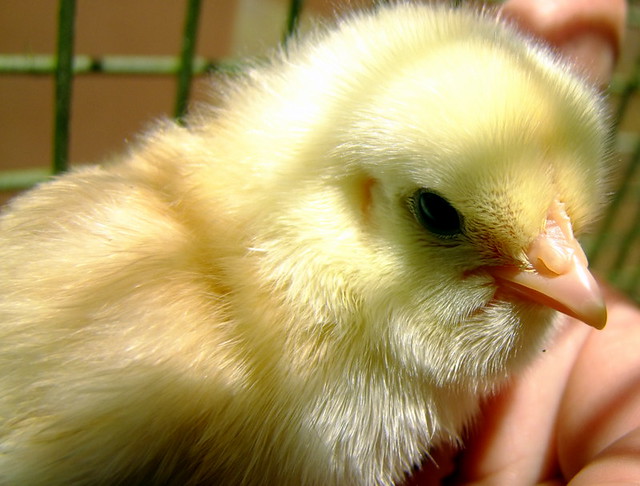
my wee black chick, a Black rock and very hardy
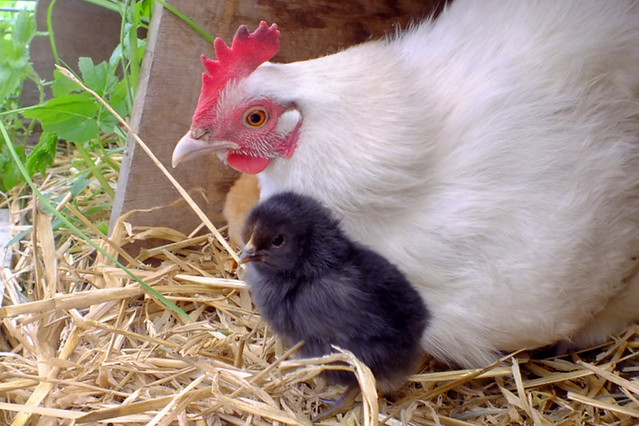
this is the sire of my rooster they look alike

a couple of our fancy pigeons they have feathered feet

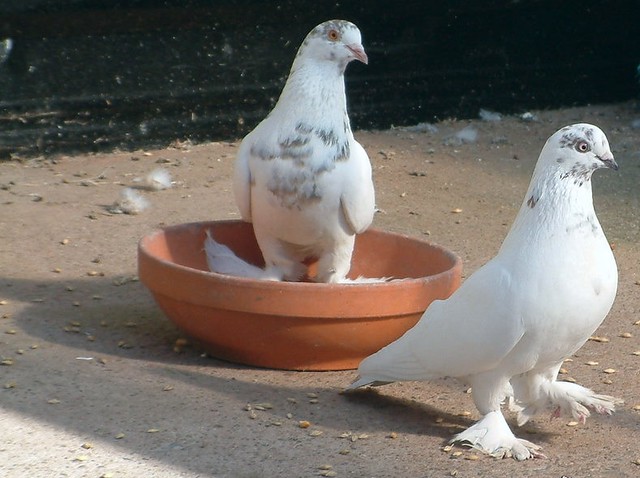
hot bath for the racers

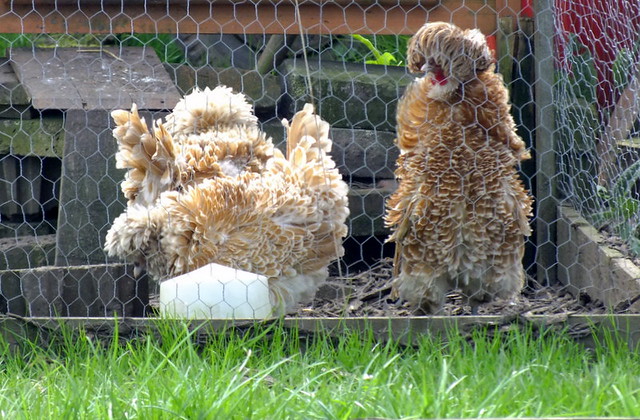
how about these two, they belong to a friend they are called Frizzell's I think they are a breed that came from Poland
my wee black chick, a Black rock and very hardy
this is the sire of my rooster they look alike
a couple of our fancy pigeons they have feathered feet
hot bath for the racers
how about these two, they belong to a friend they are called Frizzell's I think they are a breed that came from Poland
Gotta be your camera, right Judith?? Very beautiful bright colors! Your pigeons feathering is so pretty!!! Love the little chicks! So damn cute!!!I do always admire her beautiful pictures even of chickens............They look almost painted ...come on Judith whats the secret???
Your friends chickens are so strange!! LOL Can't tell the head from the rear! LOL

obbanner
Hot Topics Subscriber
I thought of this thread when I saw this article. It's aimed more at the potential urban/suburban farmers than the participants in this thread. I thought it worth posting in case anyone who's not in the country is thinking about hens. A friend asks me to take care of their chickens and ducks when they go on vacation. I can keep the eggs, but, if I was given my preference, I'd rather go to the store than take care of their poultry. 
Five Reasons Why Owning Backyard Chickens Is For The Birds - Forbes
Five Reasons Why Owning Backyard Chickens Is For The Birds

2 comments, 1 called-out
Comment Now
Follow Comments

Somehow or other, it has become the mark of twenty-first century urban hipness to keep a bunch of birds out back. We’re mostly talking hens. Exact numbers are unavailable, but the trend has become popular enough for dozens of major cities to revise their animal ordinances, thereby opening the legal floodgates for the emergence of urban animal agriculture, an endeavor that most American cities legislated out of existence (primarily for health reasons) back in the nineteenth century.
This renaissance of foodie affection for the uber-local egg has also inspired its share of outlandish rhetoric. Says the mayor of Madison, Wisconsin: “Chickens are really bringing us together as a community.” Says my Austin neighbor and co-owner of Boggy Creek Farm, Carol-Ann Sayle: “Everyone should have their own henhouse in their own backyard.”
It’s doubtful that the incoming mayor of New York City will agree with either of these sentiments. But no matter. Thousands of other urbanites nationwide—many of them so committed to keeping chickens that they do so surreptitiously—are suddenly giving a major cluck about backyard eggs.
Lost in all the enthusiasm are the drawbacks. According to Ian Elwood, of Animal Legal Defense Fund, “the solutions backyard chicken farming seeks to create—food security, local foodsheds, healthful eating—are all better served by encouraging more plant based farming.” His bottom line regarding urban agriculture is simple: “Let’s leave animals out of it.”
What follows are five reasons why, when it comes to chickens, Elwood is onto something.
1) Diminishing Production. Hens start laying eggs after about five months. Production, however, wanes at the age of two. Hens can live for well over a decade. Many backyard hen owners are as reluctant to keep a non-productive hen as they are to turn her into chicken soup. The upshot has been a sharp rise in abandoned birds. In 2001, according to the Associated Press, Minneapolis’ Chicken Run Rescue fielded six calls from individuals looking to find homes for forsaken chickens. By 2012, that number reached almost 500.
2) Commercial Hatcheries. Raising hens in the backyard seems like an obviously humane alternative to factory farming. In some ways, it is. However, on this point, two closely related facts should be considered. First, the majority of hens fortunate enough to escape the factory’s battery cage hail from the same industrial hatcheries that supply factory farms with millions of birds. This commonality not only undermines any pretense of thinking that backyard birds challenge the industrialized status quo, but it leads to a second problem, namely the fact that the male chicks born in those industrial hatcheries were likely either tossed alive into a grinder or gassed. Male birds are worthless to a hatchery supplying egg farms. Household hens might be glorified, but their cute chicken brothers are treated like trash.
3) Predation. Backyard hens are especially vulnerable to predation. Try this experiment: when you learn that a friend gets backyard hens, check in two months later and ask how things are going. Chances are good that the answer will go something like, “great, but . . . .” Dogs, cats, snakes, coyotes, possum, hawks, raccoons, raccoons, raccoons. These predators are prevalent and persistent and your poor hens, the ones you have come to love as pets, cannot indulge their natural defense mechanisms (such as finding a low tree limb hidden in dense foliage). They often find themselves trapped in some Ritz-Carleton of a coop that turned out to be less secure than advertised and, in their plush safe havens, are killed in a way that makes the slaughterhouse seem like a day spa by comparison. “What killed my chickens?” It’s an all too common question. And there are currently 23,900 answers being offered on Google GOOG +1.1%.
4) Roosters. There’s about a 5 percent chance that your hen will turn out to be a rooster. There are a couple of reasons for this mistake. For one, the sex of a chicken is hard to identify upon birth, even for experts. Many roosters are accidentally identified as hens and shipped to feed stores, the place where urban farmer/hipsters flock to buy their stock. Less innocently, many male birds are tossed into shipping containers as a form of packing material, deployed to prevent the hens from banging into the side of the crate and having their retail value lowered. In any case, urban ordinances that do allow hens are markedly less accepting of roosters, who are more often than not considered poultry non-grata in urban settings.
5) Cost.First-time backyard hen owners are enchanted by the idea of free eggs. Don’t be fooled. Build the coop, buy the feed, pay the vet, count the hours spent maintaining the coop and administering care, compensate the neighbor’s kid for feeding the hens when you go to the Hamptons for the weekend, and then grab a calculator. The results? As one backyard farmer from Merced, California told an online chicken forum: “Don’t tell my wife, but I think my eggs are costing about $40 a dozen.”
Follow me on twitter @the_pitchfork and visit my website at james-mcwilliams.com
Five Reasons Why Owning Backyard Chickens Is For The Birds - Forbes
Five Reasons Why Owning Backyard Chickens Is For The Birds
2 comments, 1 called-out
Comment Now
Follow Comments

Somehow or other, it has become the mark of twenty-first century urban hipness to keep a bunch of birds out back. We’re mostly talking hens. Exact numbers are unavailable, but the trend has become popular enough for dozens of major cities to revise their animal ordinances, thereby opening the legal floodgates for the emergence of urban animal agriculture, an endeavor that most American cities legislated out of existence (primarily for health reasons) back in the nineteenth century.
This renaissance of foodie affection for the uber-local egg has also inspired its share of outlandish rhetoric. Says the mayor of Madison, Wisconsin: “Chickens are really bringing us together as a community.” Says my Austin neighbor and co-owner of Boggy Creek Farm, Carol-Ann Sayle: “Everyone should have their own henhouse in their own backyard.”
It’s doubtful that the incoming mayor of New York City will agree with either of these sentiments. But no matter. Thousands of other urbanites nationwide—many of them so committed to keeping chickens that they do so surreptitiously—are suddenly giving a major cluck about backyard eggs.
Lost in all the enthusiasm are the drawbacks. According to Ian Elwood, of Animal Legal Defense Fund, “the solutions backyard chicken farming seeks to create—food security, local foodsheds, healthful eating—are all better served by encouraging more plant based farming.” His bottom line regarding urban agriculture is simple: “Let’s leave animals out of it.”
What follows are five reasons why, when it comes to chickens, Elwood is onto something.
1) Diminishing Production. Hens start laying eggs after about five months. Production, however, wanes at the age of two. Hens can live for well over a decade. Many backyard hen owners are as reluctant to keep a non-productive hen as they are to turn her into chicken soup. The upshot has been a sharp rise in abandoned birds. In 2001, according to the Associated Press, Minneapolis’ Chicken Run Rescue fielded six calls from individuals looking to find homes for forsaken chickens. By 2012, that number reached almost 500.
2) Commercial Hatcheries. Raising hens in the backyard seems like an obviously humane alternative to factory farming. In some ways, it is. However, on this point, two closely related facts should be considered. First, the majority of hens fortunate enough to escape the factory’s battery cage hail from the same industrial hatcheries that supply factory farms with millions of birds. This commonality not only undermines any pretense of thinking that backyard birds challenge the industrialized status quo, but it leads to a second problem, namely the fact that the male chicks born in those industrial hatcheries were likely either tossed alive into a grinder or gassed. Male birds are worthless to a hatchery supplying egg farms. Household hens might be glorified, but their cute chicken brothers are treated like trash.
3) Predation. Backyard hens are especially vulnerable to predation. Try this experiment: when you learn that a friend gets backyard hens, check in two months later and ask how things are going. Chances are good that the answer will go something like, “great, but . . . .” Dogs, cats, snakes, coyotes, possum, hawks, raccoons, raccoons, raccoons. These predators are prevalent and persistent and your poor hens, the ones you have come to love as pets, cannot indulge their natural defense mechanisms (such as finding a low tree limb hidden in dense foliage). They often find themselves trapped in some Ritz-Carleton of a coop that turned out to be less secure than advertised and, in their plush safe havens, are killed in a way that makes the slaughterhouse seem like a day spa by comparison. “What killed my chickens?” It’s an all too common question. And there are currently 23,900 answers being offered on Google GOOG +1.1%.
4) Roosters. There’s about a 5 percent chance that your hen will turn out to be a rooster. There are a couple of reasons for this mistake. For one, the sex of a chicken is hard to identify upon birth, even for experts. Many roosters are accidentally identified as hens and shipped to feed stores, the place where urban farmer/hipsters flock to buy their stock. Less innocently, many male birds are tossed into shipping containers as a form of packing material, deployed to prevent the hens from banging into the side of the crate and having their retail value lowered. In any case, urban ordinances that do allow hens are markedly less accepting of roosters, who are more often than not considered poultry non-grata in urban settings.
5) Cost.First-time backyard hen owners are enchanted by the idea of free eggs. Don’t be fooled. Build the coop, buy the feed, pay the vet, count the hours spent maintaining the coop and administering care, compensate the neighbor’s kid for feeding the hens when you go to the Hamptons for the weekend, and then grab a calculator. The results? As one backyard farmer from Merced, California told an online chicken forum: “Don’t tell my wife, but I think my eggs are costing about $40 a dozen.”
Follow me on twitter @the_pitchfork and visit my website at james-mcwilliams.com
LOL, Art! All the reasons why I don't have any. I love them! But all the reasons why I don't have any. It always seems the ideal "prepper" food...endless supply of eggs...and then chicken. And something to keep down the bugs to boot  But it's not in me to sell old ones, or kill them or wake up one morning to an empty pen due to predators. :*( Sometimes beauty has to be viewed from afar. I still think they are beautiful and I love the thought of them roaming on my property. But I know its never gonna happen.
It always seems the ideal "prepper" food...endless supply of eggs...and then chicken. And something to keep down the bugs to boot But it's not in me to sell old ones, or kill them or wake up one morning to an empty pen due to predators. :*( Sometimes beauty has to be viewed from afar. I still think they are beautiful and I love the thought of them roaming on my property. But I know its never gonna happen. 
There is actually a few people that take in the older hens that no longer lay as much. They enjoy having them around and are fine with having less egg production. We have some friends that live out in Gray Summit on about 30 acres and have taken in about 20 hens now. It has sort of become a hen rescue. They have built a nice little area for them to live out their days eating bugs and laying enough eggs to keep even the neighbors stocked.
Similar threads


- Replies
- 26
- Views
- 2K


- Replies
- 18
- Views
- 428

