I have used GrokAI as a search engine in past, and restarted just recently noting its "most balanced" asto bias, and most useful in techical research. Then I read the cited studies and think for myself.
Here is what it turned up: in reply to my question:
Explain the concept of "stamm lines" in dog breeding and in particular how behavioral traits follow maternal lines or paternal lines most reliably
(Excerpt:
"How behavioral traits tend to follow the lines
Behavioral traits in dogs (temperament, trainability/biddability, fearfulness, aggressiveness, drive, sociability, etc.) show moderate heritability—typically in the 0.2–0.5 range depending on the trait and population, with some (e.g., trainability or boldness-related measures) higher. Breed ancestry explains only a modest fraction of individual variation (around 9 % in large genomic studies), and most loci involved are regulatory rather than simple Mendelian.
Maternal lines are generally regarded as more reliable for behavioral consistency, for both genetic and non-genetic reasons:
• Maternal (environmental and epigenetic) effects are substantial. The dam provides the prenatal uterine environment, milk, early care, and social modeling during the critical socialization window. Studies of German Shepherds and other working dogs show that levels of maternal care in the first weeks of life measurably influence adult offspring scores for social engagement, physical engagement, and aggression (or related temperament dimensions) at 15–18 months or later. Mothers that provide more intense or specific styles of care produce systematically different adult temperaments.
• mtDNA and X-chromosome effects, while limited in scope, can influence energy metabolism, stress response, and certain neurological functions.
• Many experienced breeders therefore treat a multi-generation “mother line” or dam family as an anchor for stable nervous system, learning style, trainability, and overall temperament. Outcrossing is often followed by “bookending” back to the maternal line to restore consistency.
Paternal lines transmit Y-chromosome material and, more importantly, half the autosomal genome. A prepotent sire can rapidly spread desirable (or undesirable) alleles across many litters and kennels. However, the sire has no direct postnatal behavioral influence comparable to maternal care, and Y-linked genes are few. Behavioral transmission through sire lines therefore relies more purely on the additive genetic contribution and on selection of sons that themselves prove good producers. Popular-sire effects can also create bottlenecks and reduce overall diversity."
Here is the study that is cited
I'm interested in the genetic predictability of behavior, which is clearly doable, in practice, but which eludes genomics at the state of the art.
Which then leads back to best practices in those working in dog world at the highest level with access to largest data pools- MWDs and largest breeders, Service Dog corporate programs that track results using tools like BetterBred, etc.
And back to your point
@Nordika
Look at the maternal lines for behavioral traits, and back in time to before the genetic pool was compromised by whatever it is one objects to---
This is a consistent theme, I read in archives here and elsewhere. And in horse world.


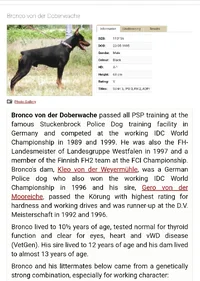

 With Bronco, it obviously worked and I'm extremely impressed with multiple dogs in the pedigree living well past 10.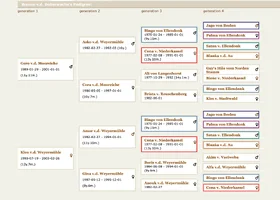
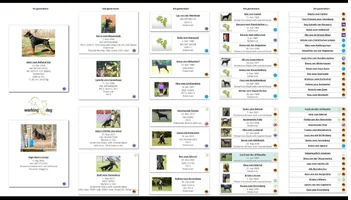


 og Profile Page
 at World Dog Show


