• Disclaimer: Hello Guest, Doberman Chat Forums presents the opinions and material on these pages as a service to its membership and to the general public but does not endorse those materials, nor does it guarantee the accuracy of any opinions or information contained therein. The opinions expressed in the materials are strictly the opinion of the writer and do not represent the opinion of, nor are they endorsed by, Doberman Chat Forums. Health and medical articles are intended as an aid to those seeking health information and are not intended to replace the informed opinion of a qualified Veterinarian.”

Buying a holter monitor

It seems I read that they are leaning toward reasoning that the the echo showing an enlarged heart is most indicative of true DCM, whereas a Holter with erratic heartbeats that has a normal echo may indicate the sudden death risk.
Either way, it would seem good info to have if either of my Dobergirls head south early. Even information held in retrospect may help researchers (thinking of Zastava being in the Disappearing Doberman project). In the case of the echo having determined something early, I have read there are medicine regiments that can give a meaningful prolonging of life. In the case of a Holter having detected missed beats, or beats not timed properly, I can at least brace myself if indicated. If that sudden death never comes, hey, we enjoyed bonus years.
 
In the case of a Holter having detected missed beats, or beats not timed properly, I can at least brace myself if indicated. If that sudden death never comes, hey, we enjoyed bonus years.
Missed beats are likely to happen with dobermans. Anything under 50 PVCs is considered "normal" for dobermans and not necessarily a sign of DCM. The holter too can help you catch anything early to start treatment before symptoms even happen. By the time you see any outwards symptoms, its often too late to slow the disease.

But both tests catch indicators of DCM, specifically? Like you definitely want these tests working together, if you can, right?
Yes and you should do them as closely together as possible as the echo and holter only show you the health of the heart on that day.

An echocardiogram assesses the heart while it is pumping and contracting. It also assesses the heart valves while they are opening and closing. An echo uses sound waves into the heart and the surrounding areas. The sound waves bounce off different parts of the heart and create a reflection echo, which generates a moving picture of the heart. The echo allows the cardiologist to make a more accurate assessment of the heart function and allows them to look at the size and structure of the heart and how well it is functioning.

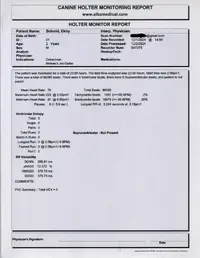
A holter monitor records heart rate, heart rhythm and the strength and timing of the heart's electrical impulses. Running the holter over a continuous period of time allows the cardiologist to detect any irregular or abnormal heartbeats and any issues with the electrical impulses of the heart. Abnormal electrical impulses prevents the blood from flowing through the heart correctly.

So each test measures different functions of the heart in different ways.

I'll look for my receipts of typical echo costs I've paid.
I believe at the clinics here they've been about $250 which is a really good price. The reasons the clinics are cheaper is because one cardiologist can see many more people than they'd probably ever see in a month in their office. Then $15 to submit to OFA. Holter is $60 to get results. $15 to submit to OFA but if you submit 3 things at once to OFA it drops to only $10 a piece so I do echo, holter, and eyes at the same time.
 
That's awesome to hear! I don't know how to read the report, but sounds like something that would help any Doberman owner sleep well.
 
I don't know how to read the report, but sounds like something that would help any Doberman owner sleep well.
I agree. It was reassuring when the breeder looked at it and the cardiologist who did his echo said everything was perfect there too.
 

Back
Top