Picky eater or something else ?

Fstuff92

Notable member
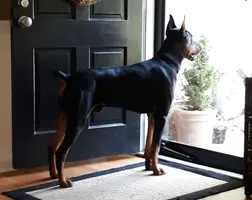
Our dobie (Rambo) is almost 9 mo's old and weighs @ 75-80 lbs. Neither of his parents were huge so to me the weight sounds about right.

My concern is at 7 months he was 75 lbs and was the same at 8 mo.

Recently (in the past month and a half) he's started to be really picky about eating. We changed foods and still the same. He's only eating about half of the recommended amount. We've tried adding water and that seemed to help in the beginning but now he's back to the same pattern. He looks good body wise, no ribs showing, etc. I guess my main concern is he's not getting the nutrition he's supposed to be getting. He gets plenty of exercise, we do not give many extra's or treats, and recently I've been giving the dog food as treats (which he gladly gobbles down).

We never had to decide about leaving the food out because up until now it was gone in a flash. We have been leaving it out since this started simply because we're afraid of him not getting the nutrition. When the food is out or he walks by he will check it out but I believe he's simply hoping for something better, eventually he will eat it. He also tends to only want to eat when we're in the room as if he's afraid he's missing out on the fun.

Wondering if you guys have any thoughts / advice on this matter.
 
We have been leaving it out since this started simply because we're afraid of him not getting the nutrition.
He won't starve himself so only leave it down for about 15 minutes, then take it away. If they know it's available to them any time they'll start getting picky and not eat during meal time. I would also stop adding the water because the food can spoil faster when you pick it up.

He's at the age where he's really going to be slowing down on growth and food intake so what you're describing is normal.

He also tends to only want to eat when we're in the room as if he's afraid he's missing out on the fun.
That's a Doberman trait so I just stay in the room while they're eating and they're done within 5 or 10 minutes.
 
My pup gained weight each visit to the vet.....but then the weight gains started slowing down at your pups age......75-80 is nice weight at that age...they will gain a little more ......but it will not be big jumps on the scale like you have been seeing in the past.
As far as picky eater...........they will eat.........nature took care of that for sure.
Place the food down for a short period of time 15-20 minutes.........after that time remove.
After pup has missed a few meals he will get the message real fast.
I know ..its hard love.......but this is good for them in the long run.
My vet told me that the water intake is real important......but food..........dogs could go without food for a couple of days with no real damage if they want to play the picky eater game with you.
My vet used this example: its like you want your child to drink white milk......then child wants chocolate milk......so you give in to the chocolate milk .......then the child always wants chocolate milk.
Pups will take advantage of you if you allow it.
Good luck
 
Here’s a decent adage my mother in law didn’t like much cause her dogs are super lethargic eaters because she lets them take a joy ride eating mine get 10-15 minutes during the morning and evening and I feed them in their kennels. If I put food in with them and they lay down in the kennel I take the food away immediately due to their lack of enthusiasm. Point is I put it down and set my watch like others have mentioned. But back to the adage two brothers have puppies from the same litter and one brother keeps rotating through brands of food etc and the puppy won’t eat the other brother feeds his dog lettuce obviously in a metaphorical sense. His brother says my dog won’t eat anything and yours eats lettuce how did you get him to do that ? The brother replies and says well he didn’t like it much for the first 3 weeks but now he eats it every-time.
 
Something to think about and a great read as well. Written by Waine Singleton;

All puppies are predispositioned to work for their food. They are inherently born with this trait - wolves, foxes, dogs, etc. In a litter when the dam returns to the den or whelping box, puppies immediately start jockeying (working) for a position on the closet nipple. It’s a frenzy. I’ve not ever seen a healthy puppy not.

How does this innate behavior result into what we call food drive - an innate, biologically determined urge to attain a goal or satisfy a need by performing tasks for food. And, is the method of food training that we do today actually positive?

At approximately 4 weeks of age we start transitioning puppies from their mother’s milk to solid food. At this stage of development in the puppies life, they no longer have to {work}for food. Why? Because there is plenty in front of them in a carousel dish or multiple individual bowls with food measured according to the breeders puppy nutritional beliefs. It’s at this moment the genetic predisposed behavior inherited at birth is changed. This is a stage where things get tricky and a once very active puppy who had to work for his food now has a choice to eat now or later.

How does this affect a working puppy? It is now my belief that food drive is actually a puppy that possesses an higher survival instinct. Is this really drive or possessing a stronger will to live. Certainly some puppies eat everything while others have an opinion and don’t seem to have that same desire. So, as trainers what do we attempt in this moment? Well, we try to reverse the stage where the cycle began of not working for their food by not feeding them unless they work and perform tasks for their meals. Some puppies catch on fast while others are reluctant. The ones that are switched back to their birth instincts rapidly, we label them as having high food drive and the slow developers of this process lacking. Again, is this food drive or the innate ability to want to survive? Some more than others.

Of course using the method of restricting or withholding meals until a desired task is completed has been labeled as positive reinforcement. While the puppy excitedly performs tasks, is very active, and gives the appearance that he/she is happy. Of course in this moment the puppy is extremely happy - he can finally eat and give his body the nutrients it needs to survive. But is this positive? The act or state of forcing or being forced to do something is a form of compulsion. Are we not forcing a puppy to perform by withholding what he needs to survive - also called working.

Absolutely there are extremes but raising a working puppy has it’s difficulties - nature vs nurture. Is it because we fall in love that we nurture them with love and add a extra scoop from time to time? Does our love change their nature? I definitely say yes. Of course we want them to big, strong and healthy. Dogs in the wild that are forced to work for their food, and have a different build and structure. They are lean and muscular vs overly substantial and perform tasks of survival daily - working They also live long lives with minimal injuries. However, looking hard at this survival style type of training, it could actually be looked at as a negative. Though it’s life as a dog knew it in the early stages of it’s life, the nurturing person can’t resist filling the bowl with food and giving a free meal.

How eager a puppy works for his food oftentimes determines how we label that puppy. Good one or bad one. In actuality, could we be the ones who really ruined the genetics the puppy was born with?

Waine Singleton
 
he's started to be really picky about eating.


It could just be the heat. I know almost every dog I have ever owned eats less once the thermometer starts rising.
He won't starve himself so don't give in or he may become a picky eater if the heat is the problem.


My concern is at 7 months he was 75 lbs and was the same at 8 mo.


I don't worry about what the scales say, it's how the dog looks that ultimately matters. A pup with plenty of energy, a nice looking coat and general signs of health is good enough for me.
 

Back
Top