Nordika
Member
Do you know what her mix is? Definitely see the Dane in there.It's uncanny how much that old painting above looks like Zephyr's maternal grand-dam.
View attachment 162421

Do you know what her mix is? Definitely see the Dane in there.It's uncanny how much that old painting above looks like Zephyr's maternal grand-dam.
View attachment 162421

Here you go. Feel free to also follow the links to her breeder's website.Do you know what her mix is? Definitely see the Dane in there.
 www.nordgardkennel.com

A note, from the Nordguard kennel page:Here you go. Feel free to also follow the links to her breeder's website.
I agree. She looks like a fit Great Dane. That's the type of topline I see in dogs that are bred for performance.
Herja | Nordgard Kennel
Herja is a tenth genration Midgard Mastiff. She is strong, extremely loyal, and a terrific guard dog. She is extremely friendly with people she knows and a great hunter of small animals.
Thanks @Nordika - I had a big Neufy mix, and I guess my memory fails on what I recall from breed origin. But that dog was so gentle and protective of our infant son...bring a tear to my eye still. I had to teach him to swim as he'd been rescued from being shut in a garage all day...afraid of everything, at first.Um, where to start...their purpose was really to breed big scary guard dogs. They got a train full of dogs from Germany. Too much to cover, if you're interested in a good summary, this is great information
She does talk about many of the different breeds and why mixed were of necessity as some of those dogs brought in were single specimens. She also points out the Rottweiler used in BRT was not pure, and you'll see Doberman in there. The Russians at that time had no use for short haired dogs, Doberman, Dane, Hounds, all those short haired dogs were bred into longer/thicker coated dogs.
As far as my Newfoundland, she was Euro and American show line, nothing to do with Portuguese Water Dogs? Newfoundlands have a different way of swimming than other dogs, it is innate, as is their caretaking of human charges.
Ah, I see. The origin of the Newfoundland dog is too obscure with just speculation at best. No one knows the origin of the landrace St. John's water dog, which both the Newfoundland and Labrador retrievers derived. The vikings brought large bear dogs to the islands in 1000AD, there is archeological evidence of that, and native dogs thought to have descended from the American Black Wolf (now extinct?), well we have our own Black Wolf here, the Alexander Archipelago wolf (Canis lupus ligoni), also known as the Islands wolf. The Basque brought their Great Pyrenees and the French Barbet, and the English - their Mastiff, and the Portuguese, their Water dog. Whatever their origin, there are genomic ties to the Irish Water Spaniel, Labrador retrievers and curly coated retriever, which likely stems from the St. John's water dog. The Barbet, which is an ancestor to the poodle is highly likely to have contributed to the Newfoundland. The Newfoundland dog specifically bred for assistance to fisherman, hauling nets, etc, and draft, hauling sleds of logs(i have an old picture somewhere of a team of Newfoundland dogs hauling logs in Newfoundland). I must say my Newfoundland did howl like a wolf, maybe gives some credence to the wolf ancestry theory, she was adept in water, water rescue, pulling a boat to shore, and some shore fishing...she caught her first herring at 8 months of age during a herring spawn. Although my BRT caught her first Salmon at only 3 months of age, was more water dog than any water dog, a photo of her dry is very hard to find as there were so few times she was dry, was adept at water rescue and could haul a light boat to shore. The winner of the smallest fish caught though goes to the Doberman! Hoorah!!Thanks @Nordika - I had a big Neufy mix, and I guess my memory fails on what I recall from breed origin. But that dog was so gentle and protective of our infant son...bring a tear to my eye still. I had to teach him to swim as he'd been rescued from being shut in a garage all day...afraid of everything, at first.
 I love dogs!
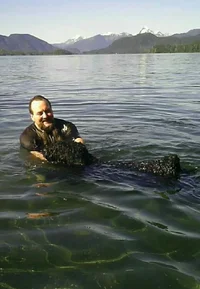
Not sure I have, but our female Husky seemed to float pretty well as she gently paddled along – certainly a lot more than our Doberman. It was like her fur added to buoyancy.Something unique to my female BRT was her floating rearend. Have never seen this in any other dog, anyone ever seen a dog with this weird swim style?View attachment 162431

Our Boxer was quite heavy chested and probably not a very good swimmer so his front end just went down and his back end came up.anyone ever seen a dog with this weird swim style
Oh dear, that's not good at all!Our Boxer was quite heavy chested and probably not a very good swimmer so his front end just went down and his back end came up.
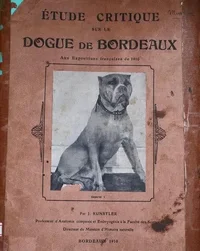
Stupid fashion trends have ruined many breeds. Compare this old Dogue de Bordeaux to the current breed.A note, from the Nordguard kennel page:
"Show breeding practices have placed an emphasis on appearance and adherence to breed standards, at the expense of a dog's working ability and overall health (Farrell et al., 2015). In the case of the Mastiff breeds, this has often led to a focus on physical traits such as size, head shape, and loose skin, rather than the breed's health or historical strengths as a working guardian dog (Meyer-Lindenberg et al., 2006). As a result, the modern Mastiff has been robbed of its working heritage, as breeders prioritize aesthetics over function (Farrell et al., 2015).
Once again, as per @Ravenbird comments about breeding in dobes, this is a common refrain in other working dogs.
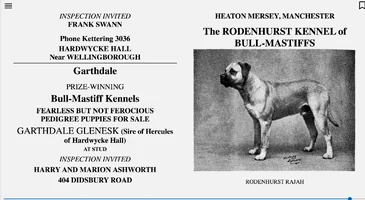
 Breeder also tried to sell them as service dogs, SMH, no, no, and absolutely no.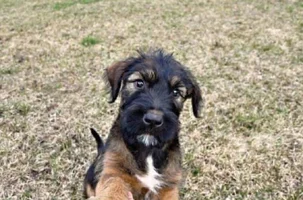
I was talking to the owner of a local brewery and he said their Newfoundland would dive to the bottom of the swimming pool, grab him by the arm, and pull him up to the surface. I don't know that he's not an exaggerator, but that's what he said.Thanks @Nordika - I had a big Neufy mix, and I guess my memory fails on what I recall from breed origin. But that dog was so gentle and protective of our infant son...bring a tear to my eye still. I had to teach him to swim as he'd been rescued from being shut in a garage all day...afraid of everything, at first.
Oh boy how messed up is that?Breeder also tried to sell them as service dogs, SMH, no, no, and absolutely no.
They absolutely will, whether you like it or not! As a kid I was dragged out of a pool by my hair more than once...lol.I was talking to the owner of a local brewery and he said their Newfoundland would dive to the bottom of the swimming pool, grab him by the arm, and pull him up to the surface. I don't know that he's not an exaggerator, but that's what he said.
More:A note, from the Nordguard kennel page:
"Show breeding practices have placed an emphasis on appearance and adherence to breed standards, at the expense of a dog's working ability and overall health (Farrell et al., 2015). In the case of the Mastiff breeds, this has often led to a focus on physical traits such as size, head shape, and loose skin, rather than the breed's health or historical strengths as a working guardian dog (Meyer-Lindenberg et al., 2006). As a result, the modern Mastiff has been robbed of its working heritage, as breeders prioritize aesthetics over function (Farrell et al., 2015).
Once again, as per @Ravenbird comments about breeding in dobes, this is a common refrain in other working dogs.

 mywoof.com
 wustenbergerland.com
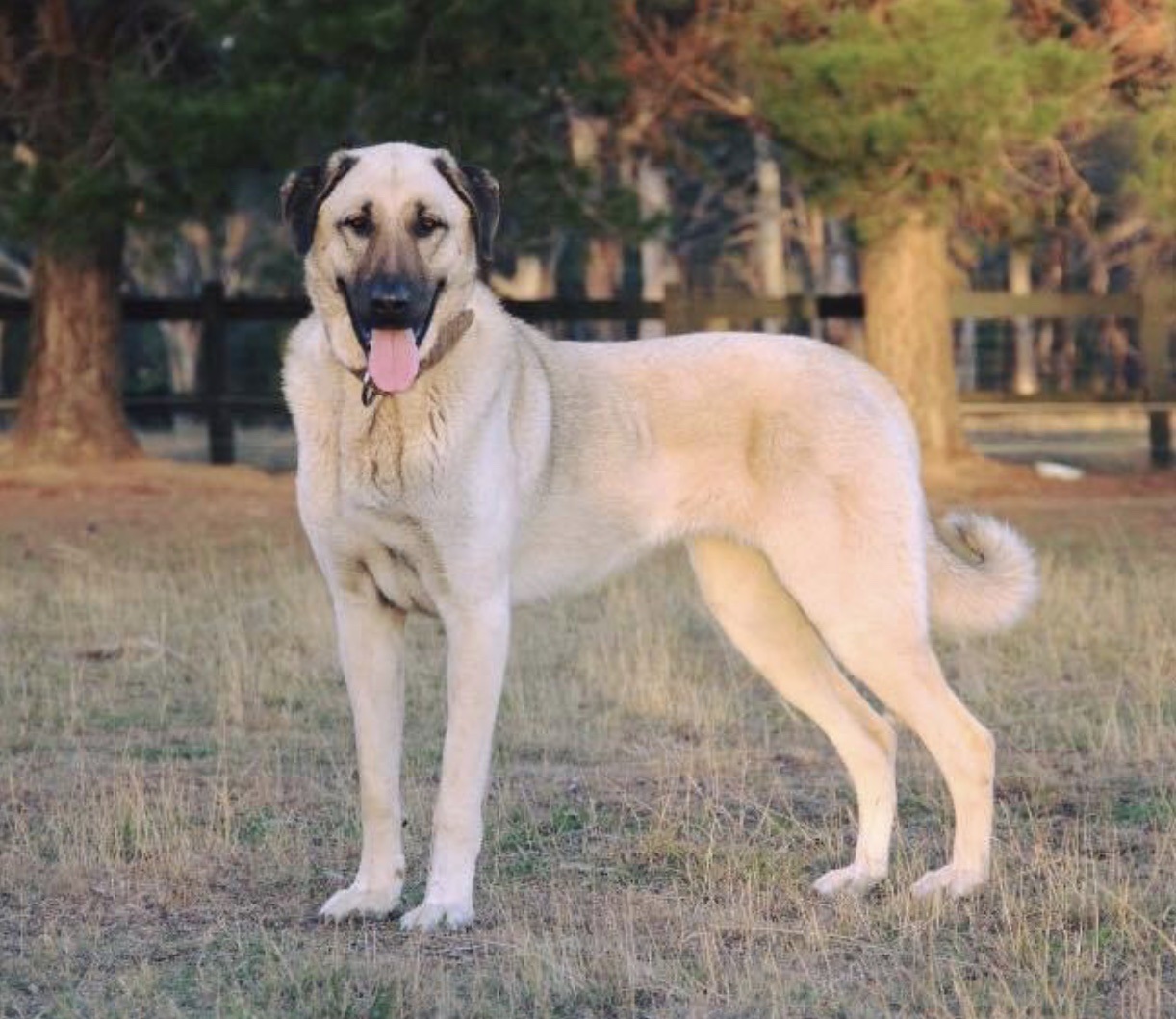
*Anatolian shepherd* was a creation by the FCI itself, back in the time, when *sivas kangal* was just a national/local breed without interest in worldwide recognition.Anatolian is the result of a small number of kangols being exported and bred elsewhere. They're almost 100% what you'll find if you're not in Turkey.
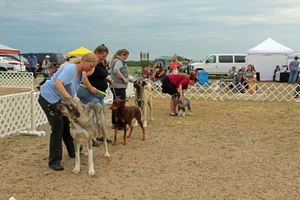
I got a photo of both breeds at a dog show a few years back. Anatolian in front and Kangal behind Phoebe.Anatolian shepherd is a wider expression. True Kangals were specific to Sivas region. Anatolian shepherds include different types from all around Turkey.

A friend has a Kangal, and they think he's great! He's good w/ people but will not tolerate other dogs or wild predators. She told me this is typical of the breed.More:
"The focus on breeding to closed gene pools (Breed Registries) for exaggerated traits in the Mastiff has also led to health issues related to inbreeding. Inbreeding reduces genetic diversity, resulting in a higher prevalence of hereditary diseases and health problems (Leroy, 2011). In Mastiffs, this has manifested in various health issues, including hip and elbow dysplasia, heart disease, and cancer (PetMD. n.d.). As a result, despite modern food and care, the average lifespan of a Mastiff today can be as low as 6 years (American Kennel Club, n.d.). Compare that to a “breed” which is largely still landrace, and unaffected by long term “pure” breeding practices, like the Kangal, who lives an average of 12-15 years - double that of the mastiff at greater average size (AnimalsSo, n.d.)."
Good friends have had two Anatolians, that kept the songdogs out of the property, away from chickens, goats and mini-horses.
Very accepting of butt rubs once they checked you out...both died before ten years, so perhaps more showbred than foundation turkish stock...?
I read there is some dispute about use of the term "Anatolian" tho.
Kangal seems to be the proper name, by some: (I include this as just another example of how interesting/incorrect the debate can be...)
"Kangol is the OG Turkish version, and almost 100% what you'll find in Turkey if you go there.
Anatolian is the result of a small number of kangols being exported and bred elsewhere. They're almost 100% what you'll find if you're not in Turkey.
They're slightly different enough that you can easily tell them apart. Kangol is a short haired dog, and an Anatolian is it's fluffy identical twin. They're close enough, in every other aspect, that some agencies/people will tell you theyre the exact same breed.
It's all a bit off in my opinion, but after a bit of reading in a bunch of places, and digging through images, this is the conclusion I've come to."
wiki:
Kangal Shepherd Dog - Wikipedia
en.wikipedia.org
And looking for a good explanation of "landrace" here is one with a good example, and another breed I'm interested in...
Daughter's horsey girl friend got on at a rescue back east. Very shy.
What is a "landrace" dog breed, and how are they different? (e.g., Car
Have you ever met a dog whose look felt ancient — as if it carried wild stories in its coat and eyes? That’s the magic of a landrace dog breed. These dogs aren’t created by show-ring standards or selective breeding charts. Instead, they evolve over generations, growing strong and adaptable in...
Anyone here with experience in, or friends who do?