Just for fun, since there are so many experienced dobe folk here with other big strong dog history...

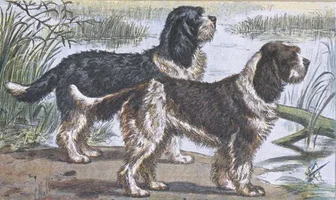
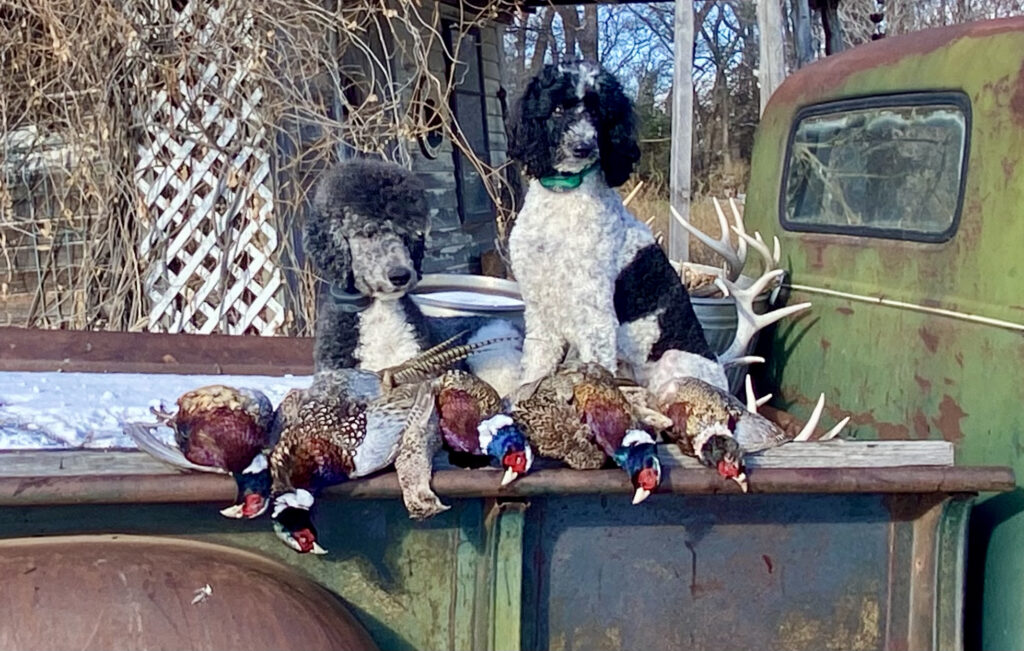
The Barbet, which is an ancestor to the poodle is highly likely to have contributed to the Newfoundland.
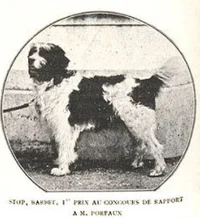
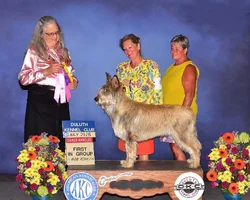
To be clear, not talking about the Barbet breed of today, which like many breeds suffered from near extinction during and between the World Wars, to save it they used poodle and the coat is much different today. The Barbet is believed by many cynologists to be the principle ancestor of several breeds, including the Irish Water Spaniel, Poodle, Newfoundland, Briard, Otterhound, Bichon and Griffin breeds.1000029071.webp1000029032.webp
 
While on the subject of Newfoundland dogs, historical and genetic evidence suggests that Great Pyrenees ancestry is present in the Newfoundland dog. Scientists note that Newfoundland DNA can be traced back to Great Pyrenees DNA. So historical in the foundation, but also recent in the Landseer. Great Pyrenees were crossed with black and white Newfoundlands by breeders in Germany, Switzerland, and the Netherlands to develop the Landseer European Continental Type. My Newfoundland's sire was a Landseer (color designation). However, I did trace that lineage back many many generations and found a bitch that was used (from Switzerland) that was a Landseer ECT, this was before the split into a separate breed in Europe. That line produced many AKC champion dogs and any American or Canadian Newfoundland that has the Landseer coloration or was bred to one likely has recent Great Pyrenees addition from those bred in Europe. Sorry I'm such a dog nerd. I received my first Encyclopedia of Dog Breeds when I was 9. Filled with history and pictures, and half the book was on rare breeds that were unknown outside their region. I'll sign off now 😄
 
While on the subject of Newfoundland dogs, historical and genetic evidence suggests that Great Pyrenees ancestry is present in the Newfoundland dog. Scientists note that Newfoundland DNA can be traced back to Great Pyrenees DNA. So historical in the foundation, but also recent in the Landseer. Great Pyrenees were crossed with black and white Newfoundlands by breeders in Germany, Switzerland, and the Netherlands to develop the Landseer European Continental Type. My Newfoundland's sire was a Landseer (color designation). However, I did trace that lineage back many many generations and found a bitch that was used (from Switzerland) that was a Landseer ECT, this was before the split into a separate breed in Europe. That line produced many AKC champion dogs and any American or Canadian Newfoundland that has the Landseer coloration or was bred to one likely has recent Great Pyrenees addition from those bred in Europe. Sorry I'm such a dog nerd. I received my first Encyclopedia of Dog Breeds when I was 9. Filled with history and pictures, and half the book was on rare breeds that were unknown outside their region. I'll sign off now 😄
Please continue!
So the Great Pyr predates the Newfy, and that courage went with the coat color, etc?

"Cynologist"- I'm so stealing that.
 
Sorry I'm such a dog nerd. I received my first Encyclopedia of Dog Breeds when I was 9. Filled with history and pictures, and half the book was on rare breeds that were unknown outside their region. I'll sign off now 😄
Please DON'T!! Your knowledge base is so interesting! I've always loved to read about different breeds too, and have always really enjoyed the challenge of looking at mutts and trying to see what their breed make up is.

In regards to newfs--did you ever hear of/know Susie and Murphy Foley in Montana? Susie was big (and I think fairly influential) into SAR with her newfs. Susie was a dear friend.
 
Wikipedia is so often edited for political purposes that I hesitate to cite it, but on non-political, far back nerdery its helpful:

So its possible your Killer Neuf was a reject as all black, vs the two-tone that Landseer show breeders were trying to recreate for romantic fashion?

Yet another example for @Ravenbird thesis...
Or more likely, my confusion...😉
Running away chuckling evilly...
 
Please DON'T!! Your knowledge base is so interesting! I've always loved to read about different breeds too, and have always really enjoyed the challenge of looking at mutts and trying to see what their breed make up is.

In regards to newfs--did you ever hear of/know Susie and Murphy Foley in Montana? Susie was big (and I think fairly influential) into SAR with her newfs. Susie was a dear friend.
Ya thats my favorite ice breaker at the dog park..."so...what IS that breed mix?"
 
To be clear, not talking about the Barbet breed of today, which like many breeds suffered from near extinction during and between the World Wars, to save it they used poodle and the coat is much different today. The Barbet is believed by many cynologists to be the principle ancestor of several breeds, including the Irish Water Spaniel, Poodle, Newfoundland, Briard, Otterhound, Bichon and Griffin breeds.View attachment 162469View attachment 162470
This IS highly useful. Sometimes when talking with other owners of well behaved dogs, tsk-tsking at the clueless doodle owners who can't understand why their mutt is so out of control at the dog park,

I will sometimes observe...well, the poodle was originally a high drive hunting dog bred to go in the water...er "Pudel" to be more accurate. And that drive CAN be put to work...IF you find a good human trainer.


Refreshing (and reassuring as to @Ravenbird thesis, that some customers WANT to use that working foundation...)

I akshually try not to judge...much...🤣🤡
Ok, new internet rabbit hole: "Barbet"...
 
Please continue!
So the Great Pyr predates the Newfy, and that courage went with the coat color, etc?

"Cynologist"- I'm so stealing that.
Great Pyrenees are one of the oldest dog breeds still in existence in the same form today. They had contributed to the foundation of the Newfoundland, but there is some speculation that the Tibetan Mastiff was also used in the very early formation in England. I would say that Newfoundlands in general have great courage no matter their color and they're historically known for their sagaciousness. Interestingly, historical texts consistently highlight the Barbet's exceptional intelligence, describing it as possessing more sagacity than most other dogs.
On color, based on anecdotal evidence, the Landseer, i.e. black and white, seems to be more active, but that's not science 😉
 
Wikipedia is so often edited for political purposes that I hesitate to cite it, but on non-political, far back nerdery its helpful:

So its possible your Killer Neuf was a reject as all black, vs the two-tone that Landseer show breeders were trying to recreate for romantic fashion?

Yet another example for @Ravenbird thesis...
Or more likely, my confusion...😉
Running away chuckling evilly...
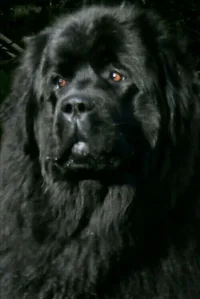
Well fwiw, my black Newfoundland, with a black and white daddy, was the sweetest dog ever to grace this planet. 1000001128.webp
 
Well fwiw, my black Newfoundland, with a black and white daddy, was the sweetest dog ever to grace this planet. View attachment 162486
I'm sure...ours was too. Only slightly kidding, on "Killer" just because of intimidating size and I'm intrigued on those references to how he "saved your life several times".

I've had a bunch of dogs and have been surprised at how ferocious in defense of loved ones, in the atypical breeds...the sweetest are usually the bravest.
 
🙂
Please DON'T!! Your knowledge base is so interesting! I've always loved to read about different breeds too, and have always really enjoyed the challenge of looking at mutts and trying to see what their breed make up is.
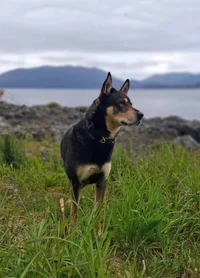
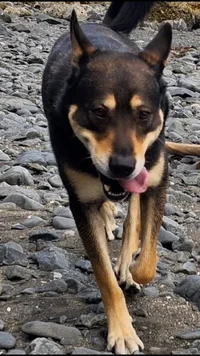
Mutt Challenge: has fifth toe on hind legs, fully formed long toe with bone, pad, and nail.

1000029157.webp1000029156.webp
 

Back
Top