• Disclaimer: Hello Guest, Doberman Chat Forums presents the opinions and material on these pages as a service to its membership and to the general public but does not endorse those materials, nor does it guarantee the accuracy of any opinions or information contained therein. The opinions expressed in the materials are strictly the opinion of the writer and do not represent the opinion of, nor are they endorsed by, Doberman Chat Forums. Health and medical articles are intended as an aid to those seeking health information and are not intended to replace the informed opinion of a qualified Veterinarian.”

How would you define a 'sharp' dog?

How would you define a 'sharp' dog?


  • Total voters
    16
It's OK PTG, Sammy and D4E are sorting this out for themselves, I know you are defending her as a personal friend would, but lets not take this thread away from the educational discussion we were having and get it locked ;)
Thank you. Yes, ALL personal attack statements from BOTH sides need to stop now. That is not what we're here for and will not be tolerated. Sarcastic comments are unnecessary and do not contribute to the conversation. They are also often misinterpreted because tone cannot be conveyed via text only. It is in the hands of both the poster AND the reader to consider how their words and the words they are reading can be interpreted or misinterpreted before they publish them or they reply to what they are reading. This is a friendly, helpful community and it is the responsibility of everyone here to keep it that way.
 
Marko at what point on that scale do you feel a dog could be an extremely great asset to a k9 team, but be able to react accordingly or recover as you say.

Those are the dogs I would love to see videos of.

I'm going to trawl YouTube and try and find examples of dogs that I think show a dog that can recover quickly but I think that all I will find are dogs in Schutzhund etc. ;)

I've had a look and all I can find is dogs that are either police/military or Schutzhund dogs. I think it will be impossible to find a video of an untrained dog that recovers very quickly from a high alert/action situation. IMO those videos of dogs that do just that are either that of dogs that naturally have the disposition to do so or are trained to calm quickly, it would be hard for an untrained eye to be able to tell the difference.

So, to carry on with the discussion. I would say that we've have a good discussion of what sharpness means in a dog, also that there are different rates of sharpness. The ideal using for example the Korung scale is 'Moderate without remaining aggression'. This implies to me that the dog does not immediately fly into action at the drop of a pin rather it takes mild provocation or a good reason to do so. When the 'situation' has passed or been neutralised the dog will then quickly settle and relax. This also is a good character trait for the Dobermann as a breed.

Next question for those in the know. Using the Korung 'ideal' as an example, 'Moderate without remaining aggression' is this also ideal for dogs that will be used in life threatening Military scenarios or even for PP, or would that dog be just a good dog that excels in dog sports?

Another point of view I read elsewhere... (if anyone wants the link to the discussion pm me)

In my experience, I have found that truly confident and high fight dogs don't make the best or ideal PPD dogs. When a dog is so cocky and full of himself that he nevers feels threatened, he is not much use watching your back.

Suspicious, sharp dogs have a little less confidence, pehaps a little nervy. What nature has not given them in confidence, has provided to them for survival a unique skill of obsessively worrying about their immediate saftey and well being. They don't care if YOU are ok, they worry about themselves so much so, that they are forever on point, watching every change in their surroundings. Reacting to such naturally with growling, barking and hackling. As pack leaders we the human manipulate this nervousness into being a vigilant watch dog. Some dogs with this trait and still sound nerves and confident in fight drive, make ideal Street Police Dogs in very tough areas, sentry dogs at Military bases.

Imagine if you will, you are in a really bad part of town at night, if your dog fears or at least worries about the approaching person you never saw, then alerts to this oncoming situation with his or her natural body reaction, or one preferred through training scenarios, then you are now aware of situation and able to respond or be vigilant yourself if need be.

The above quote by Bryan Colletti is from a working dog forum, I'm not sure if any rules have been broken or even if it's ethical to quote him here but he does have some good points, Mods if you feel it is inappropriate please delete the quote.

What do you think?
 
Some dogs with this trait and still sound nerves and confident in fight drive, make ideal Street Police Dogs in very tough areas, sentry dogs at Military bases.

A more balanced dog in drives - Balance is the ideal and that is what he is saying. But since there are no perfect dogs you have to work to work with the dog to try to bring in some balance . That is why if you understand these dogs, drives, instincts etc you understand better how to work with each dog.

As long as the person handling the dog knows what they are dealing with and wants to deal with it and bring some level of balance to the dog then there is no problem working with it in special police, military situation. These dog do not belong in a normal breeding program or on the street in the wrong hands.

I think that is what CRD biggest concern was the safety of everyone and I understand that - it is a big concern for all of us. But if you are going after someone like Bin Ladne for ex the you darn well want one!!! But JQP seldom if ever sees these dogs. It is why breeders must be aware of what they are breeding. The genes are there somewhere and could pop up at anytime. BUT if you are breeding dogs that you do not understand this and especially if one is on the Euro craze and has never worked, trained or titled a dog to these levels then they would not recognize a potential problem and place the dog in the wrong hands.

The people can't call their breeder for help because they have no clue.

That is what happened to Matrix. Matrix is a great dog and Dale is a better handler to have taken a dog that had already been rehomed and mistrained from the beginning and bring the dog to his way of thinking. What an awesome feeling and realtionship. So there is no misunderstanding - again not for everyone but did the dog need to be put down which is what most trainers and behavorist today would recommend? I think not.
 
This is starting to make a little more sense.

From a breeders standpoint how difficult would it be to breed a quick recovery time into a very sharp dog?
Would that make the most desirable dog for these situations? Obviously breeding just one quality would be extremely difficult. I'm interested if anything like this would be attempted.

Watching all the videos even the dogs shown with a quick recovery were not as quick and not as responsive as the original video with the mal in the counter terrorist group.

Now a dog with a very fast recovery and a very fast response time to a perceived threat would be a dog not to mess with.

Also a lot of time I would imagine there are multiple threats as bad guys travel in packs. In this situation are these sharp dogs more likely to leave there first target after he is subdued to instantly pursue the next threat?

I still don't like the handler aggression, but I have never been in this situation. If that's the only type of dog that will work for this type of action then so be it.
 
CRD through trianing you work as hard as you can to teach the dog when to bite and when to release. Some of the very high dirve, sharp dogs have a big problem with that but they are not insane so would not turn to go onto someone else AS LONG AS THE PERSON NEW NOT TO MAKE HIMSELF A TARGET!!! They are really taught to focus on one objective.

I will tell you a true story - One of the first Schutzhund trails I ever attended - Judge is stand off from the helper blind and the dog and handler come on to the entrance and are waiting for the judge to call them on the field. The dog (which is a doberman trait that often makes them fall from favor ANTICIPATE) so the dog immediately takes off and goes after the judge. MY heart dropped to the ground and I was for a mement frightened about what was going to happen next.

The judge just stood there and did not move so the dog did not attack - REMEMBER: Bark and hold - when the decoy or bad guy stops moving the dog is trained to STOP the attack. That is why Dale said they are not trained to KILL but to capture and HOLD. A big difference BUT if you continue to struggle you will continue to get bitten. Now for a sharper dog we have what we call molesting the helper - in other words just because the helper stops the dog does not immediately disengage so you have to go to a higher level of training to teach or convince these dogs that they must release. For most sport dogs they quickly learn that when they release they get a rebite which is the reward. So you can pee your pants but don't try to MOVE for gosh sakes.

Usually a sharp dog is not as strong or balanced in PACK drive so is not as concerned about pleasing you but more interested in getting to the job if that makes sense. That is why I always talk about balance. It is all about breeding for balance to creat the best dog out there except in extreme situations.

To Add: I think I have confused the meaning of recovery - When I look at recovery for a puppy I look for a puppy that when something a little frightening happens the puppy recovers or moves forward without freezing and becoming unable to function.

When you are talking about recovery you are talking about the dogs abilty to drop out of defense and fight drive and let pack drive bring them back under the command of the handler. so that dog would be a good dog to work with. So a dog that could not turn it off would be a dog not to mess with. I hope i am not confusing it more but terms are important
 
Poppy I have seen and watched on very sharp dog work. The handler trainer was bit several times while trying to work with the dog and always knew if they stepped over th eline that they would be bitten. It is why breeders had to work with temperament to make it more suitable for the world we live in. While trying to breed out sharpness some went too far and we lost some of the hardness, fearlessnessalertness etc. There was no prescription that said measure this dose and the breeding will correct sharpness but not take out the defense drive, dominance, fearlessness, alertness etc. It is a pig in the poke.


Yes a 8 week old puppy will show tendencacies toward sharpness. But all the socialization and training in the world will not change the final outcome if the dog is truly sharp as we are discussing sharp as it applies in the working dog world. Sharpness is a hardwired set of genetics that all the training in the world will not eliminate. If that makes sense. The dog will continue to progress into a sharper attitude and training will not resolve it. Cross the line and you will be taught a valuable lesson about how these dogs are dogs not humans and we do not totally understand their innermost thought processes.

Then to make it really hard all these drives, instincts, and character interact and melt together to create the final dog who is usually mature mentally at 2 years of age. I would not want one and would not want to work with one.


This is a 'hard' dog not a sharp dog.
 
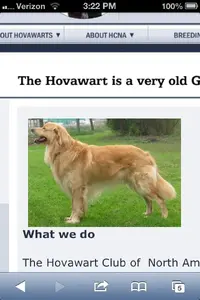
Not to sound argumentative,I wonder if some of the "Goldens" are even Goldens?Aggressive isn't part of the usual personality.

This dog however.... image.webp
 
This is a 'hard' dog not a sharp dog.

Ok I get what you are saying now, yes a sharp dog may come up the lead but it would be sharpness combined with high dominance or shite training.


IMO that dog has bitten the handler out of prey drive not sharpness.

I have had and currently have sharp dobes I would say above medium and high.
My opinion is:
Yes you will see sharpness in a pup as young as 8 weeks, I have a malinois up that has been manifesting sharpness since 8 weeks.
A sharp dog is not necessarily a dog that eats the leash and equally a dog that eats the leash is not necessarily sharp.
Crappy and unfair correction will create this in a hard or overly dominant dog.

My definition of sharpness is a dog that perceives threat (suspicious) and reacts to it with aggressive behaviours rather than flight/avoidance.
They can be a pain in the ass, quite literally. When I first got pickle I had to go away for a few weeks and when I got back I let myself in and she bit me on the ass.

Boldness is a quantifiable characteristic separate to sharpness.
Boldness is far more desirable for most work than sharpness.
Sharp dogs are not for first time owners.
 
and also indeed, but some male dobermans are very dominant and that can carry them through. Not my choice by any stretch but he saw something in these dogs.

Incidentaly aggression is more common than you would think in goldens.

this is a golden/lab mix!

 
“Sharp” or “Sharpness” are English translations of temperament concepts originating in another language/culture/time. It might be impossible to establish a clear definition in light of our language, our culture and our point in history.

A very simplistic explanation is that a “sharp” dog is one who responds to a perceived threat with aggression.

There are varying levels of Sharpness. The quicker the response is; the “sharper” the dog is. The more aggressive response is; the “sharper” the dog is.

Generally speaking, folks tend to ignore the fact that “Sharpness” is something to be measured. Instead, folks tend to jump right to the extreme end of the scale and call a dog that responds very quickly with high aggression to stimuli as a “Sharp” dog. Yet, every dog can have its level of sharpness measured and evaluated. As an example the old DDR breed survey had values of 1-5 (None, Some, Sufficient, Good, Very good) Other evaluators have come up with their own terminology trying to describe this temperament characteristic and have created terms like “Shy-sharp”.

A whole bunch of different temperament concepts have been touched on in this thread, some are related to sharpness, and some are not.

A dog can be fearful and sharp. A dog can be confident and sharp. “Sharpness” is the aggressive response to stimuli. Strictly speaking, it’s still a display of sharpness whether the dog is responding out of fear, dominance, defense or some other drive.

In a perfect world a dogs Sharpness is balanced with his other Temperament traits and we end up with a clear headed dog who responds to only real threats with only an amount of aggression to overcome the threat. We live in a world that is far from perfect though.

Sharpness and dogs coming up the leash could be separate discussions. There is a relationship, but other factors come into play too.

Addressing the question of why anyone would want or tolerate a dog with a propensity to come up the leash- it depends on why the dog is doing it. IMO, it’s unreasonable to expect a dog to be a “Manstopper” and at the same time never challenge the handler and submit to things the dog perceives as unfair.

Not to anthropomorphize, but expecting a dog to fight badguys yet be totally submissive to the handler is like expecting your teenager to question his school teachers and assert his rights when contacted by the Police, yet never argue with his parents. Life just doesn’t work that way. Living with a dog that is willing/capable of actually fighting a human being is going to have some obvious drawbacks for a human handler.
 
Again we speak of balance which makes the best dog .... It is finding that perfect dog with balance that is the challenge.

It is one thing for a dog to turn and bite at the person trying to pull them off an attack - that is why people get bit when trying to break up a dog fight. That bite comes from frustration not redirected aggression. As stated you need to read what the dog is really doing the biting out of .... A dog that bites in the above situation is a far different dog than the one that takes no correction from his handler and responds with aggression. This should never be allowed.

In training for Schutzhund it is the helpers job to make sure he protects the handler and keeps the dog focused on him and should the dog even think about turning on the handler the helper should immediately step up and convince the dog that he needs to stay focused on the real threat.

There is also a difference in submissive and obedient. A dog can be obedient but it does not mean it is from a submissive position as we think of submission. In fact a dog that responses out of submission is not going to be a good candidate for Schuzhund. Confidence and submisison do not reside in the same frame of mind. A good schutzhund dog above all should be confident and he works and obeys because he has nice pack drive - a desire to please which is not necessarily associated with submissive behavior.

Can a Schutzhund dog challenge its handler - yes - it does not mean it is a bad dog they just want to know you are really in charge and then they will follow your lead. I am not sure what you are referring to when you say "unfair". It is fair to expect the dog to out when asked or to retrieve the dumbbell or what ever else you ask as long as it is reasonable and does not harm the dog.

It is true though that Doberman will follow you if they trust you and you do not go overboard on corrections. If you get abusive to the dog then that is unfair. Anything you are doing during training above all should be fair and reasonable. It is a totally different thing when a dog challenges you to make sure you are going to be in control than when he is handler aggressive. They are not even in the same realm.
 
Hmmm… one might argue that redirected aggression is simply an expression of frustration. IMO redirection or frustration can manifest itself even in a dog that would not typically be called sharp. There may be a higher likelihood of seeing redirected aggression with a sharp dog, but I don’t believe the behavior is always linked to sharpness. With young dogs, inexperienced dogs, frustrated dogs, or dogs intensely into fight drive; once in a while they may redirect onto anyone within reach- including the handler.

Several different topics are being covered in the thread that I wouldn’t necessarily associate with sharpness. You are correct that during training part of the decoy’s job is to keep the dog focused. In real life the badguy isn’t always so obvious to a dog, hence the reason that occasionally fellow Officers get bit during a K9 deployment and whenever reasonably possible everyone is cleared from the area a dog will be deployed into. A dog that bites the wrong guy might be sharp, but he might simply just go after the wrong guy.

Submission and pack drive are linked. A lower pack member is subordinate (submissive) to higher members but that doesn’t necessarily mean total ‘roll-over-and-show-your-belly’ submission, it can just mean the accepting of leadership. As an example, the dog that outs when he really wants to dominate the decoy isn’t doing it to please you, he’s doing it because he’s learned to avoid the consequences of ignoring your out command.

By "unfair", I was referring to what the dog views as unfair. That will vary from dog to dog and from circumstance to circumstance. As an example, a dog that has just started bitework might think it’s unfair for you to hold him back from the decoy and thus express his indignation at you. The same dog will no longer think being held back is unfair after he’s learned the rules of the game. In logical, human thinking, in both cases the handlers actions are neither abusive nor unfair. Depending on the dog’s temperament and experience, the dog however might perceive the handlers actions as very unfair.

Even something like the handler giving the same leash pop that has been acceptable 100 times before, could be perceived as unfair if the circumstances are different from the previous 100 times. There are dogs that wouldn’t bite the handler under any circumstance, and there are dogs who will come up the leash under a variety of circumstances. Again, that is a discussion which could be separated from sharpness.
 
Hmmm… one might argue that redirected aggression is simply an expression of frustration. IMO redirection or frustration can manifest itself even in a dog that would not typically be called sharp. There may be a higher likelihood of seeing redirected aggression with a sharp dog, but I don’t believe the behavior is always linked to sharpness.

I think the problem is in the reading - redirected aggression is frustration but not all redirected aggression is frustration and that is where we need to be able to read the dog so it can also be through sharpness. It is the level that determines which it is. In a sharp dog they usually do not stop the aggression and dog that is redirecting will drop the fight when he realizes that he has misdirected the frustration to the wrong person. That has been my experience in both dog fights and schutzhund. A sharp dog does not necessarily care at that point they are just out to win and if you get in their way then you are fair game. So much has to do with the attitude of the dog - and how all the different parts interplay with each other.

I see why it is confusing as frustration is redirected aggression but it is the level and intensity that determines if it tips to sharpness. You are correct there are so many facets of each and every drive and how they interplay with one another that makes it challenging to explain completely when typing for the internet.

As far as unfair I know Helio when he first started bite work tried to bite the leash that was holding him as he just wanted loose so he could go to the helper. That was frustration (not that he felt it was unfair) that he then redirected to the leash that was holding him.

There are just too many facets to ever explain every single one on the internet and then there would still be that one dog that could give it a whole different definition.

The basic is that a sharp dog does not respond out of fear or submission. Submission while a part of pack drive and no one said differently because there are two ends of that scale - a dog that responds out of confidence and willingness to please whereas the submissive dog sometimes can't even respond at all other than to lay down and belly up. That does not make a Schutzhund candidate.
 
[/QUOThis is a 'hard' dog not a sharp dog.{/Quote]

Matt - this is where so many get it confused and it is hard as a lot of people interplay the two words.

A hard dog can be sharp and vice versa. If you have a dog that is both hard and sharp you are in deep doo doo. But they are 2 different things.

A hard dog is a dog that is considered to take a lot of crap and will almost prefer to take the crap than to comply. It is a "you can't make me" attitude. A sharp dog says You will have to kill me before I kill you. I hope that helps in undersanding better the difference between the two.
 
The other side of a hard dog is a dog that a lot can happen to and nothing stops him. He will go through a ton of hard obstacles and keep on going. Nothing rattles his chain. His heart and drive is to complete the task regardless.
 
Quote Matt Vandart- “Sharpness is a dog that will behave forwardly aggressive, surely that is it? It's not complicated really. “

Yes! This is a very basic, simplified meaning of “Sharp”. Now separate the reasons WHY a dog may be forwardly aggressive from the sharpness itself.

A dog CAN be fearful and sharp! A dog whose sharpness comes from fear or insecurity will flee from a threat if his forward aggression is unsuccessful at eliminating that threat.

A dog can be;
hard and sharp;
confident and sharp;
fearful and sharp,
dominant and sharp;
etc.

A dog’s measure of “Sharpness” and his willingness to stay in the fight are not the same.

A dog’s measure of “Sharpness” and his level social dominance are not the same; an example of measuring his level of “Sharpness” would be by evaluating how quick he is to use forward aggression to establish or maintain social status. The dog could be very socially dominant but slow to use aggression (low or moderate sharp), OR he could be quick to use aggression but submit easily if he’s met with an aggressive counter response (sharp, but not hard).

Dobs4ever is correct that if you have a dog that is both hard and sharp you are in deep doo doo. You also have your hands full with a dog that is both socially dominant and sharp. Likewise, you have a problem (albeit a different one from the above examples) if you have a dog that is both fearful and sharp.

As has already been correctly pointed out in the thread, the way a dog’s temperament is balanced will determine whether it is good or bad for a particular job. A dog with some fear/insecurity makes for an easy to train guardian.
Too much insecurity is a bad thing, but SOME is needed to keep the dog “on edge” so to speak.

There has to be something to stimulate a “sharp” dog. He then addresses that stimulus with forward aggression. The trigger can be fear/insecurity or social (dominance, fight) etc.

At the extreme ends, a dog could be very “hard” but slow to perceive and act aggressively towards a threat (not sharp at all). Conversely a dog can be extremely sharp but readily back down when encountering resistance.

Different balances can be used for different missions. A Sentry, Guard or Scout dog could have a certain amount of fear/insecurity and work very well. You might desire more courage and less sharpness from a Patrol dog that is expected to be social with the public until he's sent to stop a bad guy. The patrol dog benefits from a fair amount of hardness so he can stay in the fight, but he doesn’t need excessive sharpness and would be unsuitable for interaction with the public if he was too sharp.
 
After re-reading what I wrote, it seems like there is still too much room for misunderstanding. Sharpness is a concept that's not easily conveyed. Perhaps "willing" and "reluctant" are better terms to use instead of "quick" and "slow"? One must take thresholds into consideration when determining sharpness so quick/slow could be misleading.
 

Back
Top