Bikejoring

remy

Active Member
I figured I’d make a thread for all things bikejoring! I’ll share what gear I use, the commands we use, post videos of our rides, people can ask questions, etc…

img_4621-webp.157375.webp
img_4635-webp.157376.webp
The gear I use:

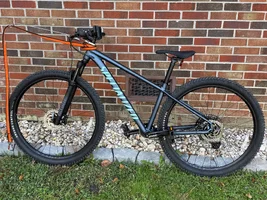
• Specialized Rockhopper Expert bike
  • just about any bike will do, but it should have disc breaks for more efficient stopping! I was previously using a bike from WalMart but just treated myself to something nicer.
Non-Stop Dogwear Bike Antenna - also available on Amazon
  • this prevents the leash from getting caught in the front wheel
Non-Stop Dogwear 2.8m Bungee Leash - also available on Amazon
  • fully elastic leash that absorbs shock
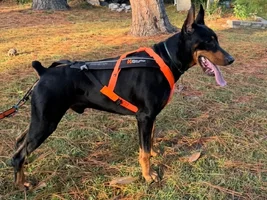
Non-Stop Dogwear Freemotion 5.0 Harness - also available on Amazon (Remy wears a size 8)
  • a harness designed for pulling is a MUST as it evenly distributes the pressure over the dog’s body
Many people will use traditional mushing (sled dog) commands but I do not. Commands we use:

• “Go, go, go”
-start running, speed up

• Direction cues
- “left, right, forward”

• “Keep going”
- essentially “leave it”, keep running and ignore whatever the distraction is

• “Easy”
- slow down (we don’t use this much though lol)

• “Wait”
- stop until told to go

Training:
I often get asked how I trained to do this, but truthfully I did not have to do much. Remy was very comfortable around bikes as he had experience trotting alongside one with the Walky Dog attachment. He loves to run and pull so it all came naturally to him. He had a decent understanding of the commands prior to starting bikejoring. We continue to work on them as we go!

I think starting off with the Walky Dog attachment is a great way to introduce your dog to biking! You have MUCH more control (physically) over the dog when using that. Work on whatever commands you plan to use, build up their stamina, etc… Many people also like to do canicross (running with the dog) prior to beginning bikejoring.
 
Last edited:
Also, I am thinking about entering a bikejoring race that’s in late February! I’ll need to train in other areas since we have only been on the neighborhood trails. My only concern with being in a new place is that he’ll get distracted trying to sniff things. This boy loves to use his nose lol.

Before making the decision to enter I also want to practice bikejoring with other dogs. Most races have delayed starts between each team (dog & handler), however there is still a possibly to encounter other teams if you catch up to them or get passed. I found a few people on FB groups that are within 2-3 hours away that I can meet up with to train. Hopefully I can do that a few times before the event!

It’s very hard to find information on how people prep for races (or even bikejoring topics in general), so I thought of sharing my weekly training schedules here. Would you guys like me to share that? I’ll just be making my own plans and adjusting as needed. The plan would be to do bikejoring sessions, longer trotting sessions (beside the bike), and of course his conditioning routines each week (while increasing the distance of both types of biking sessions over time).
 
so I thought of sharing my weekly training schedules here. Would you guys like me to share that?
I will be honest and confess right away that I probably won't ever actually do bikejoring (also i would never ever show a dog in conformation, because thats a hard nope, right?). I will also say that i have a genuine excitement for you guys doing it and reading about it, so if you dont mind the work of writing a little about it, it's something i will always look forward to reading. I do have a friend who has a Husky who has always wanted to try it, maybe this thread can insipre her along the way.
 
Good post and one that strikes a common chord with me. Hence I've taken the liberty to add other pertinent info to the concurrent post regarding bikework and contingent on guidelines being recommended/enforced by AD requirements governing sustained speed over distance and age of dog in physical development stages. I hope that makes sense. We all are aware of when growth plates are fulled closed and the recommended age to engage in endurance bikejouring.

The equipment links provided are valuable yet there are some caveats that need be recognized. The forward projecting wand with length of bungee leaves the rider in near zero control should distraction from either side influence the straight line course that is hopefully being adhered to. Needless to state OB at times falters and even fails when most needed therefore OB control is vital as is need of functional fail-proof calliper or hydraulic brakes . Sudden stops are not an anomaly. It happens. The urge to answer Nature's Call gives little if any warning of an upcoming dead halt. Speaking from experience and currently utilize bike-work as an adjunct to personal mobility related issues and mobility SD tasks.

The side mount antenna restraint IMHO is not where a Doberman during any endurance activity is not strategically in place to be observed because lagging behind leaves the rider at disadvantage of not being observant as to fatigue and dehydration evidencing.

The extended front antenna and bungee attachment is functional in environment where there is no oncoming pedestrian and dog traffic. I often encounter both in my bikework regimen and need to navigate through the distraction without interference. I use a utility harness that transfers load directly to shoulders. A double strand of 4 ft. heavy duty bungee one end carbiner clipped to harness and other end to hand loop looped over the left handgrip. Strategically the Dobe is on my left and leading in 10 o’clock position. In overtaking slower pedestrian and dog traffic the bike is strategically a barrier separating the pedestrian/dog traffic on my right. Much like walking with Dobe on left side. If there is incident from the overtaking the distraction it defuses within a few bike lengths of passing the distraction. Forward momentum is requisite.

Oncoming traffic requires another strategy. I vocally and visually signal my intended pass lane keeping the bike between my Dobe and the oncoming pedestrian traffic. Etiquette not perfect, nevertheless required as stated. The middle finger salute I am certain is in the rear view if I were too look, however eyes are glued to the terrain ahead.

Turning to the left requires a slow speed with left leg extended to act as safety bumper when crowding the Doberman to the left accompanied by vocal direction “this way”. A right turn will be instinctual in following the flow of momentum and verbal direction “follow me”. Stop and starts are governed by braking and releasing. A vocal “Ready” incites enthusiasm and a push off and mounting the seat is indication it’s ’game on'. Stopping is preceded by the verbal negative reinforcer a guttural sounding “uh” the first sounding syllables of the common “uh uh” used in correcting a toddler or defiant Doberman. The negative reinforcer verbal correction messages the running behaviour is to be terminated.

How much and how soon to engage in bikejouring. The question of age as to when has been addressed — closure of growth plates 15 months +- i.e. reliable orthopaedic advise short of visual x-Ray.

How much and how far to extend the endurance capabilities of the said dog is vital lest lameness in an unconditioned dog will prevail. As a side note Ray Carlisle utilized 5 mile daily stints with his foundation bitch Alida throughout her life as found on page 16 of the document second from last paragraph and consequently motivated me decades ago to follow Ray's conditioning regimen. If it worked for Ray and if endorsed by one of the founding fathers of the UDC then his conditioning regimen can't be all that bad. Sounded like it had benefits which proved true in my experience.

A reliable source that provides a progressive conditioning regimen from 'A to Z' can be reviewed per the attached link Conditioning for the Ausdauerprüfung (AD) | SIRIUS DOG and worth reading and adhering to the suggested measures.

Conditioning progress can statistically be mapped via an odometer recording average speed, max speed , distance and time. Current condition can readily be determined as progressing or regressing by comparing previous results to current results — hence logging the average times per mile will reveal at a glance progress or regress. Why all the trouble in detailing conditioning??? If bikework is an alternate day activity then if regress is being evidenced then something out of the ordinary is occurring. On a personal note a regressing of performance was evidencing leading to my suspicion of hypothyroidism in my Doberman and confirmed via TH blood panel. Thyroid meds have restored the endurance levels back to performance preceding her Hypothyroidism. All good. Nitpicking?? Only if on a stringent bikework regimen. Bikework comes with another caveat — unsurprisingly is the development of a monster …..albeit a welcoming athletic demeanour for rider and companion Dobe yet for some a not so welcoming demanding lifestyle.

The silver lining is that 6 mph/10 kph is a comfortable gait of an effortless undemanding trot and with intermittent bursts of sprint speeds nearing breakneck on-board 30 kph with rider in tow on favourable terrain then makes a 4 or 5 mile outing an attainable 1/2 hour 'work-out' for rider and Dobe. Dehydration is to be guarded against. A cupped extended tongue signals the onset. Needless to write high temps and humidity are to avoided and if signs of dehydration are appearing then rest, a squirt or two of water administered to thirsty tongue — avoid copious intake of water lest the danger of bloat could evidence — and slowing pace are a given.

The endurance title in IGP/Schutzhund is the AD (Ausdauerprüfung) details do's and don’t as did the siriusdog link above.

---

🏅 Details of the AD Title

• Name: AD (Ausdauerprüfung, meaning “Endurance Test”)
• Purpose: Demonstrates the dog’s physical stamina, structural soundness, and conditioning.
• Test Requirements:• The dog must trot beside a bicycle for 12.5 miles (20 km) at a steady pace of about 6 mph.
• A 10-minute rest is given at the halfway point.
• After completing the distance, the dog performs a short obedience exam (heeling, sit, down, recall).

• Eligibility: Dogs must be at least 16 months old and have passed the BH (Begleithund) temperament/obedience test before attempting the AD.
• Recognition: The AD is often a prerequisite for breed surveys (Körung) in German Shepherds and other working breeds, proving the dog’s fitness for work and breeding.


📋 Why It Matters

• For Breeding: Confirms the dog’s joints, heart, and stamina are sound enough for working life.
• For Training Progression: Serves as a foundation before advancing to higher IGP titles (IGP1–3).
• For Working Dogs: Ensures the dog can sustain long periods of controlled activity, critical in police, sport, and service work.

In the common bond of Dobermans …..Mikel

 
Last edited:
The equipment links provided are valuable yet there are some caveats that need be recognized. The forward projecting wand with length of bungee leaves the rider in near zero control should distraction from either side influence the straight line course that is hopefully being adhered to.
The gear shown is proper for bikejoring, which is much different than “regular” trotting alongside the bike. This is not gear you would use for the AD. Bikejoring is also referred to as “dryland mushing”, think sled dogs without the snow (this is also how they train in the off season).

It’s a pulling sport which is why the dog is ahead of the bike and uses a longer leash. The sessions are also shorter distances that you would trot a dog because of the higher exertion (pulling and sprinting) vs slow and steady trot.
The side mount antenna restraint IMHO is not where a Doberman during any endurance activity is not strategically in place to be observed because lagging behind leaves the rider at disadvantage of not being observant as to fatigue and dehydration evidencing.
I assume you’re referring to the Walky Dog attachment? I go at whichever pace my dog desires and always keep an eye on him. It attaches under the seat and I clip it to my dog’s harness so his head is positioned near the front of the bike (he’s never behind me).
The extended front antenna and bungee attachment is functional in environment where there is no oncoming pedestrian and dog traffic.
With training it is definitely possible to use it when other people and dogs are present. Actually during the bikejoring races there are often people on the sidelines and the possibility of catching up to or passing another dog & it’s handler. Of course this would not be ideal for a very reactive or aggressive dog though.
As a side note Ray Carlisle utilized 5 mile daily stints with his foundation bitch Alida throughout her life as found on page 16 of the document second from last paragraph and consequently motivated me decades ago to follow Ray's conditioning regimen. If it worked for Ray and if endorsed by one of the founding fathers of the UDC then his conditioning regimen can't be all that bad. Sounded like it had benefits which proved true in my experience.
I haven’t heard of this, I’ll check it out! Thank you.
 
The plan would be to do bikejoring sessions, longer trotting sessions (beside the bike), and of course his conditioning routines each week (while increasing the distance of both types of biking sessions over time).
My post was prompted by ^^^^^ nevertheless I appreciate your response in the preceding thread
 
Last edited:
remy …..please confirm if AI CoPilot input contained below is accurate in accordance to your experience….

As an aside yet a speed comparison is FCAT CAT AKC speed numbers and for Dobermans in 100 yard and 600 yard events speeds reach high 20's mph thus make me envious of sustained speeds of 22 mph over a 2km runs in 4 minutes — as per AI sourced links — and on irregular terrain with rider in tow. I attain in bikework with my Dobe and akin to bikejouring minus the competition and me in tow reaching speeds on city-scape paved trails of 30 kph /19 mph and average 4 minutes +- for 1km yet those numbers that I consider respectable are not even chart worthy and double the apparent standard.

AI content below ….please verify if accurate and would the speed and time numbers be that of single dog teams or dual dog teams.

Typical competitive bikejoring distances range from about 2 km to 8 km (1.2–5 miles). This is the standard range set by mushing organizations, though recreational riders may go longer depending on their dog’s fitness and conditioning Non-stop dog....

---

🐕 Typical Distances in Dog Bikejoring

• Competitive events: Usually between 2 km (minimum) and 8 km (maximum).
• Training/recreational runs: Owners often extend distances beyond 5 miles if dogs are fit and conditioned, but competitions keep it shorter for safety and fairness.
• Factors influencing distance:• Dog’s breed and stamina (e.g., Malinois or Huskies may handle longer runs).
• Terrain difficulty (flat vs. hilly trails).
• Weather conditions (heat shortens safe distances).
• Rider’s pacing and use of breaks.


📖 Source

You can find this information on Non-stop Dogwear’s official blog about bikejoring competitions Non-stop dog....


In competitive bikejoring, dogs often reach speeds of 25–35 km/h (15–22 mph) over short distances like 2 km, meaning average completion times are typically between 3–5 minutes. Elite teams with powerful breeds (e.g., Malinois, Huskies, or German Shepherds) can push closer to 40–50 km/h in bursts, finishing 2 km in under 3 minutes.


🚴 Typical Speeds and Times in 2 km Bikejoring Runs

• Average competitive speed:• 25–35 km/h (15–22 mph) sustained over 2 km.

• Elite bursts:• Dogs can hit 40–50 km/h (25–31 mph) in short sprints Non-stop dog....

• Completion times:• 3–5 minutes for most trained dogs and riders.
• Under 3 minutes possible in top-level competition with optimal conditions.

• Influencing factors:• Breed & conditioning: Malinois and Huskies sustain higher speeds than heavier breeds.
• Weather: Cooler temperatures allow faster runs; heat slows dogs down.
• Trail type: Flat dirt tracks yield faster times than hilly or technical terrain.
• Dog count: Two-dog teams often maintain higher average speeds than solo dogs.


📖 Sources

• Non-stop Dogwear notes that the fastest dogs in bikejoring can reach up to 50 km/h Non-stop dog....
• Community reports (bikejoring forums) confirm average competitive speeds around 25–35 km/h, with completion times of 3–5 minutes for 2 km runs
 
Last edited:
Very interesting.

Looks like the min distance is 2km? What is the max distance?
 
My post was prompted by ^^^^^ nevertheless I appreciate your response in the preceding thread
Note to self — myself ..…meaning what?

I joined the discussion based on the 'generic' implication of bikejouring as opposed to the puritan context as would be evidenced in multi dog competition events. Whether coming at bikejouring from the direction of a competitor seeking 'podium' positions, blue ribbon rosettes and titles or from a casual solitary perspective then the concept of 'jouring' is broad and open invitation IMHO to any adventurous and physically fit dog handler and equally physically fit dog to partake in.

Where popularity of 'jouring' events are present such as Nordic skijouring or bikejouring then clubs can be found to aid in initiation of the sport. From the opposite end of the popularity spectrum as would be in many communities is scarcity or absence of clubs such as my community. Thereby depriving a 'jouring' enthusiast of the sport. The nearest to me in Ontario is https://mushlarose.ca/ and 5 or 6 hour drive. Consequently that alone deters incentive to partake.

That leaves solo activity on recreational trails as a training ground and with public recreation trails is the given of pedestrian and dog traffic. Navigating such areas can be tricky. Hence the improvised approach I alluded to in my initial post.

Let’s dumb it down further. Jargon not meant to be offensive. Bikework as in AD guidelines promote effortless trot with speed burst contingent on non-violation of safety of surrounding users on groomed recreation trails. Albeit I am stepping outside the boundaries of competitive 'jouring' deliberately to make my point. ‘Bikejouring' in its primitive format can be experienced by anyone enthused enough to try and physically capable of riding a bike …..nevertheless a 'watered-down' version of ‘bikejouring' can be experienced.

Speeds will be contingent on the dog's athleticism and strength that IMO are an innate given within the Doberman per-se. I like to think of bikejouring as a leisure activity as opposed to a competitive activity as I would like to believe other outdoor enthusiast owner/handlers share the same sentiments. Hence encouragement for over-the-shoulder onlooker to dip toes into the murky waters of bikework-jouring.
 
Very interesting.

Looks like the min distance is 2km? What is the max distance?
I think that mostly depends on the organization holding the race. IFSS races are between 2km and 8km, ICF races are between 5km to 7km. (There are likely more organizations than this but these were easiest to find info on.) Most of the races I’ve seen in my general area are about 2 miles.
remy …..please confirm if AI CoPilot input contained below is accurate in accordance to your experience….

As an aside yet a speed comparison is FCAT CAT AKC speed numbers and for Dobermans in 100 yard and 600 yard events speeds reach high 20's mph thus make me envious of sustained speeds of 22 mph over a 2km runs in 4 minutes — as per AI sourced links — and on irregular terrain with rider in tow.
I’m unsure of the exact speeds/race completion times of other dogs, but I can use my own dog’s running stats for comparison/as an example.

•He averages around 24mph for the 100 yard FastCAT run. I think he could be a little faster but he gets very excited in line and I’m sure that wastes some energy.

•These are not timed but using the length of his recorded runs, he completes the 600 yard CAT in 46 to 48 seconds.

•We recently did a quick 3/4 mile bikejor session since it was a bit warm outside. He completed that in 3 minutes and 20 seconds.
 
I will be honest and confess right away that I probably won't ever actually do bikejoring. I will also say that i have a genuine excitement for you guys doing it and reading about it, so if you dont mind the work of writing a little about it, it's something i will always look forward to reading. I do have a friend who has a Husky who has always wanted to try it, maybe this thread can insipre her along the way.
I figured most will not be doing it themselves, but I’m happy to share if people are interested in learning more!
Do it, do it! :thumbsup: Love reading about the gear and training!
Thank you! I can go more in-depth if you have any questions! I figured I’d make the initial post more “basic” and would expand if anyone wanted me to.
 

Back
Top