
• Disclaimer: Hello Guest, Doberman Chat Forums presents the opinions and material on these pages as a service to its membership and to the general public but does not endorse those materials, nor does it guarantee the accuracy of any opinions or information contained therein. The opinions expressed in the materials are strictly the opinion of the writer and do not represent the opinion of, nor are they endorsed by, Doberman Chat Forums. Health and medical articles are intended as an aid to those seeking health information and are not intended to replace the informed opinion of a qualified Veterinarian.”

Avoid Isoxazoline Flea and Tick Meds

strykerdobe

Hot Topics Subscriber
mail


Avoid isoxazoline flea and tick meds
Did you know that flea and tick medications in the isoxazoline class have been linked to seizures and muscle tremors in dogs and cats? With spring is in the air, here’s what you need to know to advise your patients.

Avoid isoxazoline flea and tick meds
By
W. Jean Dodds, DVM
-
March 12, 2020


Spring is in the air! Did you know that flea and tick medications in the isoxazoline class have been linked to seizures and muscle tremors in dogs and cats? Here’s what you need to know to advise your patients
If you’re wary of recommending flea and tick medications to your clients, you’re in good company. It has been known for a while now that these products can cause serious side effects in some animals. But are you aware of which brands are the most problematic, and why? It’s important to educate yourself about these flea and tick medications — especially those in the isoxazoline class — so you know how to keep your client’s dogs and cats safe.

The products that top the list
On September 20, 2018, the U.S. Food and Drug Administration (FDA) warned animal caregivers and veterinarians about the risk of serious neurologic events, including seizures, muscle tremors and ataxia, in dogs and cats treated with certain flea and tick medications. The warning applies to medications in the isoxazoline class — specifically, NexGard (afoxalaner), Bravecto (fluralaner), Simparica (sarolaner) and Credelio (lotilaner). The FDA updated their release on April 22, 2019 to include another recently-approved product in the isoxazoline class — namely, Revolution Plus (selamectin and sarolaner topical solution).

What you should know about isoxazoline drugs
The isoxazoline class encompasses a group of azolyl phenyl chemical compounds originally developed as parasiticides about 20 years ago. They are now widely used around the world. Adverse reactions to these compounds appear to affect animals randomly, although those with certain chronic diseases, the young and elderly, and animals that are immune-compromised or have the genetic mutation of the MDR1 gene are at higher risk.

When initially designed and synthesized by Dupont Pharmaceuticals, the purpose of the isoxazoline class of pesticides was to inhibit the activation of coagulation factor X activity. Reported side effects include excessive bleeding and hemolysis. More recently, however, a suspected transient neurotoxicity was reported in a seven-month-old female Danish spaniel (Kooikerhondje) puppy. About 24 hours after being administered fluralaner, she exhibited generalized ataxia, muscle twitching or jerks, tremors of the head and body, and oral dysphagia (difficulty or discomfort when swallowing). Thankfully, the puppy fully recovered after ten hours without needing any treatment.

What action has been taken?
Ioxazoline drugs now carry a warning on their labels in both the U.S. and Canada. Also, I am currently part of a privately-convened expert committee that has completed a nationwide survey on this topic — the report should be issued this year. If your client’s pet’s are not prone to fleas, or they do not live in a tick-infested area, there is no reason to give them flea and tick medications as preventatives. If these pests do attach themselves, recommend to clients non-toxic flea shampoos and combs, or specially-designed tick removal tools, to get rid of them. It involves a little more work, but their dog or cat’s health and well-being is worth it.


W. Jean Dodds, DVM

Dr. Jean Dodds received her veterinary degree in 1964 from the Ontario Veterinary College. In 1986, she established Hemopet, the first non-profit national blood bank program for animals. Today, Hemopet also runs Hemolife, an international veterinary specialty diagnostics service. Dr. Dodds has been a member of many committees on hematology, animal models of human disease and veterinary medicine. She received the Holistic Veterinarian of the Year Award from the AHVMA in 1994, has served two terms on the AHVMA’s Board of Directors, chairs their Communications Committee, and currently serves on the Board of the AHVMF, as well as its Research Grant and Editorial Committees.
 
Survey of Canine use and Safety of Isoxazoline Parasiticides

Valerie Palmieri,W. Jean Dodds,Judy Morgan,Elizabeth Carney,Herbert A. Fritsche,Jaclyn Jeffrey,Rowan Bullock,Jon P. Kimball
First published: 02 June 2020

https://doi.org/10.1002/vms3.285
Citations: 4
The peer review history for this article is available at "Survey of canine use and safety of isoxazoline parasiticides" on Publons

Abstract​


A veterinarian and pet owner survey (Project Jake) examined the use and safety of isoxazoline parasiticides given to dogs. Data were received during August 1–31, 2018 from a total of 2,751 survey responses. Forty-two percent (1,157) reported no flea treatment or adverse events (AE), while 58% (1594) had been treated with some parasiticide for flea control, and of those that received a parasiticide, the majority, or 83% (1,325), received an isooxazoline. When any flea treatment was given, AE were reported for 66.6% of respondents, with no apparent AE noted for 36.1%. Project Jake findings were compared to a retrospective analysis of publicly available Food and Drug Administration (FDA) and European Medicines Agency (EMA) reported AE. The number of total AE reported to FDA and EMA were comparable, although a 7 to 10 times higher occurrence of death and seizures was reported from the EMA or from outside the United States (US). Serious AE responses for death, seizures and neurological effects reported in our survey were higher than the FDA but moderately lower than the EMA reports. These sizable global data sets combined with this pre- and post-parasiticide administration survey indicated that isoxazoline neurotoxicity was not flea- and tick-specific. Post-marketing serious AE were much higher than in Investigational New Drug (IND) submissions. Although the labels have recently been updated, dogs, cats and their caregivers remain impacted by their use. These aggregate data reports support the need for continued cross-species studies and critical review of product labelling by regulatory agencies and manufacturers.
 
More on Isoxazoline


1656082077466.webp

Judy Morgan D.V.M​


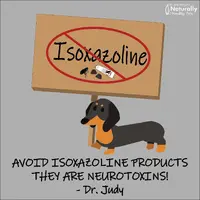
Bravecto, Bravecto Plus, Nexgard, Simparica, Simparica Trio, Credelio, Revolution Plus all contain Isoxazoline which is a neurotoxin!
☠️

It is only supposed to be toxic to the parasites however, data is showing the toxicity is NOT limited to parasites and we are seeing many adverse reactions in dogs and cats.
Some adverse reactions that my clients have seen include:
• Aggression
• Personality changes
• Seizures
• Disorientation
• Wobbling or unstable gate
• Sensitivity to touch
• Abnormal vocalizations
• Urinary or fecal incontinence
• Death
I have seen these adverse reactions happen immediately after administration, but I have also worked with cases where the pet parent noticed these reactions days, weeks, or even months later. Sometimes the reactions don’t occur until multiple doses of the medication have been given.
AVOID THIS DRUG!
📎
Here is my detox protocol: https://drjudymorgan.com/.../side-effects-from-common...
📎
Safer prevention options: https://drjudymorgan.com/collections/tick-and-flea
📎
Flea and Tick Prevention Article: https://drjudymorgan.com/.../flea-and-tick-prevention...
#drjudymorgan #bravecto #credelio #simparica #nexgard #fleaseason #naturallyhealthypets #tickseason #ilovemydog #ilovemycat #holisticveterinarian
 
mail


More Concerning News Regarding Flea and Tick Products for Companion Dogs and Cats​

Dr. Jean Dodds, DVM

The US Food and Drug Administration (FDA) issued an alert in 2018 for companion pet parents regarding certain flea and tick products that contain drugs in the isoxazoline class. To this day, however, the FDA still considers these products to be safe and effective for the treatment or prevention of flea and tick infestations, but does caution that they have been associated with neurologic adverse reactions, including muscle tremors, ataxia, and seizures in some dogs and cats with or without a prior adverse reaction history.

The isooxazoline products are Bravecto (fluralaner) tablets for dogs, Bravecto (fluralaner) topical solution for cats and dogs, Bravecto 1-month (fluralaner) tablets for dog, Credelio (lotilaner) tablets for dogs and cats, Nexgard (afoxolaner) tablets for dogs, and Simparica (sarolaner) tablets for dogs. Other products have additional properties to cover heartworm and worms such as Bravecto Plus (fluralaner and moxidectin) topical solution for cats, Simparica Trio (sarolaner, moxidectin and pyrantel) tablets for dogs, and Revolution Plus (selamectin and sarolaner) topical solution for cats.

The Concerning New Information…

Many companion pet parents believe that adverse drug, chemical, or vaccine reactions have a limited time frame concerning when an adverse event could occur. For instance, if your companion dog does not have a reaction within two days of administration, you might assume your dog can tolerate these flea and tick products. This is clearly not always the case.

Research these days has identified the cumulative effect of this class of drugs in the body. In essence, a buildup of the drug in the body’s system that can lead to the adverse event.

Indeed, a 2023 study out of Argentina discovered that the fluralaner accumulates in fat. The researchers noted, “Our results confirm that fluralaner is capable of penetrating, holding, and accumulating in the lipid membrane and provide details on its precise location and orientation. These properties would allow fluralaner to reach high local concentrations in different membranes and organs, which could be dangerous for vertebrate organisms if its handling is not properly controlled.”

While these researchers did not perform the test in companion dogs or cats, survey data from the European Medicines Agency (EMA) compiled over the years broaches the matter of accumulation in the body. EMA works similarly to the FDA in that it tracks the number of adverse events related to the isoxazoline class of drugs in dogs and cats. Project Jake conducted and published an independent survey in North America regarding adverse events and compared its data with those of the FDA and the EMA. A follow up publication in 2021 provided an update of these reported findings.

Project Jake noted, “The most serious adverse events as stated in the EMA cumulative reports were observed at 0–24 hr after the first dose, and then again after the second and third doses.” The second or third dose would be 1-2 months after the initial dose.

Keep in mind that figure above is an attributable observation or cause and effect, because when they gave the flea and tick product three times, two months later the companion pet had an adverse event. So, we do see a cumulative effect.

One of the data limitations of the Argentinian study is that no one knew the number of treatments a dog had prior to the adverse event over the years. These flea and tick products are often sold in packages of 6 and are prescribed to be given monthly. Some companion pet parents may give them during the warmest six months of the year, others may provide only one or two per year to their companion pet during peak tick season, and others may administer it monthly. The EMA’s data again touches upon this potential area of research.

According to Project Jake, EMA recorded the following adverse events based on age of companion dog from January 2013 – September 2017.

Total Dogs with Adverse Events N = 7,074

Dogs That Died (N =1603)
AgeN%
<=1 Year16810.48%
1–2.9 Years1116.92%
3–4.9 Years1438.92%
5–7.9 Years28617.84%
>=8 Years71844.79%
Unknown/Not Reported17711.04%


Dogs That Experienced Seizures (N=2,140)
AgeN%
<=1 Year1858.64%
1–2.9 Years26612.43%
3–4.9 Years35516.59%
5–7.9 Years45721.36%
>=8 Years73634.39%
Unknown1416.59%


Looking at the data for dogs over the age of five, one can infer that dogs are experiencing a cumulative effect of the drugs in the body if given over the years. Again, this drug association provides a good foundation for future areas of research.

Our Thoughts

Dr. Dodds does not recommend using any drugs of the isoxazoline class for the prevention or treatment of fleas and ticks. She prefers other and preferably all-natural options.

However, as the companion pet parent, you should make the choice. If you do choose to give these flea and tick products, we suggest not purchasing the flea/worm/tick/heartworm combination. Instead, give

the flea/tick product 15 days separate from a monthly heartworm preventive. Additionally, only give during months with a heavy load or when your household may be compromised. For example, a heavy burden of ticks may only occur in your area in May or June, but not the rest of the warm weather months.Dr. Dodds does still suggest monthly heartworm preventatives if the temperature is above 57 degrees for approximately two weeks and mosquitoes are prevalent. In Northern states, this would typically be between May – November. In Southern states, this would more than likely be year round.

Dr. Dodds does have an article regarding more all-natural flea and tick repellents if you would like to explore those options.
 

Back
Top