I knew Dobermans were used during the Wars but not at this capacity. Always good and makes me proud.
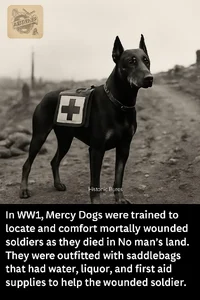
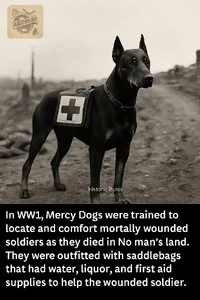
Were Dobermans used as Mercy Dogs during WWI WWII?
Yes, Dobermans served as mercy dogs during World War I and World War II
, finding and providing aid to wounded soldiers in the chaos of battle. These dogs carried medical supplies, stayed with soldiers until help arrived, and sometimes brought back items to signal a location. They were used by multiple armies, including Germany, Britain, and France, and were praised for their courage and loyalty in difficult conditions.
- Role of a mercy dog: Mercy dogs were trained to locate wounded soldiers who were unable to call for help. They would carry medical supplies like bandages and morphine, sometimes staying with a soldier to offer warmth and companionship.
- Signaling for help: If a soldier was too severely injured to receive aid, the dog would often return to the base with an item of the soldier's gear to signal their location.
- Other roles: While serving as mercy dogs, Dobermans were also used for other duties like guard and messenger roles, searching for mines, and acting as sentries.
- Courage and training: These dogs were trained to ignore the sounds and smells of battle, relying on their instincts and loyalty to complete their missions. Their intelligence, resilience, and stamina made them ideal for the job.


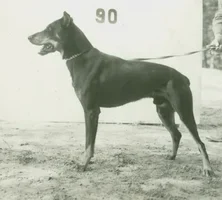
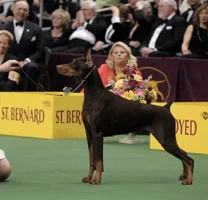
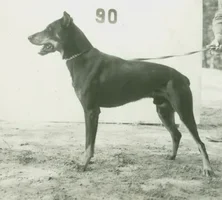
 The dog actually doesn't look half bad. The only thing I can accurately judge from this picture is his eyes aren't almond shaped (round eyes change the intimidation look factor, and reflects too much light) and not enough fill under the eye (which affects jaw strength/shape).


 ?