
You are using an out of date browser. It may not display this or other websites correctly.
You should upgrade or use an alternative browser.
You should upgrade or use an alternative browser.
War Dog Memorial in TN
- Thread starter KSmith
- Start date

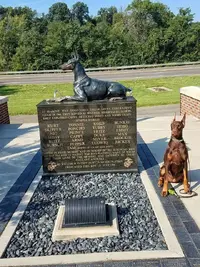
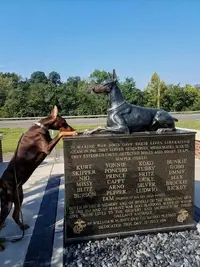
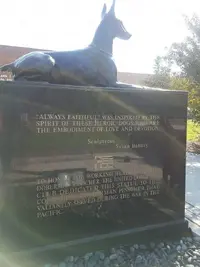


Anyone ever been?
Not to the one in TN. But we have that exact same monument here at The Museum of the Dog. I think there were 7 or 9(?) made in total.
There is a "Dogs of War" room that pays tribute to all the K9 war heroes.
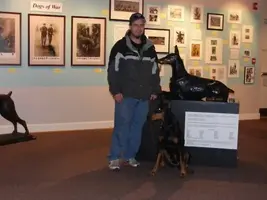


strykerdobe
Hot Topics Subscriber
Great pics!!!!!!!!!!!!!!!!! True war dogs of the Pacific!
They have a good Documentary on them!
They have a good Documentary on them!

I'm not sure where else to put this little story, so I picked this thread.
I was talking to a customer today at the store today. He's 87 years young with a wife 20 years younger than he is and I just learned today that he has a Rotty at home. I mentioned to him that I have a Doberman. He said,"My family had a Doberman, but we donated her to the war effort in WWII. They were advertising for Dobermans, so we donated her." I said that it must have been quite a sacrifice, but he said that they got her as an adult dog and that every time they would turn their backs on her, she'd bite them in the ass
I was talking to a customer today at the store today. He's 87 years young with a wife 20 years younger than he is and I just learned today that he has a Rotty at home. I mentioned to him that I have a Doberman. He said,"My family had a Doberman, but we donated her to the war effort in WWII. They were advertising for Dobermans, so we donated her." I said that it must have been quite a sacrifice, but he said that they got her as an adult dog and that every time they would turn their backs on her, she'd bite them in the ass

That is very interesting. I wonder if they sent back the Dobermans that were not found suitable for the use. Was the breed such back then that most all Dobes could be biddable, stable and hard enough for war service?I'm not sure where else to put this little story, so I picked this thread.
I was talking to a customer today at the store today. He's 87 years young with a wife 20 years younger than he is and I just learned today that he has a Rotty at home. I mentioned to him that I have a Doberman. He said,"My family had a Doberman, but we donated her to the war effort in WWII. They were advertising for Dobermans, so we donated her." I said that it must have been quite a sacrifice, but he said that they got her as an adult dog and that every time they would turn their backs on her, she'd bite them in the ass
At any rate, a very interesting interaction you had with the old man.

I'm curious if these 7 or 9 are independent sculptures or of Kurt on Guam?Not to the one in TN. But we have that exact same monument here at The Museum of the Dog. I think there were 7 or 9(?) made in total.
There is a "Dogs of War" room that pays tribute to all the K9 war heroes.
View attachment 75188
There have been a couple of threads here worth searching out if these stories interest you.That is very interesting. I wonder if they sent back the Dobermans that were not found suitable for the use. Was the breed such back then that most all Dobes could be biddable, stable and hard enough for war service?
At any rate, a very interesting interaction you had with the old man.
I remember reading some went back to their families, some were adopted by their handlers while in service and some, sadly, destroyed.

Kaiser2016
Well-Known Member
I can't recall now if I did read it from the threads here but I believe that some were also abandoned when the soldiers were picked upThere have been a couple of threads here worth searching out if these stories interest you.
I remember reading some went back to their families, some were adopted by their handlers while in service and some, sadly, destroyed.
 Sure they may have been a different dog back then but the bond must have still been so strong.
I think that any time it is suggested that the Doberman is a dangerous breed that should be banned or on a prohibited breed list, a photo of this monument should be shown. It should also be pointed out at the same time that, according to the monument, the Doberman war dogs were not attack dogs, rather they were messengers, explorers and detected bombs.
They also just flat out detected enemy presence.I think that any time it is suggested that the Doberman is a dangerous breed that should be banned or on a prohibited breed list, a photo of this monument should be shown. It should also be pointed out at the same time that, according to the monument, the Doberman war dogs were not attack dogs, rather they were messengers, explorers and detected bombs.
Superior hearing and sense of smell

If I recall, and someone please correct me if I'm wrong, but that boy Kurt.
He was the first K-9 casualty on Guam.
His early detection of enemy personnel is credited with saving the lives of some 100+ U.S. Marines.


I'm curious if these 7 or 9 are independent sculptures or of Kurt on Guam?
From the artist website:
ALWAYS FAITHFUL

They served as sentries, messengers, and scouts. They explored caves, and detected mines and booby traps. Given in their memory and on behalf of the surviving men of the 2nd and 3rd Marine War Dog Platoons, many of whom owe their lives to the bravery and sacrifice of these gallant animals.

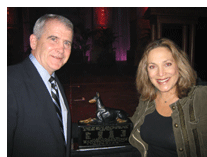

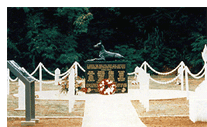
General Carl Epting Mundy, Jr., 30th Commandant of the Marine Corps, donated an original casting of the “Always Faithful” monument that stands at the Naval Base Guam, to the Marine Corps Heritage Foundation in 2012. The sculpture features Kurt the Doberman, the first military working dog killed in action in the 1944 Battle of Guam, during World War II. Military working dogs provided an enormous service to World War II Marines, with some making the ultimate sacrifice while protecting troops. The “Always Faithful” statue was first commissioned by the United Doberman Club along with a Marine Corps officer who went on to serve as a well-known veterinarian to the famous dogs of the Hollywood screens, such as Rin Tin Tin. The monument, by internationally noted sculptor Susan Bahary, is now located in Semper Fidelis Memorial Park adjacent to the National Museum of the Marine Corps.
“We are so pleased that General Mundy donated an original casting of the ‘Always Faithful’ monument to be placed in Semper Fidelis Memorial Park,” said LtGen Robert Blackman, Jr., president and CEO of the Marine Corps Heritage Foundation. “War dogs served valiantly as part of Marine Corps operations throughout World War II. We are proud to honor their service and the service of all military working dogs throughout Marine Corps history. Visitors to the Marine Corps Heritage Center will now be reminded and have the opportunity to reflect on the dogs’ contributions to our nation and honor their memory.”
“I donated the statue to be placed in Semper Fidelis Memorial Park where it can be seen and appreciated by the public for years to come,” said Mundy. “During my career, I witnessed the special bond between handlers and their dogs, and what a central role the dogs played in helping and protecting our service members. The statue is meant to recognize all the dogs that have served our nation and Marines so faithfully, and I wanted the American public to know more about their contributions.”
The United States Marine Corps began using military working dogs, then known as “war dogs,” during World War II. During the Battle of Guam, Marines used the working dogs, mostly Dobermans and German Shepherds, as sentries, messengers and scouts. From carrying messages and medical supplies, to sniffing out hiding enemy soldiers and warning of forthcoming attacks, the dogs served alongside the Marines, even sleeping in the foxholes with their handlers. Twenty-five Marine war dogs lost their lives during the battle.

After the war, Putney was instrumental in ensuring most of the 549 war dogs were successfully retrained so they could return to the States as domestic pets. While Putney went on to become a successful Hollywood veterinarian, he never forgot the war dogs and devoted his life to making sure they were remembered.
Putney returned to Guam in the late 1980’s to find that the cemetery where the war dogs had been buried had been moved and was ill-kempt. He helped raise funds to have the dogs properly buried, and The National War Dog Cemetery was opened at the U.S. Naval Base at Orote Point. Putney along with the United Doberman Club worked to raise funds to commission the “Always Faithful” monument in honor of the dogs who lost their lives liberating Guam.
In addition to the Naval Base at Guam, castings of the “Always Faithful” monument can also be found at Auburn University College of Veterinary Medicine, Auburn, Ala.; the University of Tennessee’s College of Veterinary Medicine in Knoxville; and The Alfred M. Gray Marine Corps Research Center in Quantico, Va.; The American Kennel Club Museum of the Dog; and in private collections. Nine castings of the monument exist, in addition to the artist’s proof. Putney was a graduate of Auburn University, as is Mundy.
“I couldn’t be more thrilled with the placement of ‘Always Faithful’ at the National Museum of the Marine Corps, where it can be seen by so many civilians as well as those in the military,” said sculptor Susan Bahary. “It is especially meaningful and fitting that is was donated by General Carl E. Mundy who as the Commandant of the Marine Corps, officiated at the first unveiling of the monument in Guam in 1994. He has continued to be a great supporter of the sculpture and the valiant war dog handlers and their dogs.”

Archer
Hot Topics Subscriber
I have been to the one in TN. I have also seen the one in Alabama and at the AKC War Dog museum. It is incredibly striking and very moving in person no matter where you see it. I highly recommend any Doberman fan to see it. Huge part of our breed's history. Love the pictures!
strykerdobe
Hot Topics Subscriber
Dobermann1940.
Apparently this was the Doberman.
Apparently this was the Doberman.
Similar threads


- Replies
- 31
- Views
- 2K


- Replies
- 20
- Views
- 2K

- Replies
- 17
- Views
- 2K
