

I just came across this post on FB. It's an interesting observation. Since I don't show conformation or breed, I can't really say how much of a thing this is, but I have noticed the overall picture at shows (same dogs getting GCH points to add silver, gold and platinum to the intitials so this makes sense. Of course my concern is on fragile health & COI's due to popular sire syndrome and this is a piece of the puzzle I never thought about. I don't know or follow the author, she had a Rottweiler on her profile, so I assume she was not referring to the Doberman or actually any breed specifically. I inserted the bold print on what I feel is the important point of this observation.
From Elain Starry:
Dog Shows: Then and Now — The Turning Point
THEN — Evaluation of Breeding Stock!
When conformation shows began — Newcastle in 1859 with 27 Setters and 23 Pointers showing for guns as prizes, then Chicago in 1874, then Westminster in 1877 — they were an evaluation of breeding stock. You brought your dog to be judged in the classes: Puppy, 12-18 Months, Novice, Bred-By-Exhibitor, American-Bred, Open. The judge's job was to look at a group of unchampioned dogs of the same breed and pick the best examples to breed on.
Once a dog finished its Championship — 15 points with two majors — you retired it, bred it, and you purchased or kept a new puppy to bring out. That cycle kept the classes full. Class entries made majors, and majors finished dogs.
NOW — The Grand Championship -- Select Points
On May 12, 2010, AKC introduced the Grand Championship program. The Delegate transcript stated the intent plainly: to provide incentives for breeders and exhibitors to continue to show their Champions and as a secondary goal to generate additional revenues for entry.
The system works like this: After Best of Breed and Best of Opposite Sex are awarded, when quality warrants, the judge may choose a Select Dog and Select Bitch from the remaining Champions. Best of Breed, Best of Opposite Sex, Select Dog and Select Bitch all earn Grand Championship points. Those points are calculated based on the number of dogs competing in the regular classes plus the dogs competing in Best of Breed competition.
That changed the economics of the whole show.
1. It is no longer about the classes. It is about Getting those Grand Champion Points, the Groups and the ranking.
Today many judges are focused on the specials — the already-finished Champions in Best of Breed — not the class dogs. For owners, the real prize is no longer Winners Dog or Winners Bitch. It is Breed, Group placement, and being the Number One dog in the breed. The magazines publish the Top 25 Grand Champions in each breed based on GCH points, and the campaign is to stay on that list.
2. Select ( Grand Champion points) gives owners a reason to never stop showing the same dog.
Before Select, if your dog was not truly special material, you stopped. Now, even an average Champion can continue to collect Grand Championship points by picking up Selects. So instead of retiring the Champion and bringing out a new puppy, owners keep the special on the road whether it is special material or not.
That new puppy is put on the back burner. You are already paying an entry fee for your special. And if you love showing, you are still able to "show"--you do not need a new puppy!
3. Class entries decline, and majors disappear.
This is the consequence you see every weekend. At many shows now you may have 2-3 class dogs and 6-8 specials. At some shows you have more specials than class dogs.
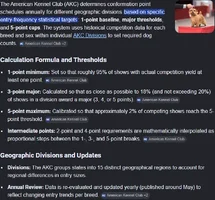
Majors are made from class entries, not specials. When everyone stays in as a special chasing Select points, there are not enough class dogs and bitches to make a 3, 4, or 5-point major. It becomes harder and harder to finish a dog.
That is not evaluation of breeding stock. True evaluation would mean looking at a broad base of young, unchampioned dogs in the classes and using many good males moderately. What the Select and Grand Championship system encourages is the opposite — one heavily advertised male shown for years collecting Select points, breeding hundreds of litters, while the next generation of class puppies waits at home.
That is the turning point: from finishing a Champion in the classes and moving on, to keeping the special going forever for Select points and recognition.
EPS
From Elain Starry:
Dog Shows: Then and Now — The Turning Point
THEN — Evaluation of Breeding Stock!
When conformation shows began — Newcastle in 1859 with 27 Setters and 23 Pointers showing for guns as prizes, then Chicago in 1874, then Westminster in 1877 — they were an evaluation of breeding stock. You brought your dog to be judged in the classes: Puppy, 12-18 Months, Novice, Bred-By-Exhibitor, American-Bred, Open. The judge's job was to look at a group of unchampioned dogs of the same breed and pick the best examples to breed on.
Once a dog finished its Championship — 15 points with two majors — you retired it, bred it, and you purchased or kept a new puppy to bring out. That cycle kept the classes full. Class entries made majors, and majors finished dogs.
NOW — The Grand Championship -- Select Points
On May 12, 2010, AKC introduced the Grand Championship program. The Delegate transcript stated the intent plainly: to provide incentives for breeders and exhibitors to continue to show their Champions and as a secondary goal to generate additional revenues for entry.
The system works like this: After Best of Breed and Best of Opposite Sex are awarded, when quality warrants, the judge may choose a Select Dog and Select Bitch from the remaining Champions. Best of Breed, Best of Opposite Sex, Select Dog and Select Bitch all earn Grand Championship points. Those points are calculated based on the number of dogs competing in the regular classes plus the dogs competing in Best of Breed competition.
That changed the economics of the whole show.
1. It is no longer about the classes. It is about Getting those Grand Champion Points, the Groups and the ranking.
Today many judges are focused on the specials — the already-finished Champions in Best of Breed — not the class dogs. For owners, the real prize is no longer Winners Dog or Winners Bitch. It is Breed, Group placement, and being the Number One dog in the breed. The magazines publish the Top 25 Grand Champions in each breed based on GCH points, and the campaign is to stay on that list.
2. Select ( Grand Champion points) gives owners a reason to never stop showing the same dog.
Before Select, if your dog was not truly special material, you stopped. Now, even an average Champion can continue to collect Grand Championship points by picking up Selects. So instead of retiring the Champion and bringing out a new puppy, owners keep the special on the road whether it is special material or not.
That new puppy is put on the back burner. You are already paying an entry fee for your special. And if you love showing, you are still able to "show"--you do not need a new puppy!
3. Class entries decline, and majors disappear.
This is the consequence you see every weekend. At many shows now you may have 2-3 class dogs and 6-8 specials. At some shows you have more specials than class dogs.
Majors are made from class entries, not specials. When everyone stays in as a special chasing Select points, there are not enough class dogs and bitches to make a 3, 4, or 5-point major. It becomes harder and harder to finish a dog.
That is not evaluation of breeding stock. True evaluation would mean looking at a broad base of young, unchampioned dogs in the classes and using many good males moderately. What the Select and Grand Championship system encourages is the opposite — one heavily advertised male shown for years collecting Select points, breeding hundreds of litters, while the next generation of class puppies waits at home.
That is the turning point: from finishing a Champion in the classes and moving on, to keeping the special going forever for Select points and recognition.
EPS




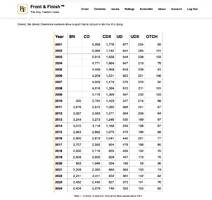




 But, unfortunately, some people are not considerate and don't let people know or as I've come across...entered in more than one show on the same weekend and then opted to go to the other show, breaking the major for everyone after we built the major together online.

 AKC certainly isn't making it any easier for the common folk to continue to afford to show breeding stock either with entries lately being upwards of $45 per entry. Add in cost of fuel and food these days, and trying to train and trial to earn titles on the back end? Thats just barely scratching the surface of costs. I love the breed though and I'm not afraid to have instant ramen for dinner at times just to afford it all.


