• Disclaimer: Hello Guest, Doberman Chat Forums presents the opinions and material on these pages as a service to its membership and to the general public but does not endorse those materials, nor does it guarantee the accuracy of any opinions or information contained therein. The opinions expressed in the materials are strictly the opinion of the writer and do not represent the opinion of, nor are they endorsed by, Doberman Chat Forums. Health and medical articles are intended as an aid to those seeking health information and are not intended to replace the informed opinion of a qualified Veterinarian.”

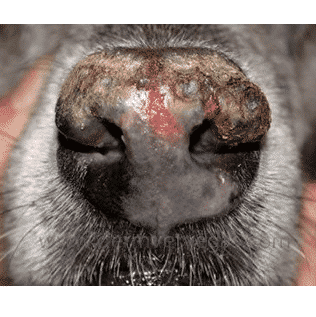
Raw crusty nose

Yes, that is why I suspected it as a possibility but if it were it looks mild.

Page 9 for diagnosis.
I just read all 10 pages and I'm just sick. Who knew? :cry:

I don't know that this is what Reckless has, but after reading that thread I'm at once praying it's not and/or grateful that it has never left her nose pad.
 
I just read all 10 pages and I'm just sick. Who knew? :cry:

I don't know that this is what Reckless has, but after reading that thread I'm at once praying it's not and/or grateful that it has never left her nose pad.
I think Mars battled with Lupus so I think the Pemphigus was a secondary issue. Both auto immune diseases. I agree whatever it is is promising that it hasn't caused any discomfort for her or spread elsewhere!
 
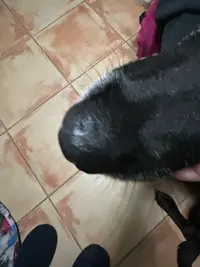
Reckless the Dutch Shepherd has had this nose problem on & off for 5 years (she's 8 now). J has tried everything, the vets just shrug and say this ointment or that ointment. They haven't suggested a skin scraping which I guess will have to be requested. It will get better to the point of looking completely normal for several months and then go back to raw & crusty, which makes me feel like it's not diet related. This is as bad as it's ever been. It never spreads outside the nose pad and is mainly only on top, never gets bad down the front or sides.

@Rits, she did order that creme that you recommended in the other thread, but I just thought I'd see if anyone had ever seen or dealt with anything like this.

Again, the weirdest thing is that it heals and gets better then in a few months it starts peeling and getting worse again. No rhyme or reason.

Just guesses.
Does it only happen certain times of the year? Paw pads are not affected.
Apply a salve to the area. One that is ok if the dog licks it.

My guess would be an Immune issue, Zinc deficiency, allergy issue.


Maybe Zinc Responsive Dermatosis
zinc-responsive-derm_fig-4-35461-gallery.png
 
Does it only happen certain times of the year? Paw pads are not affected.
Apply a salve to the area. One that is ok if the dog licks it.

My guess would be an Immune issue, Zinc deficiency, allergy issue.
Thanks for your input. Not my dog, so no diary of up & down times... nothing affected at all except the nose. I'm suspecting immune issue, but nothing like the horrible cases I've seen the the articles.
 
Thanks for your input. Not my dog, so no diary of up & down times... nothing affected at all except the nose. I'm suspecting immune issue, but nothing like the horrible cases I've seen the the articles.

Ok
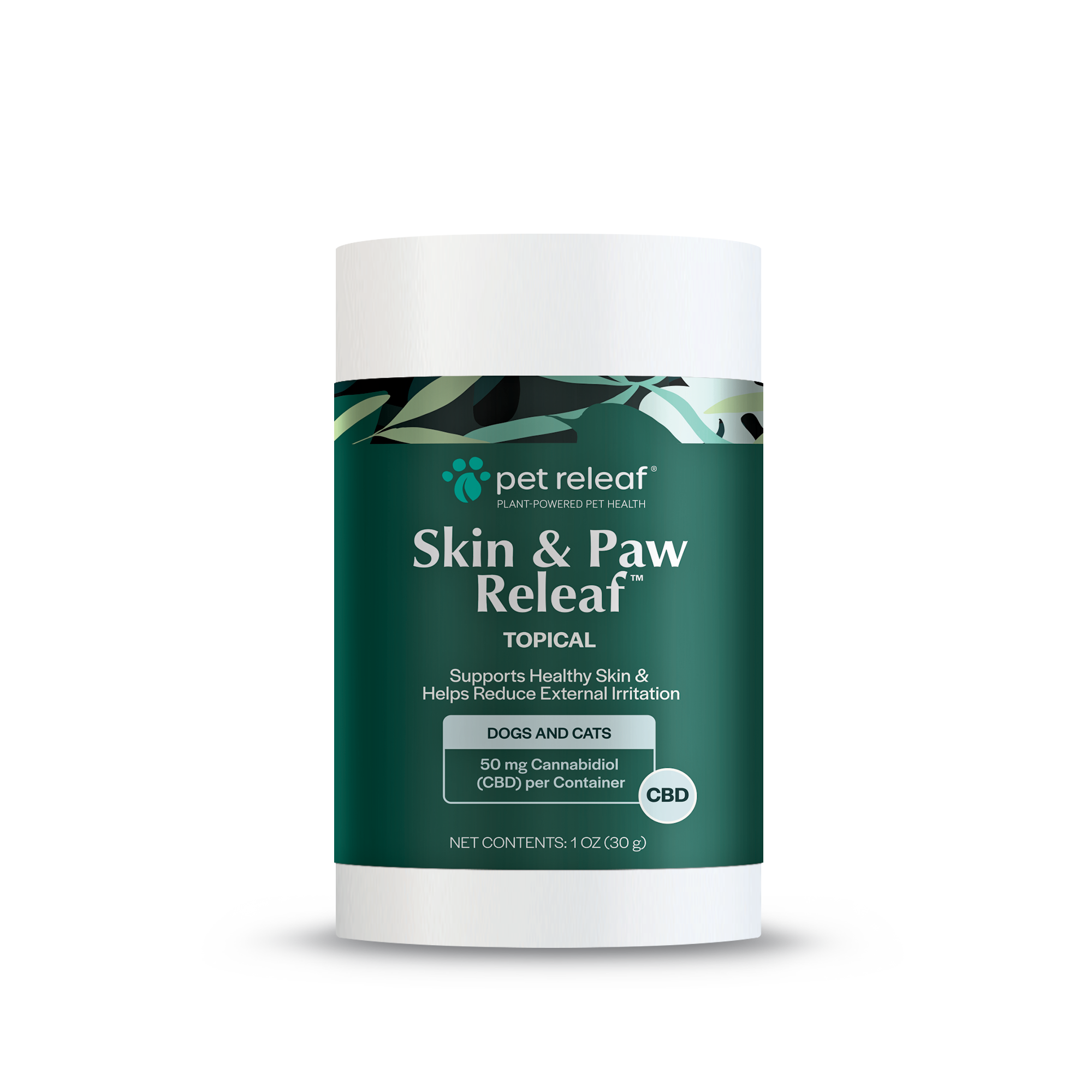
This might be a good choice to put on the nose. Also for Paw pads.

From Petreleaf. Its a full spectrum CBD.
they have a great sale ending tomorrow 4/11

 
Update - Reckless went to a new vet for a different reason, but as I said in the original post, her nose never completely heals although it gets better at times. So it was brought up to the new vet and he gave it a name and prescribed Animax Ointment (about $20) and Tacrolim Ointment ($140!!!). But guess what - less than 3 weeks and her nose looks awesome! The spots that don't look "normal" are healed but have scar tissue from constantly being raw and open. No bleeding or breaking open since she started on the ointments. Just in case anyone needs this info in the future, I thought I'd add this update.


Canine Discoid Lupus Erythematosus​

Written by Dr. Jacqueline Brister, DVM

Summary​

Discoid lupus erythematosus (sometimes referred to as DLE) is an autoimmune disease that affects the skin. It is one of the most common immune diseases of the skin in dogs. Autoimmune diseases happen when the immune system, which normally protects the body from illnesses, attacks healthy tissues or cells. While we do not know what causes DLE, skin issues associated with it get worse with sun exposure.

Systemic lupus erythematosus is a similar disease, but it is more severe and affects many other organs within the body.

Symptoms and Identification​

Symptoms of discoid lupus erythematosus are primarily related to the hairless portion of a dog’s nose. The nose will change color, ulcerate, ooze, and/or develop a crusty appearance. Nosebleeds may also occur.

Sometimes the skin around the eyes will be affected as well. Hairy portions of a dog can also be affected, but this is not common.

Biopsying diseased skin will aid in diagnosing the condition. Unfortunately, other conditions can appear similar, so symptoms and response to medications while waiting for biopsy results (which can take 1-2 weeks) are also needed. Culturing the affected skin (i.e. testing for bacteria) is commonly done to ensure that another type of infection is not occurring.
 

Attachments

  • tempImageBdWyPG.webp
    tempImageBdWyPG.webp
    112.2 KB · Views: 2
  • tempImage3utYXC.webp
    tempImage3utYXC.webp
    96.4 KB · Views: 2

Back
Top