DEBUNKING PET FOOD MYTHS AND MISCONCEPTIONS
Ancient grains: pet food lessons industry missed or ignored
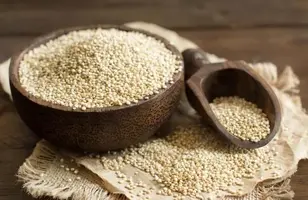 photo by Karissaa | BigStockPhoto
Ancient grains: pet food lessons industry missed or ignored

RYAN YAMKADECEMBER 15, 2020
Ryan Yamka, PhD, is founder and an independent consultant with Luna Science and Nutrition, and founder of the Guardian Pet Food Co. He is board certified in companion animal nutrition by the American College of Animal Sciences and a fellow with the American College of Nutrition. Yamka calls on his extensive background in pet nutrition, and multiple years developing, formulating and launching dog and cat foods as a senior executive with leading pet food companies, to address common myths and misconceptions about pet food.
Ancient grains: pet food lessons industry missed or ignored | PetfoodIndustry.com
At a time when the pet food industry and consumers have been plagued with
recalls and the canine dilated cardiomyopathy (DCM) scare, you would think that manufacturers would want to do everything in their power to gain back consumer trust. Instead, we are witnessing a trend toward more line extensions with ingredients not supported by science that demonstrates the products are safe or effective at providing the proper nutrition. After all, if the companies hit hardest by the DCM scare would have conducted digestibility studies and nutrient analyses of their grain-free pet foods, that matter would have been put to bed back in 2018.
Why are so many pet food companies using ancient grains?
In a recent article, I discussed the Food and Drug Administration (FDA)’s
update on grain-free pet food and DCM. Although not as highly publicized as their investigation into the hypothesized theory that grain-free foods caused DCM, they did recognize that DCM is a scientifically complex and multifaceted disease.
As a result of the ongoing investigation, many companies had chosen to remain silent and instead quickly launch new pet food formulas with ancient grains, along with creative marketing campaigns to help save market share. Unfortunately, many of these companies have fallen into the same pitfall and potential liability by launching these new products without science to support their efficacy in providing adequate nutrition.
Many companies have promoted ancient grains as a solution preventing (and in some cases implying treatment of) DCM, which according to the data, is a problem that does not exist. An additional problem is that the introduction of these ancient grain foods into the marketplace has made it look, at least to the consumer and veterinarian, as if those companies’ grain-free foods indeed were problematic, therefore making the companies seem guilty. This left retailers with the responsibility for explaining the landscape of these pet food options with very little support and science from manufacturers to help them.
Keep in mind, many of these are the same companies that previously bashed traditional grains (i.e., corn, wheat, rice, sorghum and barley). Since these companies have launched ancient grain foods, they also have chosen to remain silent or not provide a reason for their “grain-friendly” formulas, which leaves consumers and retailers with many unanswered questions: If grains were bad before, then why are ancient grains better? Was there something wrong with their grain-free formulas? If so, then why is it a line extension versus a product replacement?
Can you see the problem here?
Marketing versus science
Similar to the grain-free/DCM debacle, failure of companies to test and back up their pet foods with third-party nutrient analyses, digestibility studies or other third-party-verified testing will further ruin the reputation of the companies producing the foods, thus further eroding consumer, retailer and veterinarian trust in these brands.
How can you know if nutrition is adequate and if the pet is able to assimilate nutrients within the pet food if you are not testing it? This is a rhetorical question, because the answer is you cannot. Unfortunately, although it may be an unpopular fact often ignored by the industry, it is only a matter of time until more untested pet food formulations are implicated in another health crisis with these types of careless practices.
Digestibility – why you need to understand it
I often harp on digestibility because it is critical in evaluating a pet food and ingredients within it. Digestibility studies involve collecting stool and analyzing it to determine the percentage of macronutrients and micronutrients absorbed in comparison to what was fed. This process does not involve any invasive procedures, inhumane conditions or otherwise harm to the animal. After all, doesn’t everyone clean up after their dog or clean the litter box daily?
In short, companies that do not perform digestibility testing have no idea what the actual calorie content or digestibility of their food is—meaning that pets are ultimately the ones being experimented on. This is particularly true for foods with ancient grains. To date, I am unaware of any pet food company in the marketplace that has conducted and made their digestibility studies public on their “new” ancient grain formulas.
Additionally, it is important to remember that the DCM scare was largely focused on lack of known nutrient content and digestibility of grain-free foods. Thus, these ancient grain foods are creating the potential for more industry problems.
What are ancient grains, and what about their digestibility?
Ancient grains include millet, quinoa, spelt, amaranth and teff, to name a few. Contrary to what marketing tells us, nutritionally, ancient grains are like well-known grains such as corn, rice and oats. Ancient grains are plants that have been popular in many geographies and cultures for a long time, although they are relatively newly popular to the U.S. as a food import.
More recently, quinoa and millet have been touted as superior ingredients in many “premium” pet foods. When I say premium, I mean purely from a cost standpoint,
not from the standpoint of being beneficial to the animal.
Many people may think that ancient grains are new to pet food; however, there is scientifically, peer-reviewed, published studies investigating ancient grains and the digestibility in dogs. For example,
Kore et al. (2009) found that corn, pearl millet and sorghum were not as digestible as rice as a grain in foods for dogs.
Fortes et al. (2010) found that both rice and sorghum were higher in total digestibility than millet in dogs.
Pezzali and Aldrich (2019) evaluated the digestibility of a grain-free food containing potato, peas, and tapioca starch versus an ancient grain food containing spelt, millet and sorghum, and observed no differences in digestibility. Lastly, Godoy (2020) presented data at the American Society of Animal Sciences meeting demonstrating that quinoa is less digestible than millet and equivalent to both rice and oat groats. In short, the consumer is simply paying for marketing and overpriced grains!
Again, this is why I emphasize the importance of digestibly trials on all pet foods before they enter the marketplace. As discussed in another
previous article, we know that certain nutrients like fiber play a critical role in taurine status in dogs regardless of carbohydrate source. Could this be why pet food companies do not want to share digestibility data on their ancient grain foods? It’s likely.
Reality: Not all plant sources are sustainable
Quinoa is native to the Andes region in South America (Peru and Bolivia), which is where most of the crop today comes from. Quinoa fields once covered a small percentage of the land and llamas grazed on the rest, which protected the soil and refertilized the land with manure. Given the quinoa boom, which helped the economy, farmers began selling off their llamas to grow more quinoa. The result was more clear-cutting of farmland, the use of new fertilizers for maintaining the nutrients in the soil, pollution from other agricultural chemicals and now erosion and strains on limited water resources.
This could also mean that the these “ancient” grains may harbor the same agricultural chemical load as traditional grains that consumers often try to avoid. Additionally, demand in the E.U. and U.S. has caused prices to increase six-fold in less than a decade, creating a sustainability crisis. As a result, the poor can no longer afford to eat the crop they grow (
Cherfas, 2016, NPR).
So, one needs to question if quinoa really fits the mantra of sustainability for companies given the environmental impact and socioeconomic concerns. If you are against clear-cutting of the Amazon, this is no different. This is where knowing the country of origin of your ingredients could make or break the decision for the consumer buying the pet food. It is also no different than the situation with consumers who oppose ingredients sourced from Chinese.
Still a grain, only more expensive
Given all of the above facts, why has the industry so quickly chosen to jump on board the ancient grain train? Based on published studies, the data available does not show any nutritional benefit over traditional grains or even grain-free foods. Additionally, simply because an ingredient is plant-based does not mean it is sustainable or that it does not have a harmful impact on the world. Companies need to look past packaging when considering sustainability and consider the ingredients as well.
Lastly, we need to remember that an ancient grain is still a grain! Just more expensive.