• Disclaimer: Hello Guest, Doberman Chat Forums presents the opinions and material on these pages as a service to its membership and to the general public but does not endorse those materials, nor does it guarantee the accuracy of any opinions or information contained therein. The opinions expressed in the materials are strictly the opinion of the writer and do not represent the opinion of, nor are they endorsed by, Doberman Chat Forums. Health and medical articles are intended as an aid to those seeking health information and are not intended to replace the informed opinion of a qualified Veterinarian.”

New Virus, Parvo-like, Found in MI and IN

Oh Little Oji

Hot Topics Subscriber
$ Forum Donor $
Has anyone heard of this yet? I saw this on a dog group on the f-book:

"County Board of Commissioners during its Aug. 17 meeting, Clare County Animal Control Director Rudi Hicks shared with the Cleaver some sad and disturbing information. An unidentified virus, symptomatically similar to canine parvovirus, has been affecting dogs in the state. She said it was found in Otsego County first, where there were 20 cases.
“It mimics Parvo, but they are all testing negative,” Hicks said. “All of the dogs have died, vaccinated and unvaccinated. We just had eight dogs in our county, that we know of. We took a dog down yesterday for necropsy that just died of it, but don’t have the results back.”
Hicks said the virus is everywhere, and that it is believed to have come out of Louisiana.
She said the virus kills the infected dog within three days of the appearance of symptoms, and was quick to add that her dogs are not leaving the house.
“We’re not going to dog parks, we’re not going camping with them,” Hicks said. “Because there’s no cure There’s no vaccine because they haven’t identified it yet.”
She said that, due to the negative test results it is either a brand new strain of the Parvo virus that the test doesn’t pick up, or it’s something totally different.
When Hicks addressed the board after it approved a request for the shelter to use its own funds to erect a new storage/large animal housing building, and approved a spay/neuter grant, she brought the same shocking news to the commissioners.
“There is a new virus in Michigan that’s affecting dogs,” she told the commissioners. “We thought we were fine; we had not had any deaths. As of today, from last Thursday [Aug. 11] until now, we’ve had over 30 dogs die of a virus, a disease – not at the shelter – in the county. It mimics Parvo, so it’s vomiting, bloody diarrhea, and they all died within three days: vaccinated dogs and unvaccinated dogs.”
When asked if it was known how the disease spreads, Hicks said it is unknown. “They don’t know anything. The state is in a panic right now.”
She explained that cases started in Otsego, and that eight dogs along the street across from her own house had all died in three days. Hicks also said Animal Control had taken a carcass the previous day and had tested it in the field for Parvo; it was negative but had all the symptoms.
“We drove it to MSU yesterday,” she said. “So, we should get results, but just a warning to the public: Keep your dogs home, don’t take them to dog parks, don’t walk them.”
Hicks reiterated that, at this point, there is no vaccine, and no cure. She also spoke of a late evening call the day prior advising that a breeder in the southern part of the county had lost 21 puppies and dogs. Hicks said that report had not yet been confirmed, and repeated the symptoms as: vomiting, diarrhea and bloody diarrhea."
 
Yes, I've been following it since we travel to MI for dog shows all the time. There is an update now. It is Parvo.

UPDATE, August 22, 2022 - We are continuing to work with our animal health partners, including MDARD, to investigate the reports of illness in northern Michigan dogs. While our diagnostic investigation is ongoing, we can say that some of the first samples submitted for testing were positive for canine parvovirus. Additional diagnostic testing is ongoing and we will provide updates as soon as they are available.

Veterinarians are encouraged to pursue additional diagnostics in cases where screening tests for parvovirus are negative but clinical presentation is consistent with parvovirus infection. Please call the Laboratory with any questions about sample collection, submission, or diagnostic options and contact MDARD if unusual or reportable illnesses are seen.

Dog owners should keep up with routine vaccinations and ensure animals are fully vaccinated before interacting with other animals to keep them healthy and safe. If dogs or puppies show signs of illness, keep them at home and away from other dogs and contact your veterinarian. Be sure to clean up after your pet when walking in public and don't allow pets to come into contact with other animals' waste.
"
 
Hmm, I wonder if it's a second strain or faulty testing/user error.
There was/is a big outbreak here in the northwest as well. I've taken in 2 parvo pups in the past year.
My veterinarian thinks that it's a consequence of all the the backyard breeding that went on during quarantine. The demand for puppies went out of control and herd immunity wasn't maintained.
People don't understand that there are small segments of every population that vaccine just doesn't work as well on.

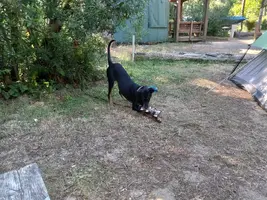
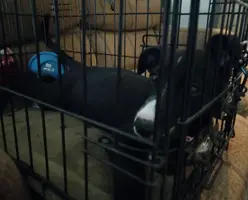
My parvo pups... I know that crate is too small. They didn't tell me I was picking up a giant puppy. Luckily I have many more 😅
 

Attachments

  • 20220717_174227.webp
    20220717_174227.webp
    1,008.3 KB · Views: 10
  • 20220806_150855.webp
    20220806_150855.webp
    152.1 KB · Views: 10
Last edited:

Mystery Virus Killing Dogs in Michigan Novel to U.S. But Familiar to Mexico City​

By Corinne Murdock
•
Aug 22, 2022 DailyWire.com


Officials have been unable to identify the cause of a canine parvovirus-like outbreak killing Michigan dogs within days — but it bears resemblance to cases seen in Mexico.

Cornell University College of Veterinary Medicine associate professor Elisa Mazzaferro told The Detroit News on Monday that the virus reminded her of cases treated by a Mexico City emergency clinician. Otsego County animal shelter director Melissa FitzGerald advised pet owners to head to a veterinarian immediately if their dog experiences parvovirus-like symptoms: loss of appetite, lethargy, bloody stool, vomiting, and diarrhea.

“Canine parvovirus attacks rapidly, dividing cells, including those of the gastrointestinal tract, and leads to vomiting and diarrhea,” said FitzGerald.

Most of the dogs infected with the mystery virus test negative for canine parvovirus, and even dogs vaccinated for canine parvovirus have fallen ill. The virus usually kills dogs within three days. Over 50 dogs have died from the mystery illness so far.

Canine parvovirus isn’t contagious to other animals or humans.

On Monday, the Michigan Department of Agriculture and Rural Development (MDARD) reported that several preliminary samples of infected dogs tested positive for canine parvovirus during necropsies. However, MDARD didn’t attribute the outbreak to canine parvovirus definitively. State Veterinarian Nora Wineland clarified that they’d just launched their investigation and were awaiting further results.

“We are still in the early stages of this investigation, but some of the first samples submitted to the Michigan State University Veterinary Diagnostic Laboratory were positive for canine parvovirus. However, there are more results pending and more to be learned,” said Wineland.

Michigan State University (MSU) Veterinary Diagnostic Laboratory (VDL) director Kim Dodd clarified to MLive that the state and university together would “explore novel explanations” like new virus variants if unable to find the cause of the outbreak.

MDARD announced its intervention in the outbreak last Friday.

The first cases appeared across Otsego County, before spreading to Clare County.

Otsego County Animal Shelter explained in a Facebook post earlier this month that most of the dogs who contracted the mystery illness in their area were under two years old and died within three days. On Monday, their director, Melissa Fitzgerald, clarified that they haven’t heard of any survivors.

The shelter reported that they spoke with veterinarians throughout their county and MDARD — however, nobody has an explanation for the outbreak.

“No one has an answer. The best ‘guess’ is that this is a strain of parvo,” stated the shelter.

In an update, the shelter clarified that they’d received more reports beyond northern Michigan to include central Michigan. The shelter reported that properly vaccinated dogs hadn’t died from the virus in their area, in an apparent contradiction to their director’s remarks earlier this week.

However, Clare County Animal Control Director Rudi Hicks reported to the Clare County Board of Commissioners last Wednesday that both vaccinated and unvaccinated dogs infected with the mystery virus all died. Hicks said that the state was “in a panic” over the mystery virus.

Until further notice, officials are advising Michigan dog owners to refrain from taking their dogs to dog parks and on walks.

Also a Link to

 
Wonder how a deadly disease jumped from Mexico to the state of Michigan? Wonder how Covid jumped from China to the US? Wonder how Monkeypox jumped from Africa to the US? Seems we no longer demand any accountability for the damage done by our open borders or from gain of function research and enactment, that is done in other countries and then unleashed on everyone world wide.
 
Update today: confirmed Parvo. The dogs that have died were improperly vaccinated or not at all!


August 24, 2022
LANSING, MI — To date, the results from the additional testing facilitated by the Michigan Department of Agriculture and Rural Development (MDARD) and completed by the Michigan State University Veterinary Diagnostic Laboratory (MSU VDL) have revealed the illness impacting dogs in Michigan’s northern Lower Peninsula to be canine parvovirus. The affected dogs did not have a history of complete vaccination.
 
Wonder how a deadly disease jumped from Mexico to the state of Michigan? Wonder how Covid jumped from China to the US? Wonder how Monkeypox jumped from Africa to the US? Seems we no longer demand any accountability for the damage done by our open borders or from gain of function research and enactment, that is done in other countries and then unleashed on everyone world wide.
It was reported to be a different strain of Parvo that had not been in the US until now. Not sure if that's true.
 
Just noticed this post by @Oh Little Oji so these can be combined.
 
Everything today says it's Parvo. The dogs that died were not vaccinated or completely vaccinated. Evidently the rapid tests were not responding but the lab tests said Parvo. It is an extremely contagious virus so any unprotected population will be vulnerable - especially crowded situations like shelters, puppy mills etc.

Every non-vaccinated dog, especially puppies, will die if they contract the Parvo virus and don't get extremely intensive medical treatment, which most of the most vulnerable places - those shelters & puppy mills - can't afford and won't do. That's how it's been since the 1980's. If this virus mutates to a stronger version, it would be a mess for sure. Right now to me it looks like a weak rapid test was prevalent and caused a panic and rumor response. I will still wait & watch, but feel pretty confident that it is not a new virus.
 

Worms & Germs Blog​

PROMOTING SAFE PET OWNERSHIP

Outbreak of Fatal Disease in Michigan Dogs? What Is It, Is It Real and What Do We Know?​

By Scott Weese on August 23, 2022
POSTED IN DOGS, VACCINATION

I’ve been holding off writing about this, hoping for more details, but my inbox has been flooded with questions about it so I figured I’d get the ball rolling. There’s been a bit of a media frenzy about an apparent outbreak of severe disease in dogs in northern Michigan.
What do we know?
  • Not much. There have been various social media and news reports about an unknown disease or a “new parvovirus” outbreak in dogs in the area. Reports mention “dozens” of dogs affected, most less than 2 years of age, mainly with vomiting and diarrhea.
  • Concerns about a new strain of canine parvovirus are circulating on social media, but some reports have indicated that while parvo is suspected, test results have been negative. I suspect that’s incorrect, or that there are some nuances to the situation that haven’t been conveyed.
On Monday, Michigan’s state veterinarian’s office issued an update:
“We are still in the early stages of this investigation, but some of the first samples submitted to the Michigan State University Veterinary Diagnostic Laboratory were positive for canine parvovirus. However, there are more results pending and more to be learned,” State Veterinarian Nora Wineland, DVM. “When MDARD first learned of these cases in northern Michigan, we immediately reached out to the veterinarians and animal shelters involved and began our response efforts. Protecting animal and public health is one of the department’s key pillars, but it is a team effort. Dog owners need to ensure their pet is up to date on routine vaccinations as it’s the first step in keeping your pet healthy.”
While light on details, the statement highlights that parvovirus is a leading candidate for the cause at this time. The number of dogs that were positive and the number that were tested area important to put those results into context. Social media reports talk about large numbers of dogs, but that’s not really reliable since cases can quickly be blown out of proportion. Dogs with any random / routine illness can lumped into case counts without a good case definition and proper data collection, so it’s hard to know the scope of the issue at this time.
What could this be?
A new virus?
  • Probably not. Most outbreaks are caused by the usual suspects. I never discount the possibility of something new, but we start by looking for common things.
An outbreak caused by a new strain of parvovirus?
  • The big concern is about a new strain of parvo that current vaccines don’t protect against. I’d say this is unlikely. Outbreaks caused by “new” strains of parvovirus get talked about frequently but ultimately, they’re usually caused by well-established strains.
  • The “new strain” fears often come up when disease occurs in vaccinated dogs, but most parvo cases in vaccinated dogs aren’t caused by a new strain. Vaccines may not always work in young dogs because antibodies from their mother are still present and can interfere with the vaccine. That’s why we (should) vaccinate dogs at frequently intervals until they’re 16-20 weeks of age. We start early in the hope that they will respond to an early vaccine, then keep vaccinating until an age that we’re confident they will respond.
  • Disease in younger vaccinated dogs can also occur because the vaccine didn’t get a chance to work. We also see issues that are likely due to use of dodgy vaccines or vaccine handling, like when dogs are vaccinated by owners or breeders that get their vaccines from questionable sources, or when cold chain might not have been properly maintained.
  • Disease in vaccinated dogs doesn’t necessarily mean this is a new virus, or a new strain of a common virus, but it’s a consideration, for sure. Disease in older, properly vaccinated dogs would cause me more concern.
An outbreak of our typical canine parvovirus?
  • This is probably the most likely explanation, or at least the one to rule out first. That will require confirmation that parvovirus is actually the cause in most cases, and investigation of the vaccination status of those dogs.
  • Sequencing of parvovirus from affected dogs would ideally be done to see if it’s a different strain.
A social media frenzy?
  • We always have to step back and figure out what we know versus what people are talking about.
  • Not uncommonly, I get questions about an outbreak of X disease and ultimately nothing unique is happening. Sometimes, a few routine cases get blown out of proportion online. Sometimes, we hear more about cases that occur routinely in the background, just because people start talking about them.
  • Reports of a large number of sick dogs could truly be an abnormally large number of sick dogs, or it could be the typical number of dogs that are sick but that no one usually talks about. This could also be a situation where there is a small outbreak of parvo in dogs in one area, but lots of dogs with unrelated GI disease are getting lumped in with them, which confuses the issue.
How can dog owners protect their dogs? Especially if they live in or are traveling to Michigan.
It’s mainly common-sense measures and the same things I’d recommend for any area at any time:
  • Make sure your dog is probably vaccinated against parvovirus (and other vaccine-preventable diseases)
  • Keep your dog away from dogs that might be sick
  • Limit contact with other dogs, especially large numbers of dogs and transient populations of dogs that are unfamiliar to you and of unknown disease / vaccination status.
As I mentioned, we typically recommend vaccinating puppies for parvovirus every 4 weeks until 16-20 weeks of age. In shelters, the recommendation is often every 2 weeks because of the increased risk. We have confidence that a vaccine given at 16+ weeks of age will be effective in the vast majority of dogs. At that point, it’s a bit case-by-case. Dogs might get one more dose 2-4 weeks later, especially if they are at higher risk of exposure (e.g. lots of parvo in the area, lots of contact with other dogs and dogs of unknown health status) or we might stop the initial series at that point. Dogs then get a booster 1 year later, then go on an every-3-year schedule. The key is getting things started off right. Proper vaccination of puppies is key to preventing this potentially devastating disease.
Tags: outbreaks, parvovirus
 
This is an UPDATE from the yesterdays above post.

Michigan dog disease…an update​

By Scott Weese on August 24, 2022
POSTED IN DOGS
Quick update on the Michigan dog disease outbreak that I wrote about yesterday and which as attracted a lot of attention.

A report from the State Veterinarian has indicated this appears to be a parvovirus outbreak.

I’m not overly surprised. As I wrote yesterday….
An outbreak of our typical canine parvovirus?
  • This is probably the most likely explanation, or at least the one to rule out first. That will require confirmation that parvovirus is actually the cause in most cases, and investigation of the vaccination status of those dogs.
Further investigation identified canine parvovirus in affected dogs. Initial point-of-care tests for parvo were negative and while we rely on these (generally quite effective) tests a lot, we know that they are not 100% sensitive. The report says those tests were consistently negative, which suggests a reasonable number were performed. That’s interesting since with severe disease and a lot of tests, I’d expect a negative. However, we know that the tests aren’t perfect and that parvo is common, so we don’t jump to rule it out too quickly.
The other key aspect here was vaccination history. Affected dogs were incompletely vaccinated. I covered parvo vaccination issues yesterday too, but it likely means that they were young and not fully vaccinated yet, or hadn’t been properly vaccinated when young.
So, from a population standpoint this is encouraging because it means that there’s not likely something new and our current preventive measures should be effective…they just need to be used.
Tags: outbreaks, parvovirus
 
If it is Parvo then I would just have a Parvo/Distemper Titer done to see if your pet is protected. More vaccines doesn't mean more protection!
It is possible dogs that were vaccinated either had a bad vaccine either when it was made or stored improperly, or they were non-responders (not making any antibodies from the Vaccine). Or the (puppy) vaccine was given too early and the Mothers Maternal antibodies prevented the vaccine from working and causing the puppies immune system not to make antibodies from the vaccine.
Best thing for (puppy vaccines) after vaccinating with their last puppy vaccines waiting at least 2-3 weeks (usually at 20weeks) after them then do a Titer to see if they have a Positive Titer.
 

Back
Top