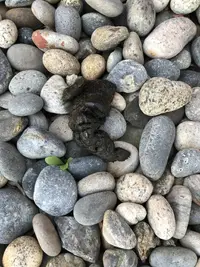
Same today. Normal in the am lunch like a cow patty. How much pumpkin? We are mixing a spoon of pumpkin with a cup of food am and pm. Should we add more pumpkin? We are also adding forti flora once a day
https://www.amazon.com/Purina-Veterinary-Fortiflora-Nutritional-Supplement/dp/B001650NNW
Dont like anything Purina and I don't like Purina Fortiflora. It has some questionable ingredients in it.
FortiFlora – Truth about Pet Food
https://truthaboutpetfood.com/tag/fortiflora
Purina’s FortiFlora – a dog and cat probiotic sold by many veterinarians – contains Animal Digest. Purina explains that Animal Digest is a “source of high-quality protein”, but FDA linked..
Animal supplements ·
Animals ·
Pets
Questionable Ingredients in Pet Supplements
March 6, 2016
FortiFlora is a supplement for cats and dogs manufactured by
Purina, owned by
Nestlé, and sold by veterinarians. According to Purina’s marketing material, FortiFlora is: “
proven to promote intestinal and immune health and balance.” In fact, on the product webpage, it has allegedly received a total of 397 reviews for a rating of 4.7 stars out of a possible 5. Yet, the first ingredient in this “supplement” is “Animal Digest.”
Pet “food” is regulated (well, at least officially) by a variety of federal and state authorities. At the federal level, these include the
Food and Drug Administration (“FDA”), the
US Department of Agriculture (“USDA”), the
Federal Trade Commission (“FTC”) and the
Association of American Feed Control Officials (“AAFCO”).
While AAFCO has no enforcement authority, it provides guidelines for the manufacture (is it “food” if it’s manufactured?) of pet “food” and animal feed. AAFCO guidelines provide that Animal Digest is:
“
material which results from chemical and/or enzymatic hydrolysis of clean and un-decomposed animal tissue. The animal tissues used shall be exclusive of hair, horns, teeth, hooves and feathers, except in such trace amounts as might occur unavoidably in good factory practice and shall be suitable for animal feed.”
The term “
enzymatic hydrolysis” means that enzymes are used to bond molecules with the addition of water. Here are two short videos of animal products and waste undergoing enzymatic hydrolysis.
Avangart Technologies – (WARNING – images can be disturbing)
Nutritious Feeds, Inc. By the way, horses and cows have evolved to feed on grass. Feeding on food waste does not make them healthier. If it did, the cattle industry would not be the biggest user of antibiotics in the world. For example, in 2011, 6.2 million pounds of antibiotics, representing 80% of all antibiotics sold in the US, were used in food-producing animals.
I should note that AAFCO’s guideline does not provide for the labeling of the type of animal. Hence, the “animal tissue” can come from any type of animal, including euthanized pets containing the poisons
pentobarbitol sodium and
phenytoin sodium that are used to euthanize animals, as well as road kill. I should also note that at least one study has shown that pentobarbitol does
not degrade (i.e., break down or neutralize) in the cooking process. An
FDA report, dated in 2002, found:
“
There appear to be associations between rendered or hydrolyzed ingredients and the presence of pentobarbital in dog food. The ingredients Meat and Bone Meal, Beef and Bone Meal, Animal Fat, and Animal Digest are rendered or hydrolyzed from animal sources that could include euthanized animals.”
So, in essence, “animal digest” is a cooked-down broth of unspecified parts (and more than likely contaminated) of unspecified animals obtained from any source whatsoever. Can we say “yum!”? Or perhaps it should be “yuck!”
Other listed ingredients are:
Enterococcus faecium – This organism can be both benign or may cause diseases such as neonatal meningitis in humans. Different (and presumably safe) safe strains are used in the manufacture of probiotics for both humans and animals.
L-ascorbyl-2-polyphosphate – As the label states, this is a source of vitamin C. However, it is a cheap (i.e., inexpensive) feed-grade source and is non-assimilated.
D-4582 = This one is a mystery. A search on Purina’s and the FDA’s websites came up empty. A general Google search had a lot of results but none related to food additives. Finally, a search of the
International Numbering System for Food Additives also came up empty. My 2-legged has sent an email to Purina requesting information on this ingredient and we will supplement (no pun intended) this post if we receive an answer.
I should note that Purina mentions that this ingredient is made from animal protein “
supplied by USDA-inspected facilities.” However, no mention is made as to whether the animal protein itself was USDA inspected. The commercial pet food industry is very, very good at hiding facts. For the record, all rendering facilities that process animals or other wastes are USDA inspected to ensure they follow their stated procedures and are not in violation of health protocols. The fact that the facility was USDA inspected means
nothing relative to the viability of the ingredients themselves. This is similar to a person selling a car and stating that it has been carefully hand-washed which has nothing to do relative to the mechanical viability of the car.
A final point is that probiotics are “live” organisms that need to be refrigerated unless they are freeze-dried
and packaged in individual blister packs to prevent exposure to moisture (see,
ConsumerLab.com). Purina’s label indicates that it:
- Contains guaranteed amounts of live active cultures [Emphasis added]
Yet, FortiFlora is kept and sold at room temperature!
PS The Weimaraner on the box is not me. I would never endorse such a product.
Happy with my home-cooked foods,