• Disclaimer: Hello Guest, Doberman Chat Forums presents the opinions and material on these pages as a service to its membership and to the general public but does not endorse those materials, nor does it guarantee the accuracy of any opinions or information contained therein. The opinions expressed in the materials are strictly the opinion of the writer and do not represent the opinion of, nor are they endorsed by, Doberman Chat Forums. Health and medical articles are intended as an aid to those seeking health information and are not intended to replace the informed opinion of a qualified Veterinarian.”

Food for large breeds?

That and people need to actually READ labels / ingredients.

Purina for example makes many different products and they are NOT all the same. The one kind of Purina that I used to feed mine (cause I was dumb and never read the label) contained the word Corn this or that I think 3 times near the top of the ingredient list.

Since switching to the Diamond Naturals all the 'allergy problems' mysteriously went away... There also happens to be zero 'corn' anything in that food so... :)
I have done a lot of research myself and always have on everything in life. The fact Purina Pro Plan has been used to great effect and never been linked to DCM speaks volumes about its formula. I am also someone that abhors corn in dog food in the past. I use to make food for my dogs thst we supplemented the 3 dogs we had. They loved it.

I am using Pro Plan to start with Large breed 30/18 is what I got. I want the best for my new pup. I am probably going to use a raw diet eventually. Dr. Harvey's Canine and proteins of my choice.
 
  • Like
Reactions: BG1
I have done a lot of research myself and always have on everything in life. The fact Purina Pro Plan has been used to great effect and never been linked to DCM speaks volumes about its formula. I am also someone that abhors corn in dog food in the past. I use to make food for my dogs thst we supplemented the 3 dogs we had. They loved it.

I am using Pro Plan to start with Large breed 30/18 is what I got. I want the best for my new pup. I am probably going to use a raw diet eventually. Dr. Harvey's Canine and proteins of my choice.

There is a study out there somewhere about legumes and DCM... Freaking peas and DCM...

I did mention that Purina had different grades of kibble...

Not personally going to be concerned if any Dobermans of mine ingest a legume. I is less than not convinced in any way.
 
There is a study out there somewhere about legumes and DCM... Freaking peas and DCM...

I did mention that Purina had different grades of kibble...

Not personally going to be concerned if any Dobermans of mine ingest a legume. I is less than not convinced in any way.
Pea fiber (which is what is in Pro Plan) is wholly different from whole Peas or Pea Protein. Interestingly, there is no scientific link for pea fiber to DCM.

Pea issues and DCM are linked to grain-free, which Pro Plan is not.

I get what you are saying about peas and peanuts or legumes. It usually is High quantities in grain free to provide carbohydrates.
 
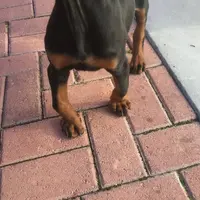
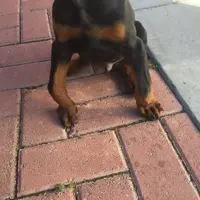
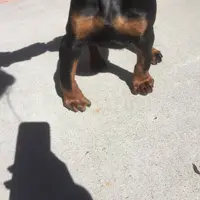
Dobes puppies in growth stage need 26% max protein to avoid "knuckling" but she's past that stage. IMHO "if it aint broke dont fix it" is the rule on food.

"Knuckling" (where a puppy’s paw turns under due to weak ligaments or bones) is more commonly linked to improper calcium-to-phosphorus ratios, over-supplementation, or excessively fast growth rather than protein alone. The label shows 1.1% calcium and 0.9% phosphorus, which is a balanced ratio (close to 1:1 to 1.2:1), suitable for large breeds to avoid overloading bones. The 30.0% protein, combined with this calcium level, is unlikely to cause knuckling if feeding guidelines are followed.
 
Dobes puppies in growth stage need 26% max protein to avoid "knuckling" but she's past that stage. IMHO "if it aint broke dont fix it" is the rule on food.
Knuckling is a result of calcium to phosphorus being imbalanced and genetics. Not protein.
 
Knuckling is a result of calcium to phosphorus being imbalanced and genetics. Not protein.
Huh. I keep seeing that protein % referenced as the-key issue. But always willing to learn:

Here is a cut and paste on studies searched:
"
Primary Sources


1. Schoenmakers, I., et al. (2000). “Clinical aspects of growth plate disorders in the dog.” Veterinary Record, 147(7), 177-182.


• Relevance: This peer-reviewed study discusses growth plate disorders in large-breed dogs, including Dobermans, and their association with nutritional imbalances. It highlights how excessive caloric intake and improper calcium-phosphorus ratios can contribute to skeletal deformities, including carpal flexural deformities that may lead to knuckling.


• Key Finding: Overfeeding and high-energy diets accelerate growth, causing mismatched bone and soft tissue development, which can manifest as knuckling in the carpal joints.


• Access: Available through veterinary journals or databases like PubMed.


2. Kealy, R. D., et al. (1992). “Effects of diet restriction on life span and age-related changes in dogs.” Journal of the American Veterinary Medical Association, 200(9), 1315-1320.


• Relevance: This study examines the impact of controlled feeding in large-breed dogs (Labradors, but applicable to Dobermans). It demonstrates that restricted caloric intake reduces the incidence of orthopedic issues, including joint laxity and deformities associated with knuckling.


• Key Finding: Overfeeding puppies with high-calorie diets increases the risk of developmental orthopedic diseases, which can contribute to knuckling by stressing immature joints.


• Access: Available via JAVMA archives or veterinary libraries.


3. Hedhammar, A., et al. (1974). “Overnutrition and skeletal disease: An experimental study in growing Great Dane dogs.” Cornell Veterinarian, 64(Suppl 5), 1-160.


• Relevance: This seminal study on large-breed dogs (Great Danes, relevant to Dobermans) explores how overnutrition, particularly excessive protein and calcium, leads to skeletal abnormalities. It directly links rapid growth from overfeeding to carpal deformities and joint instability, which can cause knuckling.


• Key Finding: Diets with excessive protein (>30%) or calcium (>1.5%) disrupt coordinated growth, leading to conditions like carpal hyperextension or knuckling.


• Access: Available through veterinary research databases or university libraries.


4. Lauten, S. D. (2006). “Nutritional risks to large-breed dogs: From weaning to the geriatric years.” Veterinary Clinics of North America: Small Animal Practice, 36(6), 1345-1360.


• Relevance: This review article discusses nutritional management for large-breed puppies, emphasizing the role of balanced diets in preventing orthopedic issues. It specifically addresses calcium, phosphorus, and energy balance in relation to developmental deformities.


• Key Finding: Improper calcium-to-phosphorus ratios (e.g., >1.5:1 or <1:1) and excessive energy intake can weaken joint structures, contributing to conditions like knuckling.


• Access: Available via Elsevier or veterinary journal subscriptions.


5. Nap, R. C., & Hazewinkel, H. A. W. (1994). “Growth and skeletal development in the dog in relation to nutrition; a review.” Veterinary Quarterly, 16(1), 50-59.


• Relevance: This review focuses on the impact of nutrition on skeletal development in large-breed dogs. It discusses how over-supplementation of calcium, vitamin D, or protein can lead to developmental issues, including carpal deformities associated with knuckling.


• Key Finding: Excessive vitamin D or calcium supplementation disrupts bone mineralization, potentially leading to joint laxity and knuckling in rapidly growing breeds like Dobermans.


• Access: Available through Taylor & Francis or veterinary research platforms.


Notes on Sources


• Scope: These sources focus on large-breed dogs broadly, as Doberman-specific studies on knuckling are scarce. Dobermans, as a large breed, share similar growth-related risks, making these studies directly applicable.


• Access: Most of these articles are accessible through academic databases like PubMed, Elsevier, or veterinary libraries. Some may require institutional access or purchase."

And here is an old thread here:

 
People tend to forget or just overlook the fact there is a huge genetic component to this as well. Good info.

Protein percent is not really that big of a concernif it is a balanced diet especially in dogs that don't have the genetic markers for it
 
People tend to forget or just overlook the fact there is a huge genetic component to this as well. Good info.

Protein percent is not really that big of a concernif it is a balanced diet especially in dogs that don't have the genetic markers for it
What genetic markers?
Specifically for knuckling, I mean.
My layman's understanding of the diet guideline on dobe puppies is that both "too much calories", and "too high protein" grows the bones faster than ideal.

Once the growth plates fuse you can load up the protein % esp in active athletic infividuals.

Are you referring to genetic markers for DCM and copper storage disease?
 
What genetic markers?
Specifically for knuckling, I mean.
My layman's understanding of the diet guideline on dobe puppies is that both "too much calories", and "too high protein" grows the bones faster than ideal.

Once the growth plates fuse you can load up the protein % esp in active athletic infividuals.

Are you referring to genetic markers for DCM and copper storage disease?
Knuckling in Dobermans, often associated with conditions like Wobbler Syndrome (cervical spondylomyelopathy), refers to the dragging or scuffing of the top of the paw due to neurological or musculoskeletal issues. Here’s a breakdown of the causes and prevention strategies:Causes of Knuckling in DobermansWobbler Syndrome:A common cause in Dobermans, characterized by compression of the spinal cord in the neck (cervical vertebrae).
Can result from malformed vertebrae, intervertebral disc herniation, or ligament issues.
Leads to neurological deficits, causing unsteady gait, knuckling, and weakness in the limbs.
Dobermans are predisposed due to their breed genetics and large size.
Degenerative Myelopathy (DM):A progressive neurological disease affecting the spinal cord, common in older Dobermans.
Causes loss of coordination, starting in the hind limbs, leading to knuckling and dragging of paws.
Intervertebral Disc Disease (IVDD):Herniated or slipped discs in the spine can compress nerves, leading to knuckling, pain, or paralysis.
Trauma or Injury:Injuries to the spine, nerves, or limbs can disrupt nerve signals, causing improper paw placement.
Nutritional Deficiencies:In growing puppies, poor nutrition (e.g., improper calcium-phosphorus balance) can lead to developmental issues like knuckling, especially in large breeds like Dobermans.
Other Neurological Conditions:Conditions like tumors, infections (e.g., meningitis), or inflammatory diseases affecting the nervous system can cause knuckling.
Orthopedic Issues:Conditions like carpal hyperextension or joint deformities in puppies can lead to abnormal paw placement.
 
Thanks. I appreciate the information on wobblers and synptoms in adult dogs showing up as dragging knuckles.

I thought the test for VWD in dogs is a blood draw for antigen assay?

The point I was trying to make here about diet in puppies stage and symptoms often referred to as "knuckling over" ought to be more specifically referred to as carpal laxity syndrome.


A study published in the “Veterinary and Comparative Orthopaedics and Traumatology” journal showed that a balanced diet and gentle exercise may be enough to reverse the problem.

For example, your vet may suggest switching to an adult formula of dog food to slow the rapid growth that worsens the condition."

Back to the OP- who asked about her 2.5 yr old dog...
imho, if it aint broke dont fix it!

For sure, food is a topic that generates a LOT of debate!😉
 
Last edited:
I've been feeding my guy Purina Pro Plan large breed for a while now with good results—solid weight checks and great energy. He’s also a chewer, so I keep an antler for dogs around to keep him busy without wrecking his teeth like with some other chews. Between that and the food, he's in great shape and stays occupied.
 
  • Agree
Reactions: BG1
I've been feeding my guy Purina Pro Plan large breed for a while now with good results—solid weight checks and great energy.
All dogs vary so if they are doing well on it, there is no reason not to keep using it.
 

Back
Top