Egg Legislation Replaces Science with Politics - VERY SCARY

Dobs4ever

Hot Topics Subscriber
May 31, 2012
Egg Legislation Replaces Science with Politics

For more information on Newsline, contact: Johnna Miller, Director of Media Development, American Farm Bureau Federation [email protected]

Who should decide the appropriate size of a pen for farm animals? American Farm Bureau Livestock Policy Specialist Kelli Ludlum says new legislation would bypass the research of veterinarians and animal scientists in favor of the politics of animal rights activists. AFBF’s Johnna Miller has the story.

Miller: New legislation being pushed by the Humane Society of the United States and the United Egg Producers would replace science-based animal care practices with a strict government mandate, according to Livestock Policy Specialist Kelli Ludlum. The primary aim of the bill is to double the size of cages for egg laying hens.

Ludlum: That doesn’t sound like a bad thing, obviously. More space for birds sounds like a very good thing, but the problem is that sometimes giving animals too much space can actually be detrimental to animal welfare. It allows them more room to fight. It allows larger birds to over-consume feed while smaller birds may not get enough feed. we have worked out the size of these um animal confinement facilities for a very specific purpose based on veterinary expertise and the technical expertise of animal scientists um to maximize the welfare for the animals.

Miller: But Ludlum says consumers would definitely be pinched by the proposed changes. It’s already happened to shoppers in the European Union.

Ludlum: The E.U. actually phased out the typical, conventional cages and went to a very similar mandate.Egg prices have increased dramatically, because producers have had to cut back on the number of birds. There simply is no more land to double facility size and so they’ve cut back dramatically on the number of birds. That’s cut back on egg production. The demand is still there, but the supply is cut in half and so where eggs are even available, the prices have skyrocketed.
Miller: The United Egg Producers own figures estimate it will cost $4 billion to implement the changes. And Ludlum says the legislation would set a precedent on how farmers should raise their animals purely for politics.

Ludlum: We don’t have a problem necessarily if they wanted to adopt standards on their own. What we have a problem with is putting this legislation into federal law and again mandating that only one type of production practice is acceptable. Even though this legislation is specific to egg-laying hens and doesn’t affect any other species directly, this legislation sets a real precedent for establishing federal production standards that once that once that bridge is crossed there’s really no going back. So it could very easily extend to all other species, all other types of production practices. So we see this as not only an egg issue, but a broader issue for all of animal agriculture.

Miller: Johnna Miller, Washington.
Miller: We have two extra actualities with AFBF Livestock Policy Specialist Kelli Ludlum. In the first extra actuality she describes what new legislation on egg farming would do. The cut runs 20 seconds, in 3-2-1.

Ludlum: The Senate and House egg bills would require egg producers to phase in what we call “enriched colony housing” which basically dramatically increases the size of the pens that hens can be kept in. There are also some other requirements, for example, things like scratchpads, nest boxes.

Miller: In the second extra actuality Ludlum describes the cost impact for consumers. The cut runs 20 seconds, in 3-2-1.

Ludlum: What it ultimately means for consumers is less choice and higher prices at the grocery store. In general today cage-free eggs are from 50 percent to 100 percent more expensive. Now we’re not talking about necessarily going all the way to cage free, so you can probably assume that the cost point will be somewhere in the middle of cage-free and conventional eggs today.
Miller: Newsline is updated Mondays and Thursdays by 5pm Eastern time. Thank you for listening.

http://www.fb.org/index.php?action=newsroom.newsclip&id=69714
 
Oh I'm sure there are people/groups that support this 100%. Wonder how they will feel when they are paying $10 or more for a dozen eggs? Now I'm not saying be cruel to the hens to keep the price of eggs down, but come on! Whatever happened to common sense??
 
This is just another example of legislators poking their noses where they don't belong and a dangerous precedent to set for all animal owners be they livestock or pet owners. I totally agree with Ludlum (above).

Farmers on their own and government funded State Agricultural Univerity studies have figured out what works best for livestock to balance their health and productivity. Sick and miserable chickens don't produce well. And the reason farm fresh eggs have firm whites is because they are fresh. Supermarket eggs can be up to a month old before they reach your frying pan, but they are still a nutritious protein choice.

How can the government on one hand fund scientific studies on livestock in the universities and on the other hand reject the findings and legislate on pure uneducated emotion? I think it's wonderful that there are still agricultural universities for young future farmers and scientists to attend, but if their work is just going to be trashed when they try to put it into practice to feed the world and make a living, what's the point?
 
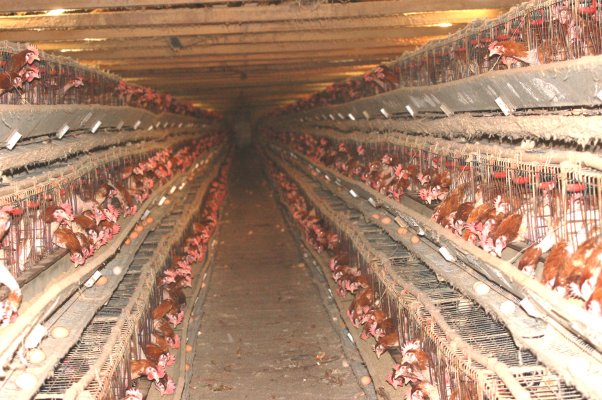
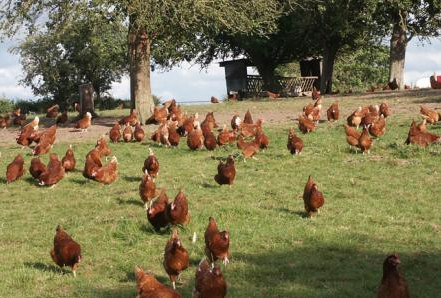
Sorry but I agree with getting rid of all battery hen farming, no one realises just how bad their living conditions are, the cages are A3-A4 sized cages that kept 4or 6 hens for one year , the never get to see the sunlight or breath fresh air, they are nearly bald with depression and others picking at them , we here in the EU have banned battery hen farming all together, the farmers were given four years for the change , I can buy 1 dozen free range eggs for £2.00 [$3.00] so they have not shot up in price plus the eggs are 100% nicer and not packed full of antibiotics as they get this all the time in the pellet feed they are given when in cages, I have had poultry all my life my grandmother showed me how to kill a chicken and pluck it when I was knee high to a grasshopper, I also rescued 500 cage chickens as the kill them at one year old, I had a farm at the time so bought them and put them to range free on the land, they were bald and terrified of the worms my son kept digging up for them but after a couple of months they were unrecognisable , someone has to fight for the animals

this is how they look at one year old , they do not live past one year
chickens+016_LittleHenRescuecouk.jpg

300px-Animal_Abuse_Battery_Cage_01.jpg

keeping the cost of eggs down causes suffering
hens.jpg

caged
vs
free range
1.jpg
 
The hens in your pictures look to be in pretty good health Judith. The first two pictures look like they have only roosters in them, and they all look like they are in moult. Where did the first two pictures come from?
 
No they are not roosters ,they are hens, it is just they are very thin, and they are not moulting they are bald from being locked in a pen, does it matter where the pictures came from, this is a cruel way to keep any livestock, everyone would be up in arms if people kept dogs like this, the thing is egg prices do not go through the roof like the argument above , if I had to pay and extra buck for eggs so that a chicken can live a good outdoor life as nature intended so be it, I have seen caged chickens close up and it is disgusting , a lab rat has a better life.
 
It does matter where the photos came from because if I had to guess, I'd say they came from somewhere in Asia where human rights can be second even to chicken rights.

My BF has worked on a commercial egg farm here in the USA and never saw anything like the first two photos. He thought they were roosters too.

It's true that the battery hens do not have a long life, but they do get turned into good soup when it becomes economically rational to do so. That's what livestock is for. The only abuse I hear of on Maine poultry farms is that of the migrant workers who tend the hens.
 
No they are not roosters ,they are hens, it is just they are very thin, and they are not moulting they are bald from being locked in a pen, does it matter where the pictures came from, this is a cruel way to keep any livestock, everyone would be up in arms if people kept dogs like this, the thing is egg prices do not go through the roof like the argument above , if I had to pay and extra buck for eggs so that a chicken can live a good outdoor life as nature intended so be it, I have seen caged chickens close up and it is disgusting , a lab rat has a better life.


I have chickens in a cage and they don't look anything like those nasty pictures. We keep them in the coup because my Greta is an all star hunter. They are much safer than if we had free range hens. Gosh, I hate to argue with everything you say, but it is my experience the more regulations, the higher the price.
 
I've had free range hens and they were all killed by foxes. The foxes would come and get them in broad daylight. I couldn't really get mad at the foxes since it was spring and I figured they had babies to feed. I even spotted my neighbor's pet ferret come around stalking my hens!
 
The important thing to me is if an animal is producing something that i eat or need that it is kept in the best possible conditions if it adds a few pence/cents so be it, but this is just my opinion
 
I agree Judith, but what I don't like is (like the subject of this thread says) legislation replacing science with politics. It goes beyond just taking away choice and into a whole new sphere of irrationality where popular opinion overrides fact.
 
But the fact is Ingrid they are kept this way to keep the price of eggs down, science is not always right just look at GM foods, these are the reccomendations of DEFRA in the UK as to how animals should be kept
Laying Hens - Code of Recommendations BY DEFRA Department for Environment, Food & Rural Affairs.
The welfare of laying hens is considered within a framework, elaborated by the Farm Animal Welfare Council, and known as the ‘Five Freedoms’.
These form a logical basis for the assessment of welfare within any system, together with the actions necessary to safeguard
welfare within the constraints of an efficient livestock industry.
The Five Freedoms are:

1.FREEDOM FROM HUNGER AND THIRST
- by ready access to fresh water and a diet to
maintain full health and vigour;
2.FREEDOM FROM DISCOMFORT
- by providing an appropriate environment
including shelter and a comfortable resting
area;
3.FREEDOM FROM PAIN, INJURY OR
DISEASE
- by prevention or rapid diagnosis and
treatment;
4.FREEDOM TO EXPRESS NORMAL
BEHAVIOUR
- by providing sufficient space, proper facilities
and company of the animals’ own kind;
5.FREEDOM FROM FEAR AND DISTRESS
- by ensuring conditions and treatment to
avoid mental suffering.

So what are DEFRA doing to ensure their recommendations are instigated?
Nothing as far as I can see.
What about point
2. FREEDOM FROM DISCOMFORT, by providing an appropriate environment including shelter and a comfortable nesting area.
Battery hens might have a roof over their heads but they DO NOT have a comfortable nesting area. They sleep in their cages on wire - no solid floor and NO PERCHES.
What about point
5. FREEDOM FROM FEAR AND DISTRESS, by ensuring conditions and treatment to avoid mental suffering.
Hens may not be the brightest birds in the world, but they do feel distress and pain and they have natural foraging instincts - so is being cooped up in a 20 inch crate not having anything else to do but eat and drink not mental suffering? I would challenge anyone who said it was not.
 

Back
Top