• Disclaimer: Hello Guest, Doberman Chat Forums presents the opinions and material on these pages as a service to its membership and to the general public but does not endorse those materials, nor does it guarantee the accuracy of any opinions or information contained therein. The opinions expressed in the materials are strictly the opinion of the writer and do not represent the opinion of, nor are they endorsed by, Doberman Chat Forums. Health and medical articles are intended as an aid to those seeking health information and are not intended to replace the informed opinion of a qualified Veterinarian.”

Desperate For Help with 2 Year Old

Good to know that about the GI tract. I don't have enough experience with both types to know, so I put it out there in case someone else noticed or wondered the same thing. Knowing the diets of a total of 3 euro Dobes hardly builds a case, but Kaiser's energy levels seemed to stand out like a sore thumb compared to his NA counterparts (from our Dobie play dates). I had concerns that he didn't have the infamous "off switch". Sure he's the only pup of the group so he has higher energy, but the raw diet made such a difference in his general behavior at home. It's like he matured over night. Had his poops stayed solid for longer periods I would never have moved him to raw; so I wonder how many other Dobes are out there dealing with the same thing, and thinking that this is just how the dog is?
But I do wonder if there is a difference between the imported dogs systems. I would think that the parents would have had different vaccine requirements and diets compared to the dogs bred here. Does anyone know if other countries are seeing these types of issues? Sorry I know we're getting off topic here.
 
If you're considering raw, maybe look into the pre-packaged ones, they're expensive but probably worth it in the long run with vets bill and all that. Is there anyone on here that uses these? Maybe they can help. (Something like Stella and Chewy - that category of raw)
Darwin's has prepackaged but only four selections of protein. Chicken, turkey, duck and beef.
Raw feedingMiami also will offer ground prepackaged.
 
Darwin's has prepackaged but only four selections of protein. Chicken, turkey, duck and beef.
Raw feedingMiami also will offer ground prepackaged.
There are 2 that I can suggest as this is what we are doing with Kaiser. I started him with Carnivora to rule out any allergies to fruits or vegetables.

Fresh frozen raw cat and dog food. Whole animal carcass diets.

Pets Go Raw is what we are using now:

Our Product | Pets Go Raw

They have "elimination diet" versions but we didn't use these.
 
But I do wonder if there is a difference between the imported dogs systems. I would think that the parents would have had different vaccine requirements and diets compared to the dogs bred here. Does anyone know if other countries are seeing these types of issues? Sorry I know we're getting off topic here.
Ya. It's like travelling to other countries. In some places you can't drink the water but the locals can. Wouldn't it be because the gut flora is different?
 
But I do wonder if there is a difference between the imported dogs systems.
I don't think there's any general difference. Each dog or maybe line is different. My boy is an import and has no NA in his ancestry. I tried a few different kibble foods and he was doing fine on Acana Pacifica until Acana moved their processing to US for US clients, then I switched to lamb and apple and he does well on it.
 
If you are looking into feeding raw the easiest way. There are the premade packaged frozen raws which come in nuggets or patties. Just thaw and feed.
Couple of other choices for raw are freezedried and dehydrated raw which are very easy to make and feed by just adding water. But which ever one you choose freeze dried or dehydrated I would only use filtered water and not water straight from the tap.
They do have those counter top gravity filters which you add tap water which are pretty good ones.

And yes vaccinations and flea and tick pesticides can cause all sorts of issues.
 
Hello All!

I've had my little puppy Remy since she was a few weeks old. We received her from a friend who has bred dobermans for years here in GA. She's a wonderful dog, but she has horrible, horrible stomach issues since the day we got her. Normal dog food used to make her throw up constantly. We immediately switched to higher quality low/no grain foo, which helped just a little. She still has absolute liquid diarrhea and terrible gas (like eye watering bad) no matter what food we give her. Often times she ends up going in the house. She's ruined more than one carpet and even stained walls. In two years I don't think she's had a solid stool. She isn't technically underweight, but her ribs do poke out slightly. She had a ton of energy, which is why we've kind of accepted this as part of who she is. She's tried several foods from sweet potato and salmon to lamb. She's seen three specialists including someone from the vetinary department at UGA. No one can find anything wrong with her. This might be related; she goes through spells where she gets redness around her eyes, dry flakey skin, and chews on her paws. (Although from reading this seems to be allergy related.) If anyone has had any similar experiences with their Doberman, or has any remedies, etc, anything would be truly appreciated.
I was still thinking about your poor Remy and I have an idea for you.. Jake ended up the last few days with a really bad digestive problem.. It was recommended to give him just chicken for a few days.. so our local pet store which has always be wonderful chose this for us Merrick 96% real chicken..checked it on Chewy.com and it has very good reviews..I know you have tried so many things but maybe going back to something simple will work..fingers :fingersx: crossed.. Jake is on an antacid and sucralfate for a bit..so I hope he will feel better. I have never seen him so sick and no idea what caused it! He usually has a stomach or iron go figure:facepalm:
 
Is that a canned food or dry kibble?

I just looked on dog food advisor Merrick Grain Free (Dry) has a full 5 star b. I didn't realize Merrick was that highly rated.
i
My bad I was talking about the canned...something easy on the stomach..dry food is harder to digest. Anyway update ..Jake seems to be better...he still is reluctant to eat but I think he's a bit better. Tempted to try the dry Merrick as well. ;) after he is hopefully back to his normal self.
 
Oh I'm sorry Jake hasn't been feeling well but I'm glad there's some improvement now.
We used to feed Merrick but after the formula changed we switched. It sounds like they must have improved it again which is great since it was a high quality food.
 
I would take a look at supplementing enzymes. I have a friend with a dog with similar symptoms. She went to several vets with no answers, spent $1000's of dollars and still no answers. I saw a video by Dr. Karen Becker that made sense to me. She was recommending digestive enzymes and explained why. I showed it to my friend and she tried it. With in a very short time the problem was solved. I am so impressed that I am starting my dogs on it. I don't really have any problems but prevention sounds great to me. I also like that I may be lowering risk for food sensitivity.

Here is the link. Pet Digestive Enzymes | Pet Digestive Health
 
Hi all!

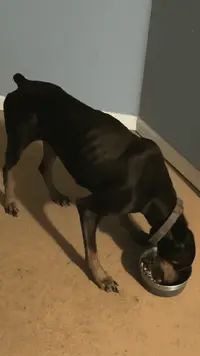
Just an update. We tried the raw food diet with remy, using a prepackaged company. It made everything a lot worse. She still had her horrible diarrhea bouts and her weight dropped terribly. Now this winter her weight has dropped even more (even more than back when she was on raw food). You can see all her ribs. It's been challenging to get her to eat her food on top of this (really amplifying the weight loss with the cold weather), and have tried adding fresh meat, yogurt, etc anything to get her to eat. If anyone has any other suggestions, we are so desperate at this point. (She still has energy and loves to play luckily) Looking for a vet specialist in GA if anyone knows one they can recommend, or simply something else to try.
 

Attachments

  • IMG_5667.webp
    IMG_5667.webp
    46.5 KB · Views: 19
  • IMG_5666.webp
    IMG_5666.webp
    47.3 KB · Views: 18
I would take a look at supplementing enzymes. I have a friend with a dog with similar symptoms. She went to several vets with no answers, spent $1000's of dollars and still no answers. I saw a video by Dr. Karen Becker that made sense to me. She was recommending digestive enzymes and explained why. I showed it to my friend and she tried it. With in a very short time the problem was solved. I am so impressed that I am starting my dogs on it. I don't really have any problems but prevention sounds great to me. I also like that I may be lowering risk for food sensitivity.

Here is the link. Pet Digestive Enzymes | Pet Digestive Health


Thank you! Unfortunately we tried enzyme probiotics and they did not help.
 
What options has the vet given? After 2yrs I would think a vet would have come up with something that worked. It would be helpful to know what she has been tested for (parasites, bloodwork, stool, etc.), how often, what, if any results were off.

Because there are so many parts to the GI tract (stomach, intestine, bowel...) the possibilities are enormous. To narrow it down, we need as much information as you can offer. There are no "right or wrong" answers, just the hope that something you mention might be the key to someone recognizing something familiar that will help you solve this (lets give her an imaginary latex allergy and her favorite toy is made from latex rubber, or her favorite mat is latex backed...It could easily be something as weirdly simple as that).

How frequently is she fed, and what amounts; how much/how often does she drink? How long between eating and pooping 1-2 hours or 8-10? Not to be gross, but is her stool like gravy, or more like a broth soup with chunks? That helps point to what part of the GI tract that is not doing its job.

What types of food have you tried; what "treats" does she get (anything not an actual meal); surfaces she most prefers to lie on; toys she gravitates to; supplements or meds she has been or is currently on.

Perhaps it is time to research things like ulcers, colitis, any and all things GI. Perhaps there is a "mechanical issue" and an x-ray, endoscopic look at the stomach, or a barium swallow to see how things "move" might be in order...

Is it time to try a new vet?

I don't think I could have been as patient as you, she is lucky to have someone so willing to accept her as she is.

 
What options has the vet given? After 2yrs I would think a vet would have come up with something that worked. It would be helpful to know what she has been tested for (parasites, bloodwork, stool, etc.), how often, what, if any results were off.

Because there are so many parts to the GI tract (stomach, intestine, bowel...) the possibilities are enormous. To narrow it down, we need as much information as you can offer. There are no "right or wrong" answers, just the hope that something you mention might be the key to someone recognizing something familiar that will help you solve this (lets give her an imaginary latex allergy and her favorite toy is made from latex rubber, or her favorite mat is latex backed...It could easily be something as weirdly simple as that).

How frequently is she fed, and what amounts; how much/how often does she drink? How long between eating and pooping 1-2 hours or 8-10? Not to be gross, but is her stool like gravy, or more like a broth soup with chunks? That helps point to what part of the GI tract that is not doing its job.

What types of food have you tried; what "treats" does she get (anything not an actual meal); surfaces she most prefers to lie on; toys she gravitates to; supplements or meds she has been or is currently on.

Perhaps it is time to research things like ulcers, colitis, any and all things GI. Perhaps there is a "mechanical issue" and an x-ray, endoscopic look at the stomach, or a barium swallow to see how things "move" might be in order...

Is it time to try a new vet?

I don't think I could have been as patient as you, she is lucky to have someone so willing to accept her as she is.

We did a complete bloodwork paneling at University of Georgia's Vet Program. Also tested for parasites. Vets have suggested adding pumpkin to her food, yogurt, different foods, and our own vet simply concluded with "there's nothing we can find wrong with her." We are taking her to a GI Specialsit Vet in North GA next week. We feed her twice a day, and she goes through bouts where she gets extremely sick of her food and won't touch it. (If I had stomach issues like her I'm sure I wouldn't want to eat the food upsetting my stomach either.) Then it's a matter of adding fresh meat, plain yogurt, etc just to get her to start eating her food. (Once she starts she'll finish eating). When she tries a new food she loves it, but eventually gets tired of them all. She goes within 1-2 hours of eating and as a TNI it does look like runny gravy. There's a picture in this thread of it. She loves laying on couches and chewing on soft toys (she kneads them). We don't give her "treats" but just handfuls of her dog food. She's tried enzymes but currently on no supplements. She drinks a TON of water. More than any other dog I've owned.
 
Darwins Natural!


Hrm... When we started raw feeding, we just did plain old, store bought chicken (watching for sodium content). I really wonder if that wouldn't be a good way to 'try again.' If you do that, you need to include some sort of bone or eggshell and adjusting that is what firms up their poo. Once that was smooth sailing, we started adding additional proteins and organs, slowly, or else we'd get a bought of black diarrhea.
 

Back
Top