Kevin your dialogue is in bold font ….mine is the other.
<<
thanks @MikeP as usual you bring a thoughtful point of deeper meaning to consider...and I am not experienced enough in the breed to debate "how much drive, nerve, etc in show vs working lines"
But I think I get your point which is that
Its not useful to debate simply "looks" in show vs working lines
But rather to look for the inherent drive(s) in the breed, and how they are expressed in the breeder lines in the actual litter(s) ...>>
<<You want to discuss demonstrated behavior of the pup on prey drive ...amiright?>>
Let’s begin from there. Allow me to cross reference my response to some of your posts such as the Frawley (Leerburg) link, and the Stonnie Dennis recent link about staying within the guide-rails of getting a dog that the prospective owner is capable of handling with the Kangal and skittish Dobe pup.
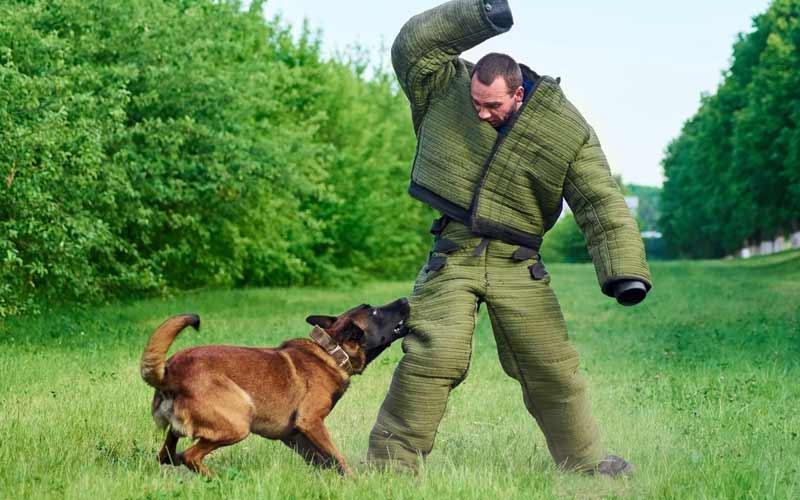
RE: the Leerburg link. Who am I to debate major leaguer Frawley from the 'sandlot minor league' of West Lincoln and now defunct Nobolis facility? Let’s just say that Frawley in his lengthy in-depth treatise on the subject of prey drive implying that it has no bearing whatsoever on defence behaviour isn't necessarily etched in stone as he would make one believe. Perhaps the jury is still out on Frawley’s assessment and assertions as being what he stands by as being gospel. Exit Ed.
Enter Helmut Raiser of noteworthy (Der Schutzhund — The Protection Dog) and incidentally I had to dust off the cover, in his treatment of prey drive and the impact it has on defence differs 180 degrees from what Frawley writes. Perhaps a print version or kindle version of his work will assist in a better understanding yet cloud the issue even more. Choose sides with an open mind and put to the test whose better explanation fits the current bill. The snippet of the first few pages on Amazon can be compared to the Frawley text.
Archives freebie
DER SCHUTZHUND(THE PROTECTION DOG)By Helmut RaiserThe Training of Working Dogs in Protection Work
archive.org
$$.00 version on Amazon
Der Schutzhund - The Protection Dog eBook : Raiser,Helmut: Amazon.ca: Kindle Store
www.amazon.ca
<<(And note I see various terms in use "hunt, ball, possession, chase..." as definitions that seem to be used differently in different breeds...and get ready as I have a little curveball next when ready...)>>
<<And also to discuss in terms of the word "threshold"... at which point that drive is activated...>>
Threshold as used in the context of drive pertains to merely how much stimulation is needed by the triggering stimulus to incite the desired drive. The term “drive” stems from Raiser's writings I believe. It seems for every behaviour there is a 'drive' attached to muddy the waters of 'drive'. IMHO I feel that Wendy Vollard's interpretation sums up best the analyzing and determining of drive
A dog with a low threshold to engage in defence is a difficult dog to handle. A mere heavy handed leash correction will incite a bite directed at the offending hand. Manfred Bayern of vom Bayern called this trait “geltunstrieb”. Conversely a high threshold would be a very forgiving submissive dog and one that would shut down and fall into the extreme defence behaviour of avoidance. Allow me to swing over to the Stonnie Dennis video that you attached of the skittish young female Doberman pup. I believe the context of the video was hinged on a behaviour where she chased an innocent victim and consequently needed a handler capable of restraining and restricting a repeat. Update me if there is a follow-up on improved behaviour as would be evident is absence of the skittish behaviour.
Genetics and IMHO that 8 to 12 week window — according to studies by Pfaffenberger in SD for the blind — after the pups 8 week birthday is critical to imprint confidence via environmental socialization which encompasses a broad range of fear prevention and confidence building. I believe that we can extrapolate from that, then is how prey behaviour can impact confidence as can be substantiated also by Frawley’s assessment. Problem is, he stops there and concludes prey behaviour is isolated into the spot where it irrelevant in the development of defence.
Better explained when Frawley states that with the decoy in running away during a courage test incites solely prey drive and expression of such. Yet Raiser states that the running away is in effect avoidance on the part of the 'combatant' thus satiation of defence drive and victory — hence confidence. You decide after reviewing both sides of the differing insights which direction to follow.
<<Many here already understand this but as a noob I still get confused thats a whole other conversation*
<<@MikeP I think I agree with your point- how to find and put to use the bred in drive(s) in doberman breed as motivation in training...
( I can speak to this bit by experience as your coaching on that Is what "turned on the training light bulb" for BYB Bonnie and I (her highest drive is "tug" not "food" for example) by using that drive as reward.)>>
<<So, now I am circling back to "how to" would I look for breeders as in @Nordika OP...>>
View Volhard’s personality evaluation of drive to better understand what drives are evident and inherent
HERE and over here
Canine Personality Profile | Volhard Dog Nutrition
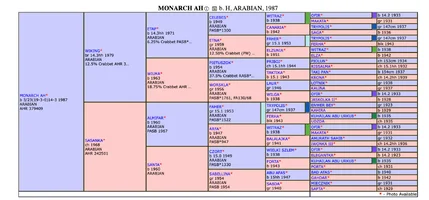
My choice of breeder is contingent on my lifestyle and how much time and effort that I can devote to the new acquisition. Consequently ask of self. Should your choice be a ballsy gung-ho athletic choice and if lifestyle fits that mold then a true working line breeder with evidence of titles in the venues of choice of both the sire and dam, grandsire and grand dame no further back than 3 rd generation would be requisite. Show breeders depending on 1st, 2nd, 3rd generation titles in venues of interest and especially in the 2-3 Gruenig combination 5% +- COI to the common ancestor where longevity and whatever venue criteria is important would also be where I would look. My previous Dober-girl was of Marienburg show lineage top and bottom flooded with a near entire 5 generation pedigree consisting of show lineage Marienburg and Nello’s Lex Luthor multiple times with high COI and distant old world Dexter vom Frankenhorst
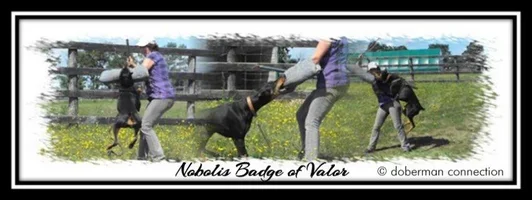
At 11 months I include a snippet of Val's 'Puppyhood' and provided solely to illustrate and promote confidence that show lines can participate in bite sport and more ……lest I be remiss to not include a late night knock on the front door and ensuing confrontational mistaken home invasion that was thwarted by a confronting Doberman rightfully named Valor IYKWIM…..consequently enabling a vulnerable old guy to still engage in controversial opinion often guffawed by the 'experts'……just sayin'
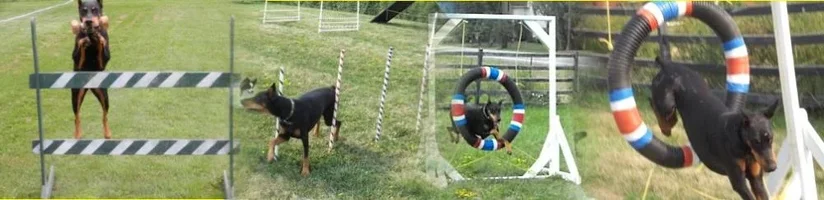
looking at performance as proofed in performance titles, vs simplistic comparisons of "how they look", correct?


 leerburg.com