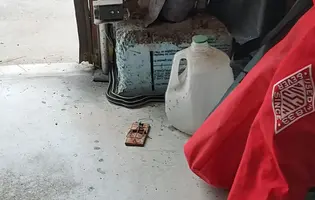
Don't worry about rabies or your dog eating their poop? I mean that's the thing I thought about when I saw that one on the ground!
It was unusual to be on the ground, but the one I caught in my house and took it outside acted stunned and flapped but wouldn't fly when I put it on the ground. After a minute it flew off normally. I think they are disoriented when in the daylight, but I'm just guessing. As for rabies, your dogs have their vaccines, they won't get rabies, and bat poop would not affect a dog any more than than mice or rabbit poop. Rabies is ONLY spread from saliva from infected animal via injury/broken skin of victim. In other words, a bite. Very, very few bats carry rabies, the numbers look higher because only bats that are acting out of ordinary are tested:
It has been
estimated that <1% of wild bats in endemic regions are infected with rabies virus (RV) at any given time (Childs
2002). Prevalence data from diagnostic laboratories are not a true indicator of rabies incidence among wild bats as most of these animals had been in contact with humans or domestic animals or were displaying abnormal behaviors such as being grounded or flying during the day. Depending on the geographic location, the species most commonly submitted to diagnostic laboratories are the big brown bat,
Eptesicus fuscus, and the Mexican free-tailed bat,
Tadarida brasiliensis. Approximately 17% of
E. fuscus and 16% of
T. brasiliensis submitted to diagnostic laboratories in Colorado and Texas were rabies positive (Pape et al.
1999, Rohde et al.
2004). In New York, 1,241 of the 36,506 (3.3%)
E. fuscus submitted to the New York State Diagnostic Laboratory diagnostic between 1988 and 2007 were found to be rabid (NYSDOH
2009). Conversely, the number of bats reported rabid from field studies is very low, and large outbreaks have not been reported (Constantine
1978, Steece and Altenbach
1989). Unlike healthy bats, which typically avoid interaction with humans, it is the bat that comes into contact with humans which is submitted to public health laboratories, consequently explaining the discrepancy between rabies in wild bat populations and rabies in bats submitted to public health laboratories.
So there you have some Bat Facts! There are colonizing bats like
@Cferg had in his building which would cause damage to the building and I can see blocking that. Red bats don't colonize like that. Anyway, everyone has to do what they have to do and I respect that. I just like to inform with facts to people are less afraid of them.




 I started looking around like, holy crap, what's out here that scared her?!
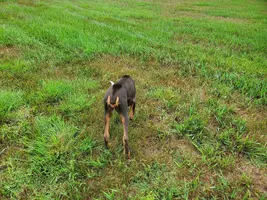


 I suppose Koyotes would take a cat. Our Dingos would.