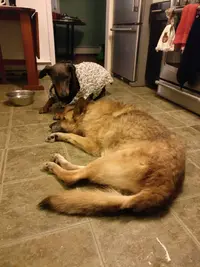
Try Melatonin for the hair loss. We get Blues and Fawns in the rescue with lots of Alopecia. Lots of times it does help. 3mg per day.
August 2, 2012 Written By
Becki Baumgartner
Melatonin Therapy for Canine Alopecia (Hair Loss in Dogs)
Melatonin Therapy for Canine Alopecia (Hair Loss in Dogs ...
franklintnvet.com/
melatonin-therapy-for-canine-alopecia
Learn how to use melatonin therapy for canine alopecia (hair loss in dogs). Learn the dosage and side effects of melatonin therapy for hair loss in dogs. Learn how to use melatonin therapy for canine alopecia (hair loss in dogs).
Veterinarians and pet owners alike are experiencing success using melatonin therapy for canine alopecia (hair loss in dogs).
The most common form of canine alopecia is
seasonal alopecia, also called
cyclic follicular dysplasia. This condition is denoted by hair loss on a dog’s flanks and back. Hair loss can also occur on the base of the tail, nose, and ears. Usually the skin becomes darker in the areas where the hair loss has occurred, and the dog’s hair will become dry and coarse.
Some breeds of dogs are more likely to be affected by seasonal alopecia than others. Bulldogs, boxers, schnauzers, Airedales, labradors, Scottish terriers, Akitas and Doberman pinschers are more susceptible than many other breeds.
Canine seasonal alopecia usually starts in early spring or late fall and lasts for up to six months, with the the dog’s hair typically growing back in afterward. Sometimes the condition recurs year after year, and sometimes it only occurs once in the dog’s lifetime. Because many dogs become affected with seasonal alopecia in the spring, researchers have concluded that lack of sunlight may be a cause.
Melatonin is a hormone produced by the pineal gland that helps regulate hormones and the body’s circadian rhythm. It is being used in veterinary medicine as a natural treatment for coat loss in dogs, cats and ferrets. Researchers are not exactly sure how melatonin helps thicken and regrow fur. Some researchers think it may be the relationship between melatonin, sunlight, and the body’s circadian rhythm. Other’s feel that melatonin’s antioxidant properties help promote hair growth. Melatonin has also been shown to help a pet gain back weight after surgery, stress or illness and help with anxiety, insomnia, and noise phobias. Mink farmers have been known to use melatonin to promote thick coats in the winter.
Melatonin is also believed to act as an antioxidant. It reduces free radical damage, stimulates an aging immune system, protects the cardiovascular system, preserves a youthful circadian rhythm; and stimulates the production of growth hormone. Oral melatonin supplementation has been found to be effective for hair regrowth in 50-75% of these cases of cyclic flank alopecia. It should be administered in the evening, due to the natural sedating effects. –
Geneva’s Pomeranians: Alopecia
Recommended Dosage: Research recommends not exceeding a dosage of 3 to 6 mg every 8 to 12 hours.
A general guideline is:
- 1.5 mg for dogs under 25 lbs
- 3 mg for an average medium to large sized dog 26-99 lbs
- 6 mg if the dog’s weight exceeds 100 lbs
This dose can be given once or twice daily.
If given once daily, the recommendation is to dose in the evening.
Note: Make sure you read the label and give your dog supplements containing melatonin only. Colorings and additives may be toxic to your dog.
Please remember, though, that every pet is different and it is always best to consult with your veterinarian for the best possible dosage for your pet’s individual situation. Adjustments may need to be made for particular health situations and/or medications.
Side Effects: There have been no reports of significant side effects of melatonin use in dogs. There have been a few reports of minor gastric upset and sleepiness. Melatonin has been shown to slightly alter the time an un-spayed female comes into heat. Melatonin may also interact with corticosteroids and some internal body process. Melatonin is not recommended for use in breeding dogs because it has been shown to sometimes alter mating desire and when a dog comes into heat.
Signs of Overdosage: It is very important not to exceed the recommended amount of melatonin. B
e very careful when choosing your melatonin product. Many of the melatonin products sold for humans are much stronger than the recommended amount for dogs. Signs of overdosage include diarrhea, vomiting, high blood pressure, incoordination, and even possibly seizures.
Note: It is always best to consult with your veterinarian before concluding that your pet has a particular ailment. In the case of Canine Alopecia, you should make sure that your veterinarian rules out thyroid disease, Cushing’s disease, parasites, mites and certain bacteria. All of these can cause symptoms similar to Canine Seasonal Alopecia. To test for thyroid or Cushing’s disease, your veterinarian will need to perform a blood test; for parasites, mites and certain bacterias a skin sample may need to be taken.
Are you interested in improving the health of your pet with natural remedies or herbal medicine? Call us!
- Natchez Trace Veterinary Services (Belle Meade) (615) 750-2248
- Natchez Trace Veterinary Services (Franklin) (615) 790-8100
Sources: