• Disclaimer: Hello Guest, Doberman Chat Forums presents the opinions and material on these pages as a service to its membership and to the general public but does not endorse those materials, nor does it guarantee the accuracy of any opinions or information contained therein. The opinions expressed in the materials are strictly the opinion of the writer and do not represent the opinion of, nor are they endorsed by, Doberman Chat Forums. Health and medical articles are intended as an aid to those seeking health information and are not intended to replace the informed opinion of a qualified Veterinarian.”

Recent, relatively sharp behavioral shifts

Hi all - first time here and first time doberdad. Brace yourselves...tons of information is coming. Appreciate any thoughts. Also completely understand if no one bothers to read this encyclopedia ... if nothing else - typing it’s been therapeutic :)

The issues described below are most likely “simply” behavioral things to work through (partly a function of his age, most certainly a function of some things i personally can do better on, and who knows what else), and i’m not trying to shift focus/blame from that, but my boy has enough physical quirks in addition to recent behavioral developments that i am just curious if any physical ailment comes to mind to those of you more experienced just in case that may be an underlying factor.

His Background: 16 months old; male; european bloodline; neutered only about a month and a half ago (i waited as long as i could because he was just so small - see below - and never had any aggression issues whatsoever, and the first time he did go at another dog he was snipped within the week); had 4 weeks of full time obedience training when i first brought him home; i did plenty of work with the trainers myself (i admit i’m far from perfect - but just trying to say: i didn’t simply hand him off to trainers and think i didn’t need to train myself and work further with him directly; i’m single - so it’s just me + him + the two cats - i get him outside and with other people/dogs a LOT - as much as is reasonably possible, but st the end of the day: it’s just us at night (relevant, likely, to the hyper vigilance; insecurity/lack of independende i describe below)

Physical ticks: he is very small - only 65-67 lbs and has only put on 2-3 lbs since i brought him home at 9 months; he is obviously slender but he isn’t excessively ribby - he is a perfectly healthy weight for his frame, truly just has a small frame; vet hasn’t been concerned with his size or weight when i’ve flagged; seems very prone to parasites/bacteria - has had giardia (took two rounds of meds to get rid of) and spirochetes; even during those stretches his fecal tests come back clean, his poos vacillate between nice normal poo and, regularly but for no apparent reason, pretty soft (but not diarrhea); very energetic; eats an obscene quantity (50% very high quality kibble; 50% raw - when he was all kibble - he was eating 5-5.5 cups per day of very calorie dense food (500-550 per cup); and j did the math when mixing in the raw last month and the caloric amount remains the same; probably irrelevant as i assume just seasonal allergies, but i’ve also had a couple different week-two week long periods where he gets really gross amounts of eye boogers.

behavioral: has always been a bit shy, but with the exception of skateboards and a few very sketchy guys that i don’t blame him for barking at when they get too close - until shortly before his neutering, no instances of dog or human targeted aggression. even when another dog snapped at him, goose would react only as needed to get himself out of harms way. in the week or so before he got neutered there were 2 different instances where he got randomly attacked by other dogs (i’m sure related to his balls), and then there was one instance where he completely out of the blue - after being at this dog park for months every day and getting along with everyone, went after a GSD unprovoked (while not an excuse - worth noting (1) the gsd was unfixed adult male (2) this happened the evening of one of the times he’d been randomly attacked that morning - so i’m sure that played into it); has also always been kind of a nut when walking at night - just alert beyond necessity and even reason, to the point where i can just feel how
much he stresses about it; more prone to barking fits at night, which i guess isn’t surprising; it’s tough to get him to a place where we’re jjst having s nice calm walk when it’s dark out - generally, he’s hyper alert and sometimes doing the heavy panting thing; and this seems beyond the “alert” that is typical of, and desired in, dobermans

since neutering (very likely related, but perhaps timing just coincidental): , energy level the same - and he is still generally okay (95% of the time) with other dogs - but he’s gotten markedly less predictable, as even that 5% is not a small amount given the number of dogs we encounter daily. his anxiety has gotten way worse - can barely walk him in crowded places anymore bc he gets jumpy and realllllly pully despite all that training he had in leash manners; still no actual attack on humans, but he has gotten markedly more protective - and much quicker to bark at an oncoming person (still not the norm though, and still no actual contact - just scary barking and sometimes a charge of a few feet, but - from the small handful of times he’s had enough leash, unfortunately, to actually get someone - he’s stopped several feet short). other times, he will be so skiddish and retreat from generally friendly people

he’s been working with a behavioralist for a few hours a day 4-5 days a week (good neighbor to have) - mostly she’s been doing confidence building type stuff and giving him plenty of time to just “be a dog” with other dogs because he’s so high strung, but she’s also spent some of the time with him to work with him specifically on him being prone to go nuts at passers by when he is in front of my apartment

if this were - as it most likely is - just a behavioral thing, it’d be described as primarily as insecurity; general high strungedness; etc. i guess what i’m just wondering is if the physical stuff combined with the suddenness of the shift (granted - at an age where changes like this are not uncommon, AND right after neutering) triggers any thoughts of a potential underlying physocal ckntributing factor that his routine vet visits might not have tested for if i didn’t ask. only reason i’m asking is bc i was reading about hypothyroidism and it’s kmpacts on behavior - the behavioral symptoms of hypothyroidism seemed spot on, but everything else about hypothyroidism seems the exact opposite of what i’m dealing with.

me: there are 100% things that i need to improve on myself, and maybe that’s the total explanation. but still, while far from perfect, i would say i’m doing a pretty decent job of doing the right thing the majority of the time. but even if this is all my fault, not trying to elicit that type of advice - not bc i’m above it, but bc ive got experienced willing resources right here with me and it seems less productive to try to get such info from strangers online. more just looking for potential physical contributing factors - as those are the types of things that even the experienced behavioralist and trainer i work with regularly may not be super up to speed on].

whew, sorry, that’s a ton of information. to wrap up, again: i readily admit that all this is most likely just a function of me raising a dog of a challenging breed for the first time on my own (but not with plenty of outside, experienced guidance) and me working through a learning curve, and him currently being at one of the worst ages, shortly after neutering (and, admittedly, maybe having misstepped in waiting as long as i did for the neuter), but asking just in case there may be more to it...

THANKS FOR TUNING IN TO THIS INFO DUMP. appreciate any thoughts, and looking forward to being a part of this forum going forward.
 
Wow...

Not much help from me for I am a first timer with Dobermans also, mine just made 1yr.

Reading through it all, it sounds like you are looking at all avenues and trying your best.

Hypothyroidism is a good thought, there are many experienced Doberman owners on here that will chime it on that.

My 2cents is that he is going through a developmental stage that needs focused effort on issues stated. Stay firm and consistent.

I know I have read it many times from @Kaiser2016 about her Doberman developmentally changing, mentally and physically, every ~six months. Mine did this also.

I’ve had many dogs in the past and I can tell you that a Doberman is a different beast in many aspects.

Good luck and Welcome from Louisiana.
 
As many people will probably chime in and say, your boy is still young. Male dobes don't fully mature and fill out until they're around 2-3 years old. As he's just 16 months you've still got some time yet.

As for the his attacking other dogs or being aggressive towards them, it sounds as if he's suffering a bit of trauma caused from when he was attacked by the other dogs and it's a fear and confidence issue now. It's also likely it's more traumatic to him than normal as it probably happened during his 2nd fear period.

If you're worried that he may bite or attack a person even if he hasn't yet I highly recommend getting a muzzle and start muzzle training him for HIS protection asap. We all know that if something were to happen and he does bite someone the blame will be on him and he may be put down. That would be terrible and heart wrenching for you. Muzzling can be a positive experience especially for fearful or aggressive behaved dogs if done correctly.

Cheers from South Korea.
 
Welcome from Canada!

The details that stand out: unfortunate timing of the neuter - 18-24 months is standard for large dogs, and neutering typically does not fix behavioral issues, it makes them worse. That your boy was fixed within a week of two separate incidents... Note that this is just what I learned from advice received here, so others will be able to weigh in on it. I'm also on my first Dobe, a 2 year old male Euro, not fixed yet, aren't they fun :laughing: How are the poor cats handling him? I've got one cat and she hates him :poutingcat:

The neighbor trainer - few hours a day? Doing what? Positive only training doesn't work on this breed. A working breed dog trainer is needed.

Poops - I don't like mixing kibble and raw. They digest at different rates which makes the poops unpredictable...and voluminous! I find it less stressful for myself when I can have expectations around my boy's potty time. Can you try full raw for a few days? I bet you'll see some changes: less poop, less edgy with a less irritable tummy, and he may put on weight with better absorption. You should add a probiotic too.

Re hypothyroidism, I won't offer an opinion on that as idk about those things, but it may just be that you've got a smaller Dobe, or it may just be age related. My boy was 70 lbs for the longest time. Around 20 months, he did breach 80 lbs but he was also a bit overweight. It will take time for you to tweak his diet and balance his exercise to get ideal body condition. Breed standard also does not have them being too heavy, like 90 or 100 lbs, ideal for males is 80...I think?
 
Welcome!

I don't mind at all a long post. I certainly do it sometimes! I will have to read it later though. Probably tonight.
 
Like a couple others have mentioned... positive only training for this breed does not work well. They are extremely intelligent and learn OB quickly. If they blow that training off then a quick correction is necessary. Sorry you did say you were not looking for advice on trainers but I felt it necessary to mention this since it is a strong working breed and needs a strong, confident leader that will give quick corrections when necessary.

As far as giardia be sure to not allow him to drink from any sources of water other than filtered or bottled water you provide. Lakes, creeks, mud puddles and dog park water drinking after other dogs can reinfect him.
Dog parks as a rule for this breed is not recommended. It can contribute to aggression and dog fights. After being attacked his behavior changes are most likely attributed to fear. This turns into fear aggression which needs to be worked on in stable, controlled situations. Building his self confidence is important at this point.
My female was attacked at 4mo of age and it has taken us over a year to get her over it through working with a behaviorist and trainer that are experienced with the breed.

Have your vet do a thyroid panel if you feel it necessary from behaviors you have witnessed.

As far as his diet; feeding raw with kibble is most likely responsible for the inconsistencies in his stools.
The stomach ph of the dog is normally a 2. Feeding raw maintains the level of ph2, adding kibble causes the gut ph to rise to >7 in order to digest the kibble. Kibble also slows gut motility so the raw is being kept in the gut much longer, therefore exposing him to bacterium in raw food for longer periods.
If you can feed total raw diet that would be great, otherwise feed raw in the mornings so the food can be digested quicker and expelled. Then feed kibble in the evening. I would add a tbsp of ACV (Braggs with the mother) into his dry food which will help keep the stomach ph lower and gut motility functioning properly. I think by separating his food type (raw or kibble) you will see an improvement in his stools.
You can also add the ACV to both his meals.
My male ranges between 77 and 80lbs., my female runs between 73-75lbs.
He has a lot more maturing to do so I would not worry about his weight.

Welcome to DCF from Florida
 
thanks everyone for taking the time to read my sleep deprivation inspired novel. really appreciate the comments - many things to take under consideration. i do think its unlikely there’s any relation between his physical ... oddities and the recent behavioral thing. the things that stand out:

(1) unfortunate timing of neuter - agree. that was a misstep - kind of panicked and pulled the trigger. oh well, live and learn. we will recover from it.

(2) neighbor behavioralist - oh don’t worry she’s not some diehard positive only stuff type person. and related, i’m traveling this week and he’s spending the time with the folks that helped me with his initial obedience training. they’re going to do as much impulse control stuff as they can productively work into his time with them. After much consideration, and agreement between all of myself, the behavioralist, and the trainer, we’re going to start introducing e collar. i’m going to spend plenty of time working with trainer when back in town to make sure i go about that method properly.

plenty more that i won’t specificallt respond to (i’ve word vommed on you all enough!), but rest assured that i see it all, will keep it all in mind and, again, very much appreciate everyone taking the time to weigh in. hasta for now!
 
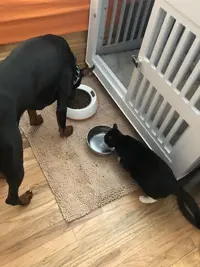
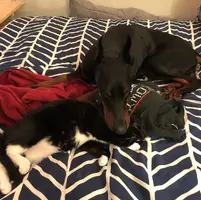
[oh and one concluding, lighter note: regarding the cats...ha sounds like the same story here, @Kaiser2016 - he’s thick as thieves (see photos) with one of them. as to the other, yea ... about that...what’s the term for most extrme polar opposite of thick as thieves conceivable? that’s what goose and that cat are, haha! :) though i will say - for goose’s part, he remains quite civil even to that one. that spirit of tolerance definitely doesn’t flow the opposite direction from cat to goose tho :)].

alright, this time, for real, that’s it from me (for now..). thanks again all - glad to have stumbled upon these forums - i can tell yall are a great community and will be a great resource.
 

Attachments

  • BD6856E2-0043-4F25-9211-E5DFAA215192.webp
    BD6856E2-0043-4F25-9211-E5DFAA215192.webp
    182 KB · Views: 12
  • 005D79D7-13FD-4471-96F5-1F00D701AACF.webp
    005D79D7-13FD-4471-96F5-1F00D701AACF.webp
    96.9 KB · Views: 12
One suggestion I haven't seen is that I would stop going to the dog park. Around his age its normal for challenging to start happening by him and from other dogs. He doesn't really need doggy friends. If there were some dogs he got along with, maybe you could arrange a playdate in a more controlled setting. Dog parks are like setting your kid free at a massive easter egg hunt. It can get chaotic and you could do the same thing at home in a safer setting. Too many dogs come and go and disrupt the pack structure and dogs have to re-establish it all over again every time a new dog comes in. I think working on his reaction to other dogs that are more stable and mesh better with him would be best in the long run.

Keep working with the behaviorist on the anxiety. How is he when you walk during the day? Have you had his eyes checked?
 
definitely stopped taking him to the park. behaviorist-neighbor has a two year old swissy female of her own that goose is dear friends with, and she has a solid pack (3-4 beyond the neighbor’s own dogs) each day - generally local dogs that goose knows well. so, yep, that’s where he gets in more controlled playtime.

and that’s v interesting thought regarding his eyes. he’s a LOT better walking at day than night. i assumed it was related to the residual nocturnal wolf instincts and nothing more, and no doubt that plays a role....but the difference is so extreme - totally different dog walking in otherwise identical environments day vs night - that maybe there is something more there. i’ll look into that. thank you!
 
if there’s any lingering concern about mine and my support people’s willingness to be tough but fair and go beyond positive only BS: i should note that the behaviorist’s background before dogs involved rehabilitating former circus and privately owned (by drug dealers) TIGERS in mexico ... so ... yea, she’s certainly not soft! :) [and i mirror her approach to all of this, which echoes your sentiments above, minus the goofs i’ve made along the way]
 
Study on 2500 Viszla dogs showing the OPPOSITE results in what we thought Neuter did...


3. Spay/Neuter and Behavior
Although spay/neuter had been previously linked to cognitive impairment and even a three fold risk of hypothyroidism, which often creates behavior changes, the Viszla study yielded some particularly interesting insight into this link.

In the study, spayed and neutered dogs were also more likely to develop behavior disorders than intact dogs.

This included:

  • fear of storms
  • separation anxiety
  • fear of noises
  • timidity
  • excitability
  • aggression
  • hyperactivity
  • fear biting.
Another study found neutered dogs were more:

  • aggressive
  • fearful
  • excitable
  • less trainable than intact dogs
(Parvene Farhoody @ M. Christine Zink, Behavioral and Physical Effects of Spaying and Neutering Domestic Dogs, May 2010)

This is contrary to the popular belief that neutering reduces aggression and other behavior problems.
 
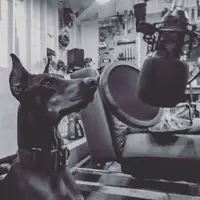
hi all - just an update: back in town with goose having spent the intervening time working with trainer to get conditioned to e collar. it’s helping a LOT. i’m glad i tried other methods before resorting to that, but it is proving to be a hell of an effective fallback option. and yes, it’s just a tool and the underlying issues still need a lot of work, but it’s definitely making the outward manifestations of the issue easier to manage while we undertake the longer process of getting at the root of the issue. the eyes thing is something i’ll still check in to - but so far the improvement applies to our nighttime walks as well. so looks likely that, as we suspected, it’s a purely behavioral thing not relating to any physical issues.

just wanted to say thanks for the advice, encouragement, etc. you guys are great.
 

Attachments

  • 3A0B2451-48BC-40E6-8595-52B30ED74E1D.webp
    3A0B2451-48BC-40E6-8595-52B30ED74E1D.webp
    89.9 KB · Views: 10
Glad to hear he's making progress and yes, if he has behavior issues that are not caused by a medical condition, it's probably something you're doing without even realizing it.

Very glad you stopped going to the dog park. As much as we want our dogs to have cute doggie play dates and as much as I trust my dog, it's the OTHER dogs and people I don't trust and Rubie doesn't generally enjoy the company of strange dogs. No need to put them in a situation in which they'll fail because we WANT something for them they that could not care less about.

The eCollar... very effective tool to fine tune training your dog should already know. Make sure you're not teaching him new behaviors with it. If he knows "COME" but only comes 50% of the time, perfect for working on that. If he knows "LEAVE IT" only when you're putting a treat on the ground in front of him and not when a squirrel is running through your yard, perfect tool for that. I'm sure your behaviorist knows this but do not stim him when he is in contact with another dog as it can elevate aggressive feelings.

He's about the size of my Doberman but, being a male, probably a little meatier even though younger. The perfect size, in my opinion ;)

Have you done any obedience or manners group classes? I do think it's important that he learns to ignore what's going on around him and focus on YOU. When we're in crowd settings, my Doberman wears a DO NOT PET, IN TRAINING vest because she doesn't not enjoy being approached by strangers and is much happier being ignored. If we're talking to someone and she approaches them for a sniff, then I'll allow them to pet her. She is not allowed to lunge or bark at ANYTHING when we're in public. That being said, we use every opportunity as a training session (we also have a 7 month old lab puppy who is learning the same thing) with treats, verbal and physical rewards, and knowing that if they're not having a good time, we will leave. Again, do not set your dog up for failure.

Pay very close attention to him and learn his stress cues. Yawning, scratching, whale eye, aversion to making eye contact, being very stiff through the body - these are all cues every dog gives when they are uncomfortable that people either don't recognize or ignore. Once you seem him demonstrating these, remove him for the situation.
 
@LifeofRubie - Thanks for the thoughts.

Re e-collar: noted, understood, and agreed. For me the biggest thing I can see it helping with--and this goes deeper than just correcting/tightening up existing skills--is my own confidence. Until he had a few behavioral issues, i was perfectly relaxed walking him--i was responsible and made sure to not let him forget his manners on leash, but i was not at all tense in doing so. But once he had an issue or two that probably would've been anomalous if i'd handled better, i'll admit ive been more tense walking him around and more prone to unconsciously keep the leash taught. I'd been conscious of that being bad inasmuch as it simply perpetuates the stress cycle, and i'd been making some marginal improvement, but no matter how aware i was of it being a problem - hard to overcome my own psychological instincts, so i know that was an ongoing issue. Seeing how responsive he is to the e collar even when distracted/tensed up has done wonders for my own confidence in just the 2 days i've been using it - haven't had to even use it more than a small handful of times, but just having it there if needed has definitely helped me relaxed, so hopefully i'll be able to more quickly undo the rob-induced stress i'd created/continued to create by walking him around when my own mind wasn't at ease.

Re size: yup, perfect size. My only initial concern (which is now alleviated) is that him being so small could be indicative of some medical issue.

Re do not pet patch - ha, that's interesting. I wonder if it's a function of where i live, but while i understand the hypothetical world in which that would be helpful (and the rationale behind your decision to do so), i have very little need for it because even when he's very relaxed and not looking like he's ready to eat a face, people are one of two things, either of which renders people approaching a non-issue: (1) outright fearful to the extent that they'll cross the street to avoid us (which sucks because i know he can pick up on that and that doesn't help his issues...) or (2) just very respectful (i live in a VERY dog heavy, and big/high energy dog hevay in particular, area in LA ... so i think people are more in tune with the subtleties than the average person--including to not approach without an invite).

Re obedience training: yes, he had one week of board and train + 3 weeks of 9-5 obedience m-f when i first brought him home, and then he just wrapped up another 5 days of board and train last week when I was away (and a fair amount of that has been in the group setting, and the work goose and i are doing with the behaviorist not infrequently takes the form of group obedience training as well). So he is VERY well trained and his obedience is exceptional 90% of the time - it's just that 10% when he gets agitated, which is a newish development hence why we haven't yet had much real world experience during which to work on it, that it all goes out the window. The e-collar, as you suggest in the context of squirrels passing by, should be helpful with that. I and the behaviorist are doing a full week of off leash recall work in a few weeks--i'll stay home from work as much as i can to be present and a part of it, and then she'll handle it to the extent i can't take the entire week off. And then the trainer i've used for his other obedience stuff has a 3 week off leash program that i think i'm going to put him through in a few monhts. Not because i intend to wander around the streets of west LA with a doberman off leash, but just the underlying skills they'll work on are things he could use improvement on and which will be helpful to hone even for just when he's in the house or on leash outside. [And lest it sound like i think i can simply offload all his training/development work to the behaviorist and the trainers: i don't think that. i do a ton of work with him on my own as well...i only emphasize the work with others because they are the most formal, discrete examples of the training he's received]

Re body language - yup. He and i are still getting to know each other, and a lot of his body language are indicators that have only--since this shift occurred--started popping up, so it's an evolving process (and always will be) - but i am aware of the importance of his body language and doing everything i can to improve my ability to read it and respond accordingly.

To sum up: i know it'll take time, but i've already seen some improvement--especially after his refresher with the trainers last week + the addition of the e-collar-- and i've got good support/plans for further productive work and am aware of the dangers of coming to rely on the e collar for more than its intended, so i'm feeling optimistic.
 
Re obedience training: yes, he had one week of board and train + 3 weeks of 9-5 obedience m-f when i first brought him home, and then he just wrapped up another 5 days of board and train last week when I was away (and a fair amount of that has been in the group setting, and the work goose and i are doing with the behaviorist not infrequently takes the form of group obedience training as well). So he is VERY well trained and his obedience is exceptional 90% of the time - it's just that 10% when he gets agitated, which is a newish development hence why we haven't yet had much real world experience during which to work on it, that it all goes out the window. The e-collar, as you suggest in the context of squirrels passing by, should be helpful with that. I and the behaviorist are doing a full week of off leash recall work in a few weeks--i'll stay home from work as much as i can to be present and a part of it, and then she'll handle it to the extent i can't take the entire week off. And then the trainer i've used for his other obedience stuff has a 3 week off leash program that i think i'm going to put him through in a few monhts. Not because i intend to wander around the streets of west LA with a doberman off leash, but just the underlying skills they'll work on are things he could use improvement on and which will be helpful to hone even for just when he's in the house or on leash outside. [And lest it sound like i think i can simply offload all his training/development work to the behaviorist and the trainers: i don't think that. i do a ton of work with him on my own as well...i only emphasize the work with others because they are the most formal, discrete examples of the training he's received]

Pardon if I'm making an assumption but ... have YOU been a part of any of his obedience/manners training? A one hour class once or twice a week in the evening for 6-8 weeks? He needs to look to YOU for confidence and cues. He cannot learn your cues and you cannot learn his if you don't train together.
 
Pardon if I'm making an assumption but ... have YOU been a part of any of his obedience/manners training? A one hour class once or twice a week in the evening for 6-8 weeks? He needs to look to YOU for confidence and cues. He cannot learn your cues and you cannot learn his if you don't train together.

Ha i'd edited my post to address that exact point as you were typing that. Fair assumption based on how i characterized it - so no offense taken - but yes, see my edit above, copied in relevant part below. I promise - even if it's sounded otherwise, i do a TON of work with him on my own.

Relevant portion of my edit above:
[And lest it sound like i think i can simply offload all his training/development work to the behaviorist and the trainers: i don't think that. i do a ton of work with him on my own as well...i only emphasize the work with others because they are the most formal, discrete examples of the training he's received]

PHEW. How does he act with you in basic training classes? Is he focused on you? Too interested in other dogs/people?

That is interesting about your area being so dog friendly, people generally are respectful or ignore you (very European, sounding!). We live outside of Chicago where dog friendly activities are EXPLODING. I still put the vest on her. If nothing else, it initiates conversation which requires someone standing nearby, talking to us, but ignoring her - the best scenario.

We also NEVER meet ANY dog on-leash. Very important to keep your boy away and focused on you. If someone says, "Oh my dog is friendly, it's OK!" just say yours isn't. ADMIN: how do we get a Sorry, Not Sorry sign in the emoji's section? :woot2:
 
Glad to learn you are seeing positive and progressive behaviors.

Great job and keep us updated. I have to say when I bring out the ecollars for the twins they get very excited. They know it’s training time and off lead play time through the mangrove trails and a swim in the ocean.
 
@LifeofRubie - although kind of in tension with the broader issue of obedience when under stress/excitement, he’s SUPER focused on me in group classes, even with other dogs around, to the point where it’s actually not necessarily a positive thing as it’s so extreme to the point that it’s less like really strong focus and more like lack of confidence/independence. for instance, we often do some free walking exercises to get the dogs to walk politely but not at a tight heel and he just won’t leave the heel position. when i do get him to, he’s all over the place. have been putting concerted effort into helping him find that middle ground especially recently given the partial clarity on what is going on i’ve recently come across, and he’s improving - but still has trouble being well mannered without being at a tight heel.

@Tropicalbri's - i can definitely seeing that become goose’s approach. it’s fascinating to me that something that seems so unfun really can be viewed so positively - but i totally get why. i bet that moment of realizing its a good thing will really gel when we do the intensive recall stuff off now leash week after next. the whole e collar thing in general has proven an interesting exercise for me. it’s so much more nuanced than your average hater acknowledges and, while need to be careful to use it appropriately and not over rely on it, he is 100% going to be a much happier dog for it.

and zooming out one more level, this all seems to largely boil down to me being a type a, anxious, workaholic lawyer. spend plenty of time with him (arguably more than i should), but im tense more often than not and the impacts on him are clear. about as clear of a call to self improvement as one can get, i guess :).

ADMIN: can we get a yolo emoji while you’re at it? ;) also i realize conversation has strayed away from he medical health angle and thus no longer really appropriate for this particular board - sorry about that. feel free to move it if you’d like.
 

Back
Top