DobieLvr
Novitiate
Top 5 Safety Tips for Traveling With a Pet in the Car
5: Prepare Your Pet for Car Travel
If you're planning to travel by car with your pet, you should prepare in advance. If your pet has never been in the car before, make some short trips first to see how it reacts. Some animals behave just fine, but others suffer from anxiety or even motion sickness. If the latter is the case for your pet, talk to your veterinarian about appropriate medications. While you're at it, make sure your pet is up to date on vaccinations as well.
Most cats feel safer in the car if they travel in a small crate. To prepare your cat for crate time, leave the crate around the house for a few days so the cat gets used to it. Same with your dog. If you plan on harnessing your dog or keeping it in a crate in the car, get it familiarized with that feeling.
Make sure your pet is wearing its identification tags in case it manages to escape you during the trip.
4: Put Together a Travel Kit
Do you pack a toiletry kit for yourself when you travel? Why not pack one for your pet as well?
If you're traveling out of state, bring your pet's health records along. You'll need them in case your pet bites someone or gets bitten. Put your name, destination address and cell phone number on your pet's crate in case of emergency. Also, don' t forget small first-aid items like nail clippers and liquid bandages.
Portable water bowls -- you can even buy one that folds up -- and bottled water are a great idea. You never know what might upset your pet's tummy, and you certainly don't want to find out while you're trapped in a small car together. So, stick with water -- no food.
Don't forget a pooper scooper, waste bags, treats, an extra leash and your pet's favorite pillow or toy for comfort.
3: Keep Your Pet Safely Entertained
Many pets sleep in the car, but just as many of them wind up getting restless. It might seem fun to let your dog hang its head out the window, but this practice is dangerous. Your dog could be hit by flying objects, and the wind and cold air can cause inner-ear damage and lung infections [source: ASPCA]. Excitable canines can also unexpectedly leap out an open window, leading to serious injury or death.
Instead, bring along a favorite chew toy, treats and other objects that will keep your pet entert*ained and busy. Stop the car often to let your pet out (on a leash, of course) to stretch its legs and sniff out its new surroundings.
2: Food, Water and Bathroom Breaks
During any trip, it's important to stop often so your pet can stretch its legs, relieve itself and burn off some excess energy.
Although water is fine, don't feed your pet in a moving vehicle. It's actually best to feed it no less than three to four hours before your trip begins, to minimize motion sickness. If your pet needs to eat during the duration of the trip, feed it at a rest stop an*d give it some time to digest.
Speaking of rest stops, when you do stop, never let your pet out of the vehicle without a leash. In an unfamiliar place, animals can act unpredictably and tragedy can occur. Don't put your pet at risk -- keep it on the leash.
Always park in the shade. And never leave an animal unattended in a parked vehicle. On a warm day, the temperature in your car can rise to 120 degrees Fahrenheit (49 degrees Celsius) in minutes, even with the window open.
1: Restrain Your Pet
Hands (or paws) down, the best way to keep your pet safe during a car trip is to use a restraint system. You wear a seatbelt for your own safety -- give your pet the same respect. Your pet should ride in the backseat so it won't get injured if a front seat airbag is deployed. However, don't let your pet ride in the bed of a pickup truck. In that case, it's safer up front with you.
The best restraint system for your pet depends on its size an*d breed, as well as the size of your vehicle. There are many options from which to choose. Following are some general tips:
Cats and some small dogs travel best in a carrier. They feel safer and can't run around inside the vehicle. You should use a seat belt to secure the carrier.
If you need to use a crate for your larger pet, make sure it is well secured and cushioned. In the event of an accident, the animal can slam against the sides of the crate.
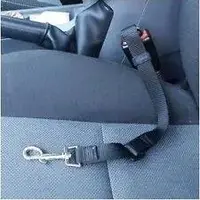
The safest way to secure your dog in the car is through a restraint system. You can purchase a harness that attaches to your regular seat belts, or straps that attach to the ceiling of the car.
Choose restraints that offer your pet some mobility -- the animal should be able to move and turn in the seat.
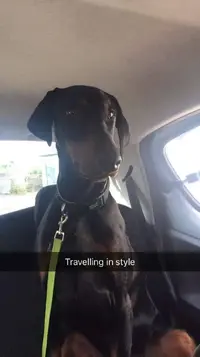
** Side question - how many use seat belts for their dogs and if you do - what style?



 *shows self out*