Yeah, I would be fine with that!!!I'd want to teach my Dobe to catch and destroy.

Yeah, I would be fine with that!!!I'd want to teach my Dobe to catch and destroy.

I'm not sure what you mean - disobey in what way?I am interested in how, technically, service dogs are taught to disobey in an emergency situation.
To save their handler/owner's life.I'm not sure what you mean - disobey in what way?
Yes it's a whole science isn't it, even for those who specialize in it. But very interesting, like in the military as well, when the dog has to break a stay command or other.I don't have expertise in this field, but I believe most service dogs are taught to DO a thing, no matter what. Like a guide for the blind, to step between the person and, say, a fast bicycle coming by. Can't remember which book I read, but it was quite fascinating and takes an enormous amount of training for any specialty service dogs. If you're referring to life-saving to do with that persons handicap, I think they try to cover all the bases of common causes that could cause that person harm or fatality and train the dog accordingly. If it is protection type life-saving from an attack, I don't think service dogs are trained that way at all. LOL, I may still not be answering the scenario you had in mind, but it's an interesting question!
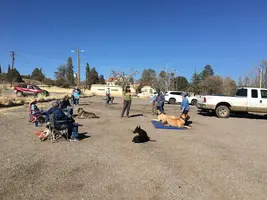


 "Wake me up when we are doing something cool."
 So good for them to learn to calmly "be" and not always moving.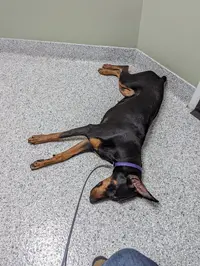
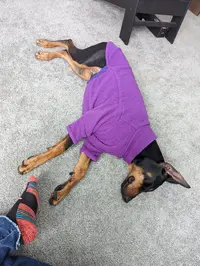
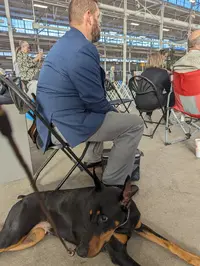
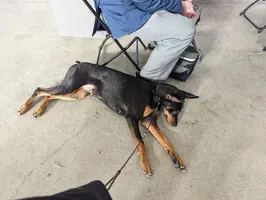
I've been frustrated several times that I can put a down-stay on with no problem, but I can't "make" her relax. Really relaxing in public doesn't come easy for Asha, but it's getting better. It's not easy for ME to say let's drive to town (30 min. trip each way) and go just sit somewhere. I love to do nothing at home, but I don't want to drive somewhere to do nothing! LOL. Anything for the dog though.And it's needed, honestly. We did that in our CGCA class and were strongly encouraged to work on this every week at least once. No commands. Just let them do whatever it is they are going to do and reward the good behaviors.
I get it! The "relax" has to not only be captured in split seconds and small doses and then rewarded but also simply more exposure, more acclimating to environments. It's a lot of work. Asha's first sign of relax probably won't even be super obvious either. Maybe less whining, less scanning, a sigh, eventual soft blinks. I imagine it took her a while to choose to lay down on her own like that!I've been frustrated several times that I can put a down-stay on with no problem, but I can't "make" her relax. Really relaxing in public doesn't come easy for Asha, but it's getting better.
Asha probably doesn't want to eitherbut I don't want to drive somewhere to do nothing! LOL
but it's good for her!
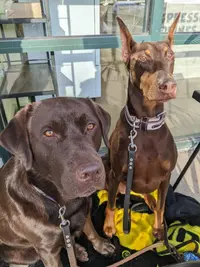
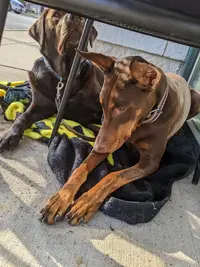
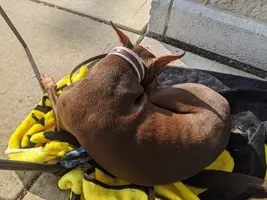

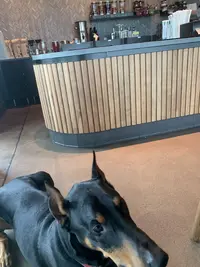
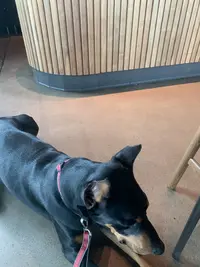
Jax at Starbucks…one of his favorite places.
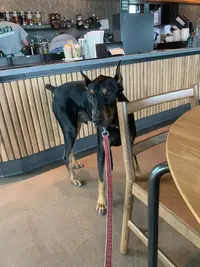

We're working on Remy's CGC right now, and this is the one test item I don't have confidence in ("reaction to another dog"). Remy does get fixated on other dogs, is extremely interested in greeting them, pulling towards them, and sometimes gives a play bark (which I recognize as such, but it's scary to other people).he want's to try and make friends with every other doggo we see (leash proactive? hahaha)Luckily he's pretty easy to reel in; doesn't get too fixated.

This is something I've had to work on with Olive too since she thinks every dog is going to like her. That's not the case with many of them and she needs to learn that sooner than later.Remy does get fixated on other dogs, is extremely interested in greeting them, pulling towards them
I laugh reacted cause that was baby Ripley's issue. A social butterfly! A few well trusted dogs that have corrected her may have helped but she's so strong forward in personality it didn't really phase her too much.This is something I've had to work on with Olive too since she thinks every dog is going to like her. That's not the case with many of them and she needs to learn that sooner than later.
This is such great advice, thank you so much! His “leave it” command is *mostly* reliable (we work on it and impulse control daily since he’s a testy teenThe INSTANT he holds a stare for more than 2 seconds is fixation, that's when to correct (little leash pop to get his attention, "leave it", and keep walking). If you wait 5 seconds his adrenaline has already shot up and now you are having to shut down drive instead of just a stare. My mistake was thinking my puppy had learned and I wanted to give her the opportunity to show me without correction that she could look away and come with me on her own. But in 3 seconds it had gone from staring to lunging. So after many failures, I just started correcting her for staring.
 ), so I’ll start incorporating that as soon as he takes notice and staring.
I’m so glad I’m not alone in this…makes me feel better that it’s a work in progress even for experienced Doberman owners.This is something I've had to work on with Olive too since she thinks every dog is going to like her. That's not the case with many of them and she needs to learn that sooner than later.

Absolutely, distance when possible is super helpful right now. He did well at Lowe’s earlier today when another dog passed by the aisle we were on, and even maintained a down-stay, so he got jackpotted for that since it’s a pretty distracting environment.A good strong leave it works great along with (in practice) rewarding looking at your face when a distraction goes by. The key for that is to work on it with as much distance as your dog needs, and start with low level distractions, so that the distraction isn't above your dog's arousal threshold. Have a nice healthy mix of correction and reward for training. You can talk to them as much as possible during evaluation and that is really powerful too.