

5 Most Common Dog Breed stereotypes DEBUNKED!
Stereotypes are unfortunately a part of how we function everyday; we make generalizations without even really thinking about it. Most of the time these stereotypes are not correct. The most common dog breed stereotypes cause thousands of dogs to sit in shelters every year just because have the wrong impression of the breed.
We judge a large population of creatures – be them humans or dogs – based on the actions of a rare few. The most common dog breed stereotypes can be as detrimental to dogs as they are to humans. Once a negative stereotype begins to spread, less people are willing to adopt these dogs. Any mixed breed that has genes from the breed also becomes less attractive to potential pet parents.
RELATED: 4 Most Scary Dogs According to Statistics
Even as a self-proclaimed “dog person,” I have my own stereotypes about dogs, specific breeds in particular. But I know I’m not alone, so I rounded up the top 5 most common dog breed stereotypes. Now we can try to debunk them together, and become true “dog people” – towards all dogs!
5 Most Common Dog Breed Stereotypes DEBUNKED
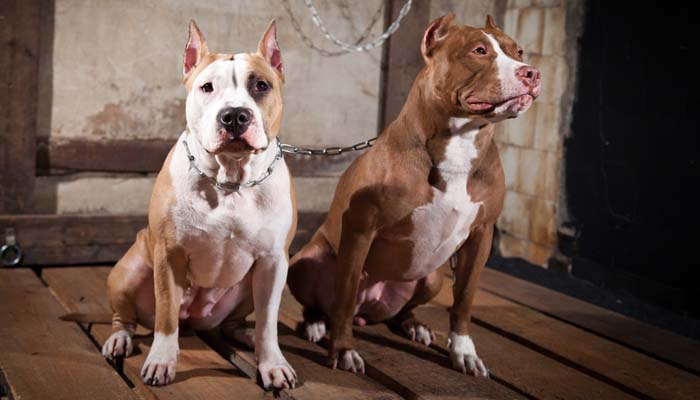
Pit Bulls
You probably guessed that this would be the first one on the list. So much negative media has focused on pit bulls lately that it’s hard to know if we should really be worried or not. The name “pit bull” sort of just sounds intimidating, doesn’t it? But it turns out the name comes from their ancestors, bulldogs, who used to rile up bulls during bullfights.
Once the bulldogs were bred with terriers, they became smaller and were used for dogfighting in pits – thus the name pit bulls. The important thing to note here is that pit bulls were bred because they were great fighters, but they were bred for “bite inhibition” – they could be mid-fight and they would calm at the touch of their owners.
While any dog can be traumatized, abused, or even trained to become vicious towards humans, breeders specifically picked pit bulls that were gentle towards humans. This means that the breed does not come from a long line of hostile, mean dogs. In fact, they may be the most gentle towards humans.
Rottweiler
 Whenever I think of rottweilers, I think of criminals in movies that have huge rottweilers protecting their property. In my head, this is always complete with snarls, chasing, and excessive amounts of drool. All of this is a Hollywood perspective, though, and the reality is that rottweilers are just not trained killers from birth.
Breeders who work with rottweilers note that they are a very easy breed to train, and they are eager to learn and to work.
For this reason, many believe that they can be easily trained to do things – even the bad things. It all depends on the person, not the dog. Because of their size, breeders also believe that rottweilers trigger a fear response in people no matter their temperament.
If not trained properly, they can be very excitable which can be translated into being rough. But the temperament tests that rottweiler breeders perform indicate that rottweilers have one of the most level, confident temperaments possible, and are not easily upset or thrown off course. As for me, I’ll have to work on my Hollywood rottweiler prejudices.
Doberman Pinscher
 When I think of Doberman Pinscher, I automatically think “guard dog,” and you probably do too. This isn’t too far off the mark, though, as Dobermans were in fact bred for protection.
Karl Friedrich Louis Dobermann started breeding dogs that had excellent sight and hearing, but who were also loyal and fearless; he was a tax collector and very much needed a friendly protector on his side.
As the breed developed, however, it became clear that Dobermans were much more loyal than they were vicious.
They were (and are) highly intelligent, which means they desire work and tasks; they aren’t lazy layabouts. When they aren’t properly exercised or challenged, they tend to get a little antsy. This is where most of the problems arise, breeders say.
Once again, this is human error – not an innate fault in the breed. People who want to adopt a Doberman should know that their new fur friend will need training, socialization, and a purpose throughout their days in order to be fully obedient and calm. But they are not vicious, scary guard dogs – they just love their masters very much!
Chihuahuas
 I am most guilty of judging Chihuahuas more so than any other breed; I automatically assume they’re all mean and cranky from my past experiences. Like many of the other most common dog breed stereotypes, this is completely untrue.
Apparently I’m not alone, with Chihuahuas being one of the least desired dog breeds in the U.S. But not all Chihuahuas are created equal!
Many people (myself included) think Chihuahuas are “yappy”- they never stop barking. What breeders and vets have come to find out is that Chihuahuas are very reactive, and unless they’re trained properly from an early age, they will be reactive (yappy) forever.
The same goes for socialization– Chihuahuas are not known for their friendliness towards anyone or any dog that they don’t live with. Breeders attribute this to people’s assumption that small dogs don’t need a ton of training, so they are never properly socialized and therefore seem grumpy and mean.
Basically, if you adopt a Chihuahua (or really any small breed), do not neglect the training process. Just because they can’t jump on you or leap a 6 foot fence doesn’t mean they don’t need training. This helps deter the negative behavior they are so famous for.
Mutts and Mixed Breeds
 Nearly 8 million animals enter shelters and rescues every year, the majority of them being “mutts,” or mixed breed animals. About 3 million of those animals get euthanized every year because they can’t find homes, and it’s believed that the majority of those animals are mixed breed dogs.
The sad part is that people often want a full-bred dog because they think they know the history of the breed, what to expect from the dog, and can take into account the dog’s background or lineage. That may all be true, but mixed breed dogs are often healthier than pedigreed dogs (because they’re not a product of incest).
Mixed breed dogs are also a concern for pet owners because “they don’t know what to expect” from the dog’s behavior. What if the dog is part pit bull/Doberman/Chihuahua? As you’ve now learned, those breeds are not “bad,” they simply have a bad reputation due to the most common dog breed stereotypes.
Properly training any dog can solve any of the concerns that potential owners can foresee.
A mixed breed dog has just as much potential to be a great, loving, loyal companion as a purebred. They also may have fewer health problems, have better temperaments, and fit your household better than dogs with a specific history of behavior and health.
It’s All About You
I’m sensing a theme here. It seems that it’s all about the owner, and not the dog. If the owner adopts a dog of a certain breed that isn’t a good fit for the owner’s lifestyle, trouble ensues.
If the owner doesn’t properly train their dog, more trouble ensues. If an owner doesn’t provide the appropriate routines or activities for their dog, the trouble keeps mounting.
Essentially, the most common dog breed stereotypes we hold are not really based in fact; they’re based on experiences that are entirely subjective to the way a dog is trained. Just take a look at some of the recent news about Pit Bulls that’s been coming out.
If you really want to get to know a dog, you shouldn’t take into account what you’ve experienced in the past or seen in the movies. I know I have a lot of work to do!
5 Most Common Dog Breed Stereotypes DEBUNKED | Top Dog Tips
'it's all about you' at the bottom of the article is spot on.
Stereotypes are unfortunately a part of how we function everyday; we make generalizations without even really thinking about it. Most of the time these stereotypes are not correct. The most common dog breed stereotypes cause thousands of dogs to sit in shelters every year just because have the wrong impression of the breed.
We judge a large population of creatures – be them humans or dogs – based on the actions of a rare few. The most common dog breed stereotypes can be as detrimental to dogs as they are to humans. Once a negative stereotype begins to spread, less people are willing to adopt these dogs. Any mixed breed that has genes from the breed also becomes less attractive to potential pet parents.
RELATED: 4 Most Scary Dogs According to Statistics
Even as a self-proclaimed “dog person,” I have my own stereotypes about dogs, specific breeds in particular. But I know I’m not alone, so I rounded up the top 5 most common dog breed stereotypes. Now we can try to debunk them together, and become true “dog people” – towards all dogs!
5 Most Common Dog Breed Stereotypes DEBUNKED

Pit Bulls
You probably guessed that this would be the first one on the list. So much negative media has focused on pit bulls lately that it’s hard to know if we should really be worried or not. The name “pit bull” sort of just sounds intimidating, doesn’t it? But it turns out the name comes from their ancestors, bulldogs, who used to rile up bulls during bullfights.
Once the bulldogs were bred with terriers, they became smaller and were used for dogfighting in pits – thus the name pit bulls. The important thing to note here is that pit bulls were bred because they were great fighters, but they were bred for “bite inhibition” – they could be mid-fight and they would calm at the touch of their owners.
While any dog can be traumatized, abused, or even trained to become vicious towards humans, breeders specifically picked pit bulls that were gentle towards humans. This means that the breed does not come from a long line of hostile, mean dogs. In fact, they may be the most gentle towards humans.
Rottweiler
 Whenever I think of rottweilers, I think of criminals in movies that have huge rottweilers protecting their property. In my head, this is always complete with snarls, chasing, and excessive amounts of drool. All of this is a Hollywood perspective, though, and the reality is that rottweilers are just not trained killers from birth.
Breeders who work with rottweilers note that they are a very easy breed to train, and they are eager to learn and to work.
For this reason, many believe that they can be easily trained to do things – even the bad things. It all depends on the person, not the dog. Because of their size, breeders also believe that rottweilers trigger a fear response in people no matter their temperament.
If not trained properly, they can be very excitable which can be translated into being rough. But the temperament tests that rottweiler breeders perform indicate that rottweilers have one of the most level, confident temperaments possible, and are not easily upset or thrown off course. As for me, I’ll have to work on my Hollywood rottweiler prejudices.
Doberman Pinscher
 When I think of Doberman Pinscher, I automatically think “guard dog,” and you probably do too. This isn’t too far off the mark, though, as Dobermans were in fact bred for protection.
Karl Friedrich Louis Dobermann started breeding dogs that had excellent sight and hearing, but who were also loyal and fearless; he was a tax collector and very much needed a friendly protector on his side.
As the breed developed, however, it became clear that Dobermans were much more loyal than they were vicious.
They were (and are) highly intelligent, which means they desire work and tasks; they aren’t lazy layabouts. When they aren’t properly exercised or challenged, they tend to get a little antsy. This is where most of the problems arise, breeders say.
Once again, this is human error – not an innate fault in the breed. People who want to adopt a Doberman should know that their new fur friend will need training, socialization, and a purpose throughout their days in order to be fully obedient and calm. But they are not vicious, scary guard dogs – they just love their masters very much!
Chihuahuas
 I am most guilty of judging Chihuahuas more so than any other breed; I automatically assume they’re all mean and cranky from my past experiences. Like many of the other most common dog breed stereotypes, this is completely untrue.
Apparently I’m not alone, with Chihuahuas being one of the least desired dog breeds in the U.S. But not all Chihuahuas are created equal!
Many people (myself included) think Chihuahuas are “yappy”- they never stop barking. What breeders and vets have come to find out is that Chihuahuas are very reactive, and unless they’re trained properly from an early age, they will be reactive (yappy) forever.
The same goes for socialization– Chihuahuas are not known for their friendliness towards anyone or any dog that they don’t live with. Breeders attribute this to people’s assumption that small dogs don’t need a ton of training, so they are never properly socialized and therefore seem grumpy and mean.
Basically, if you adopt a Chihuahua (or really any small breed), do not neglect the training process. Just because they can’t jump on you or leap a 6 foot fence doesn’t mean they don’t need training. This helps deter the negative behavior they are so famous for.
Mutts and Mixed Breeds
 Nearly 8 million animals enter shelters and rescues every year, the majority of them being “mutts,” or mixed breed animals. About 3 million of those animals get euthanized every year because they can’t find homes, and it’s believed that the majority of those animals are mixed breed dogs.
The sad part is that people often want a full-bred dog because they think they know the history of the breed, what to expect from the dog, and can take into account the dog’s background or lineage. That may all be true, but mixed breed dogs are often healthier than pedigreed dogs (because they’re not a product of incest).
Mixed breed dogs are also a concern for pet owners because “they don’t know what to expect” from the dog’s behavior. What if the dog is part pit bull/Doberman/Chihuahua? As you’ve now learned, those breeds are not “bad,” they simply have a bad reputation due to the most common dog breed stereotypes.
Properly training any dog can solve any of the concerns that potential owners can foresee.
A mixed breed dog has just as much potential to be a great, loving, loyal companion as a purebred. They also may have fewer health problems, have better temperaments, and fit your household better than dogs with a specific history of behavior and health.
It’s All About You
I’m sensing a theme here. It seems that it’s all about the owner, and not the dog. If the owner adopts a dog of a certain breed that isn’t a good fit for the owner’s lifestyle, trouble ensues.
If the owner doesn’t properly train their dog, more trouble ensues. If an owner doesn’t provide the appropriate routines or activities for their dog, the trouble keeps mounting.
Essentially, the most common dog breed stereotypes we hold are not really based in fact; they’re based on experiences that are entirely subjective to the way a dog is trained. Just take a look at some of the recent news about Pit Bulls that’s been coming out.
If you really want to get to know a dog, you shouldn’t take into account what you’ve experienced in the past or seen in the movies. I know I have a lot of work to do!
5 Most Common Dog Breed Stereotypes DEBUNKED | Top Dog Tips
'it's all about you' at the bottom of the article is spot on.
Last edited by a moderator:


