
DocReverto
Formerly CRD
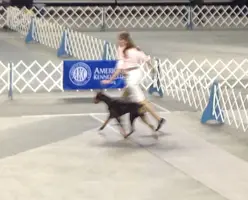
This is going to be an extremely long post. Hopefully this help brings to light the misunderstanding that conformation sports are just beauty pageants.
Structure/movement are incredibly important to our breeds survival.
Now granted this is for a Boxer. Boxers are incredibly similar to our breed, and even without that the structure argument applies to all breeds.
See below, and enjoy!
HOW STRUCTURE AFFECTS MOVEMENT
Page 1

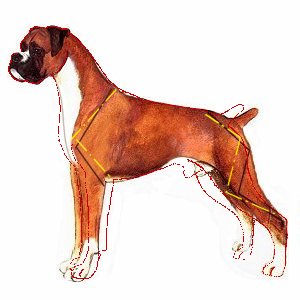
The 5 phases of movement
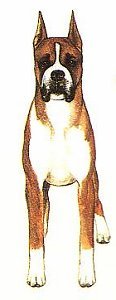
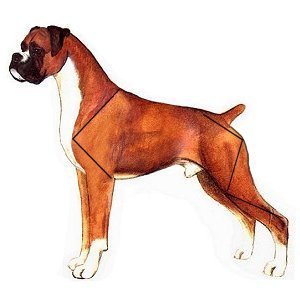
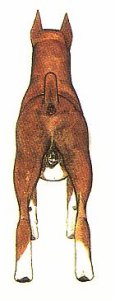
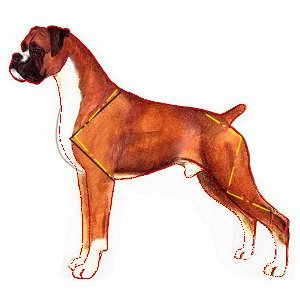
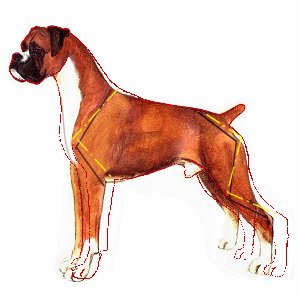
The Correct Boxer
HOW STRUCTURE AFFECTS MOVEMENT
Page 2
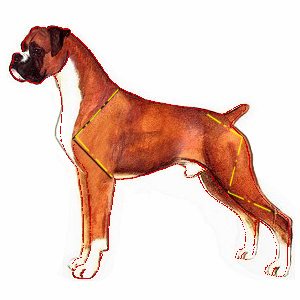
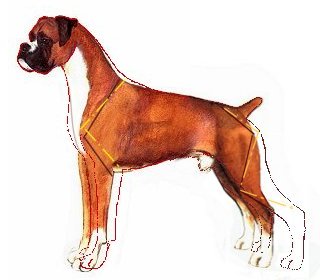
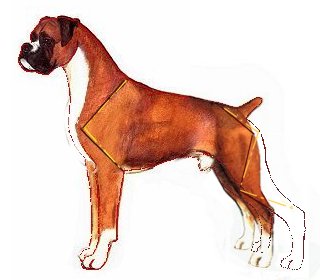
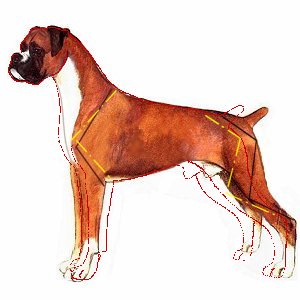
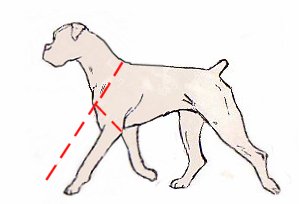
Showing how the angle of the shoulder blade affects extension:
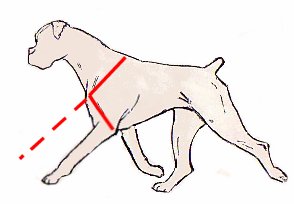
The well laid back shoulder blade gives more extension to the front leg
Note that the length of upper arm does not affect the angle of extension, only the timing
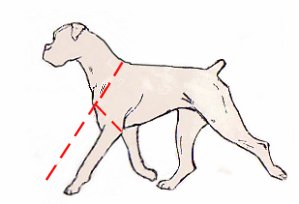
The steeper the angle of the shoulder blade the less extension of the front leg
Now when you can see the difference side by side you will discover that the first dog
will need less steps and energy to cover the same distance
HOW STRUCTURE AFFECTS MOVEMENT
Page 3
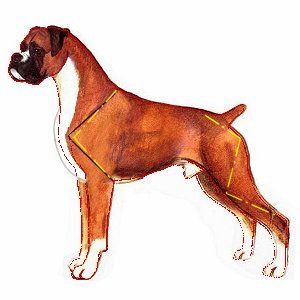
Showing how the length of the upper arm affects timing:
Correct
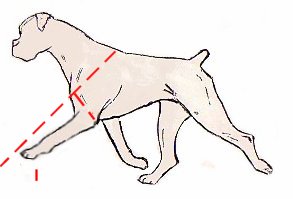
Short Upper Arm + strong rear
The second dog will need to use more energy to cover the same distance
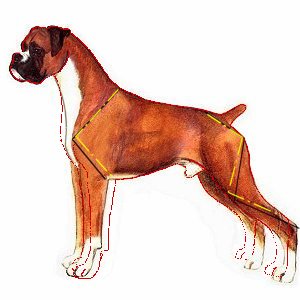
Showing how less rear angulation but good front angulation affects timing
Correct

Straighter Rear Angulation + good front
T
Now compare a dog with less front and rear angulation
Correct
Straight front and rear angulation
They mistake kinetic balance with toeing in! (Toeing in or out is a ligament problem)
Always look for the easiest, most ground covering, energy saving movement!
HOW STRUCTURE AFFECTS MOVEMENT
Page 4
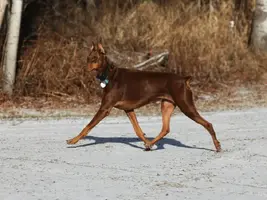
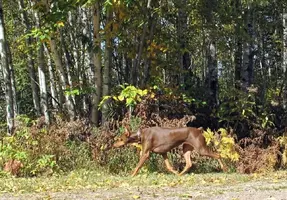
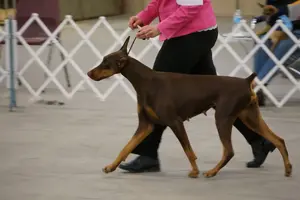
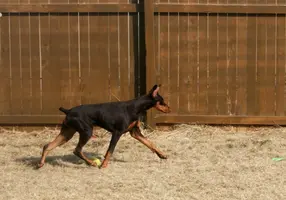
Well angled live dog in action
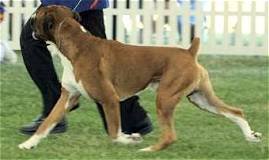
Correct reach and drive
HOW STRUCTURE AFFECTS MOVEMENT
Page 5
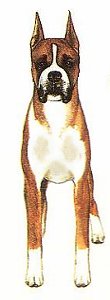
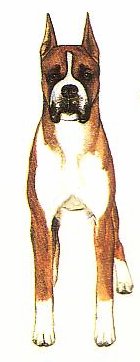
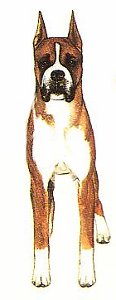
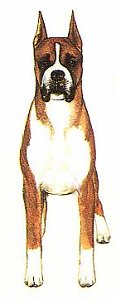
The legs move towards the centre of gravity = KINETIC BALANCE
Correct

From the front
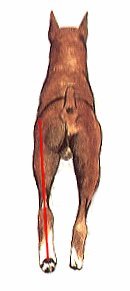
From the rear
There is no break in the straight line – shoulder to foot or hip to foot
Incorrect

Barrel Hocked
or Swivel Hocked
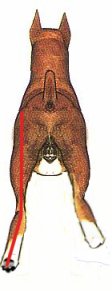
Cow Hocked
or punching out
In these examples the straight line is broken ... These rear movements are commonly seen
Structure/movement are incredibly important to our breeds survival.
Now granted this is for a Boxer. Boxers are incredibly similar to our breed, and even without that the structure argument applies to all breeds.
See below, and enjoy!
HOW STRUCTURE AFFECTS MOVEMENT
Page 1
The 5 phases of movement
- Reach - The front leg reaches forward as far as his angulation permits
- Pull - The shoulder musculation pulls / transfers his weight forward
- Transition - The middle of the stride
- Push - The rear musculation takes over and pushes his weight forward
- Drive - The rear leg drives through as far as his angulation permits
The Correct Boxer
On the following pages I will attempt to show how just how much small differences in ...
- Amount of, or lack of forechest
- Balance of shoulder and rear angulation
- Length or angle of upper arm
- Length or angle of shoulderblade
- Length of leg and pasterns
- Length of second thigh
- Incorrect pelvis angulation
HOW STRUCTURE AFFECTS MOVEMENT
Page 2
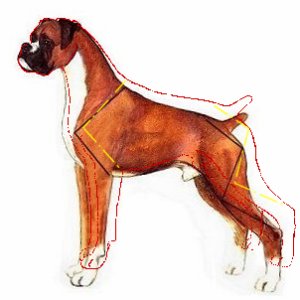
Showing how the angle of the shoulder blade affects extension:
The well laid back shoulder blade gives more extension to the front leg
Note that the length of upper arm does not affect the angle of extension, only the timing
The steeper the angle of the shoulder blade the less extension of the front leg
Now when you can see the difference side by side you will discover that the first dog
will need less steps and energy to cover the same distance
HOW STRUCTURE AFFECTS MOVEMENT
Page 3
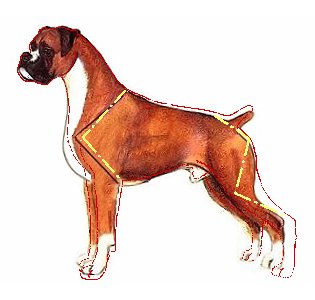
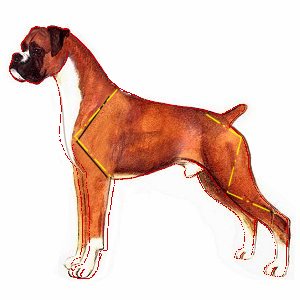
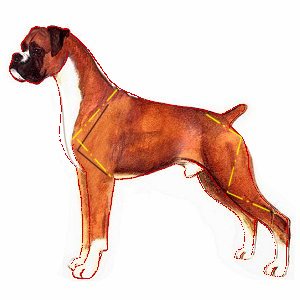
Showing how the length of the upper arm affects timing:
Correct
- As this dog is balanced front and rear he does not need to lift his feet high off the ground to extend forward
- Each foot will flex and bend as it comes forward without excessive lift in a smooth almost ground skimming action
- The action is smooth and rhythmical
Short Upper Arm + strong rear
- As this dog does not have balanced angulation front and rear he will need to lift his front feet higher to allow time for his excellent rear angulation to come forward with the desired drive.
- The front feet will lift higher and have a goose "stepping action"
- The action will not look as smooth and rhythmical as the correct dog
The second dog will need to use more energy to cover the same distance
Showing how less rear angulation but good front angulation affects timing
Correct
- As this dog is balanced front and rear he does not need to lift his feet high off the ground to extend forward
- Each foot will flex and bend as it comes forward without excessive lift in a smooth almost ground skimming action
- The action is smooth and rhythmical
Straighter Rear Angulation + good front
- As this dog does not have balanced angulation front and rear he will need to bend and lift his front feet higher to make allowances for his poor rear angulation timing.(cadence)
- The front foot will lift in an almost hackney action
- The action may look pretty but it is not correct
T
Now compare a dog with less front and rear angulation
Correct
- Viewed from the front and rear this dog's legs will come closer to the center of his body (kinetic balance)
- He will extend his front and rear legs smoothly to their full extent of his excellent angulation - but will not roll!
- (Well angled puppies may roll as their muscles are not as firm)
Straight front and rear angulation
- As this dog has poor angulation front and rear he is balanced
- His front feet will extend without needing to bend or lift excessively as his rear feet do not need additional time for cadence.
- His action will look smoother than the two unbalanced dogs above, but is not correct
- From the front and rear his feet willNOT converge as much as the correct dog. This may look prettier and more controlled to the novice, but is incorrect!
- He will need to take many more steps to cover the same distance as the dog on the left
They mistake kinetic balance with toeing in! (Toeing in or out is a ligament problem)
Always look for the easiest, most ground covering, energy saving movement!
HOW STRUCTURE AFFECTS MOVEMENT
Page 4
Well angled live dog in action
Correct reach and drive
- You can see how this dog reaches out well in front and has powerful rear drive.
- Note how the left front foot has left the ground allowing for the back left foot to take its place
- Note the rear extension of the back rear leg and foot creating thrust or drive
- You can see the kinetic balance even in the side view (feet coming in to centre of gravity)
- Notice how the topline remain
HOW STRUCTURE AFFECTS MOVEMENT
Page 5
The legs move towards the centre of gravity = KINETIC BALANCE
Correct
From the front
From the rear
There is no break in the straight line – shoulder to foot or hip to foot
Incorrect
Barrel Hocked
or Swivel Hocked
Cow Hocked
or punching out
In these examples the straight line is broken ... These rear movements are commonly seen