

strykerdobe
Hot Topics Subscriber

The False Friends of Pet Food Consumers

Recognizing the ‘false friends’ of pet food.
http://truthaboutpetfood.com/the-false-friends-of-pet-food-consumers/

Wishing you and your pet(s) the best,
Susan Thixton
Pet Food Safety Advocate
Author Buyer Beware, Co-Author Dinner PAWsible
TruthaboutPetFood.com
Association for Truth in Pet Food
Become a member of our pet food consumer Association. Association for Truth in Pet Food is a a stakeholder organization representing the voice of pet food consumers at AAFCO and with FDA. Your membership helps representatives attend meetings and voice consumer concerns with regulatory authorities. Click Here to learn more.
What’s in Your Pet’s Food?
Is your dog or cat eating risk ingredients? Chinese imports? Petsumer Report tells the ‘rest of the story’ on over 5,000 cat foods, dog foods, and pet treats. 30 Day Satisfaction Guarantee. Click Here to preview Petsumer Report. www.PetsumerReport.com
The False Friends of Pet Food Consumers
By Susan Thixton
- March 13, 2018
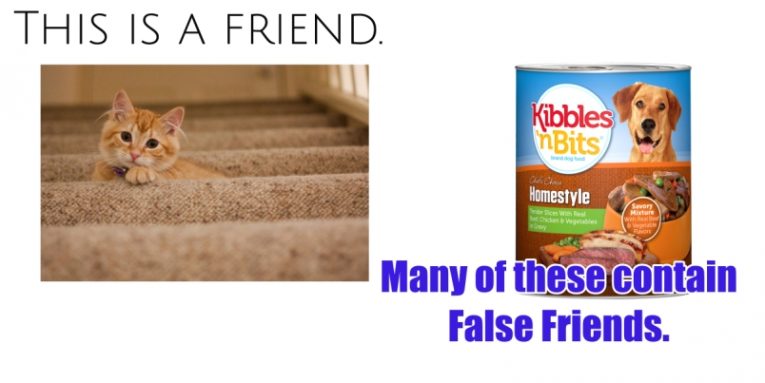
Recognizing the ‘false friends’ of pet food.
Pet food is a different language; a separate dialect.
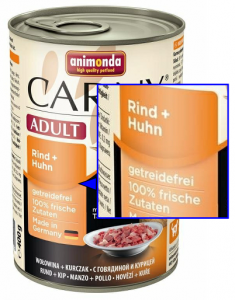
This is EXACTLY like what every pet food consumer faces. U.S. and Canadian pet food labels and websites look as if they are written in English, but actually they are written is a specific dialect of the English language. Pet food dialect, a language specific to animal foods.
Dialect: a variety of a language used by the members of a group.

Access to the translation of pet food dialect to English costs $100 a year.
The group who uses this dialect is the pet food industry; all pet food manufacturers are required by regulation to use the dialect.
Consumers – who do not speak pet food dialect – are left defenseless trying to understand a pet food label. Consumers can use Google translate to interpret the German pet food label, there is no Google translate for pet food dialect.
False Friend
The Cambridge dictionary defines the term False Friend as: “a word that is often confused with a word in another language with a different meaning because the two words look or sound similar.”
An example of a ‘False Friend’ is provided by InkTank.fi: Fart.
We all know the English meaning of the word fart, but did you know that fart means speed in Danish, Norwegian, and Swedish? If that doesn’t make you snicker enough, the words for speed bump in each language are fartbump, fartshump, and farthinder.

Because most consumers do not speak or understand pet food dialect, False Friends commonly occur in pet food.
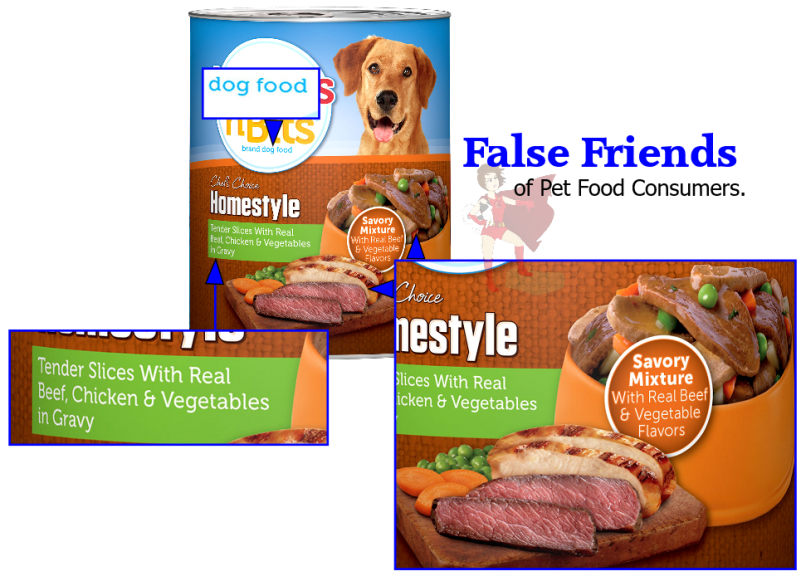
The above picture of a Kibbles ‘n Bits canned dog food (one of the pet foods recently recalled due to contamination with pentobarbital) contains three significant False Friends.
#1 In pet food dialect, the word ‘food’ does not mean the same thing as in English. The word ‘food’ on pet food labels and websites translates to ‘feed’ – such as in cattle feed or chicken feed, a lesser quality than what consumers understand of food. “Dog Food” is manufactured differently (held to lesser safety standards) than the English understanding of food, and “Dog Food” (and Cat Food) ingredients are not held to the same quality standards as the English understanding of food. Some ‘Pet Food’ ingredients are allowed by FDA to violate federal food safety law.
In pet food dialect, The word ‘food’ is a False Friend of pet food consumers (with the exception of Human Grade pet food).
#2 In pet food dialect, the words “beef” and “chicken” translates to another different meaning. Beef and chicken in human food must be USDA inspected and passed, edible. But the translation of beef and chicken in pet food dialect allows these meats to be sourced from USDA condemned – inedible – animal material. Pet food dialect does not require the pet food to warn the consumer condemned ingredients are included in the ‘food’.
“Real Beef” and “Real Chicken” on pet food labels are False Friends of pet food consumers.
But isn’t this against the law? Condemned animal material in any food would be a violation of law…right?
Another translation of pet food dialect is that unlike in human food – many laws are ignored in pet food. Law does clearly say ANY food is adulterated (illegal) if it contains any part of a diseased or non-slaughtered animal (condemned/inedible). But in pet food dialect that law is not enforced.
But what about the picture – right there on the label? The picture shows slices of roasted beef and chicken. Wouldn’t that mean this pet food contains slices of beef and chicken? No, it doesn’t. Pet food laws require images on pet food labels to be an accurate portrayal of the contents of the pet food. But…regulatory authorities do not enforce this law either. Images on pet food labels are often False Friends. And with the above particular pet food…
#3 This pet food label displays choice slices of beef and chicken in the forefront of the pet food bowl. The image intends to make the consumer believe actual slices of chicken and beef are in the pet food, note the sliced meat in the pet food bowl. But…the slices of meat in this pet food are probably fabricated meat. Not actual slices of beef and chicken as consumers understand in common English, they are pet food dialect slices of meat allowed to be fabricated with “Wheat Flour, Soy Flour, Modified Corn Starch” ingredients flavored with small amounts of feed grade chicken and beef.
Regulatory authorities openly allow this False Friend to deceive pet food consumers. The AAFCO Pet Food Committee has been asked to require the disclosure of fabricated meat on pet food labels – they said “No”.
More False Friends…
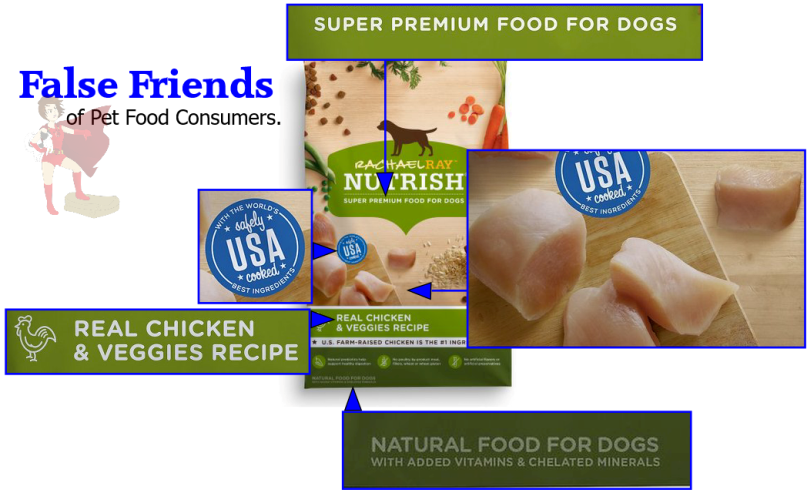
#1 and #2 This label – just like the previous label – includes the False Friend statement of “Real Chicken” along with an image of chicken breast meat.
#3 The phrase “Super Premium Food for Dogs” is another False Friend. “Super Premium” is a commonly used pet food dialect term meant to imply to unknowing consumers the pet food is of higher quality. This is a feed grade pet food, made with feed grade ingredients – the exact same quality of ingredients as all other feed grade pet foods. ‘Premium’ is a marketing term allowed by regulatory authorities which results in misleading pet food consumers.
#4 The seal on this label that claims “Safely USA cooked with the world’s best ingredients” is also a False Friend. Again, feed grade pet foods use feed grade ingredients. Pet food dialect does not grade or rate ingredients – they are all considered feed grade unless they meet the legal requirements of food (human grade pet food). ‘World’s Best Ingredients’ is a marketing term allowed by regulatory authorities which results in misleading pet food consumers.
#5 The word “Natural” is defined within pet food dialect, however the definition allows unprocessed ingredients OR highly processed ingredients to claim ‘Natural’. Natural on a pet food label is a False Friend to pet food consumers, misleading many to believe the product contains minimal processing.
An example of Cat Food False Friend…
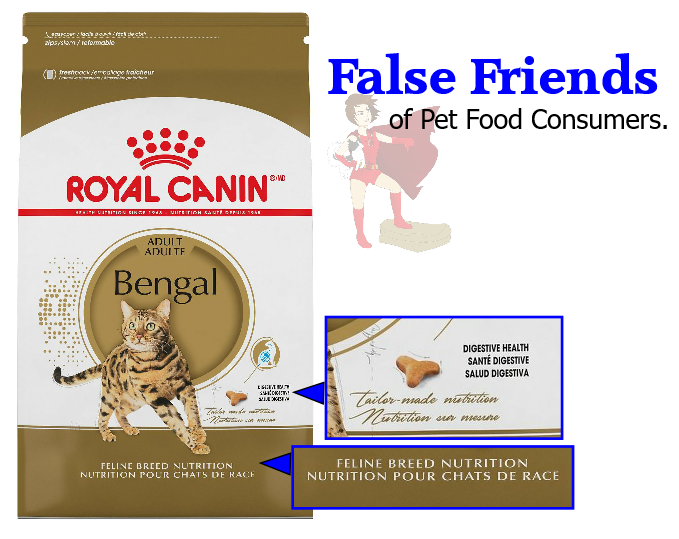
#1 “Tailor-made nutrition” is a False Friend. This cat food appears to tell consumers this product is “tailor-made” for Bengal cats. But pet food dialect requires all cat foods – whether for a Bengal cat or Maine Coon cat – to meet the exact same nutrient requirements (established by AAFCO).
#2 “Feline Breed Nutrition” is this pet food’s way of saying ‘Cat Food’. Because all cat foods are required to meet the same nutritional profiles, the pet food is not ‘breed nutrition’ – it is cat (species) nutrition.
False Friends mislead pet food consumers.
What can consumers do about False Friends?
All pet food consumers deserve public access to the English translations of pet food dialect. Consumers can call or email their State Department of Agriculture representatives and ask for a free copy of the current AAFCO Official Publication. Go to to this webpage The Association of American Feed Control Officials > Regulatory and click on your state. Contact the feed official listed for your state.
If you are told “no”, if your state will not provide you with a free copy of the English translations of pet food dialect (the AAFCO Official Publication) – write your state government officials (such as the Governor and state Senators). Tell them as a pet food consumer you deserve free public access to all regulations governing pet food. Ask them to require AAFCO to make the Official Publication (the pet food dialect English translations) public information, ask them to secure you a free copy. This is your right as a consumer.
In the meantime – this document translates common pet food ingredients into English. Click Here to view.
One more thing…
False Friend can also apply to anyone who speaks about or writes about or endorses any pet food. Unless the individual fully understands the dialect specific to pet food – they can be misleading you by they themselves being confused by the translation. Often this is unintentional, but it does happen. Educated pet food consumers who speak and understand pet food dialect can help others to understand the translation.
This post is the first of several to follow to provide consumers a full understanding of pet food dialect. More to come.
Wishing you and your pet(s) the best,
Susan Thixton
Pet Food Safety Advocate
Author Buyer Beware, Co-Author Dinner PAWsible
TruthaboutPetFood.com
Association for Truth in Pet Food

Become a member of our pet food consumer Association. Association for Truth in Pet Food is a a stakeholder organization representing the voice of pet food consumers at AAFCO and with FDA. Your membership helps representatives attend meetings and voice consumer concerns with regulatory authorities. Click Here to learn more.
What’s in Your Pet’s Food?
Is your dog or cat eating risk ingredients? Chinese imports? Petsumer Report tells the ‘rest of the story’ on over 5,000 cat foods, dog foods, and pet treats. 30 Day Satisfaction Guarantee. Click Here to preview Petsumer Report. www.PetsumerReport.com

The 2018 List
Susan’s List of trusted pet foods. Click Here to learn more.
Have you read Buyer Beware? Click Here
Cooking pet food made easy, Dinner PAWsible
Find Healthy Pet Foods in Your Area Click Here


